

A weekend away in a grand tourer can be spoilt by one inelegant detail - luggage that fights the car. Ill-fitting cases waste valuable boot space, jar with a carefully specified interior and reduce a considered ownership experience to something oddly generic. Bespoke automotive luggage exists for precisely this reason. It is not simply luggage with a motoring reference attached. Done properly, it is an extension of the motor car itself - designed with the same regard for proportion, material, performance and individuality.
For the discerning owner, that distinction matters. A beautifully configured Aston Martin, Bentley or Porsche is never chosen by accident. Exterior paint, hide colour, contrast stitching, piping and veneers are all expressions of taste. To then travel with anonymous cases bought off a shelf is rather like commissioning a tailored suit and pairing it with borrowed shoes. The point of bespoke is not excess for its own sake. It is coherence.
What bespoke automotive luggage really means
The phrase is often used loosely, yet true bespoke automotive luggage begins long before the first panel of leather is cut. It starts with the client, the car and the way both will be used. A bag intended for race weekends has different priorities from one made for continental touring. A holdall for the rear shelf of a classic Jaguar requires a different silhouette from a set intended to slot into the shallow front compartment of a mid-engined supercar.
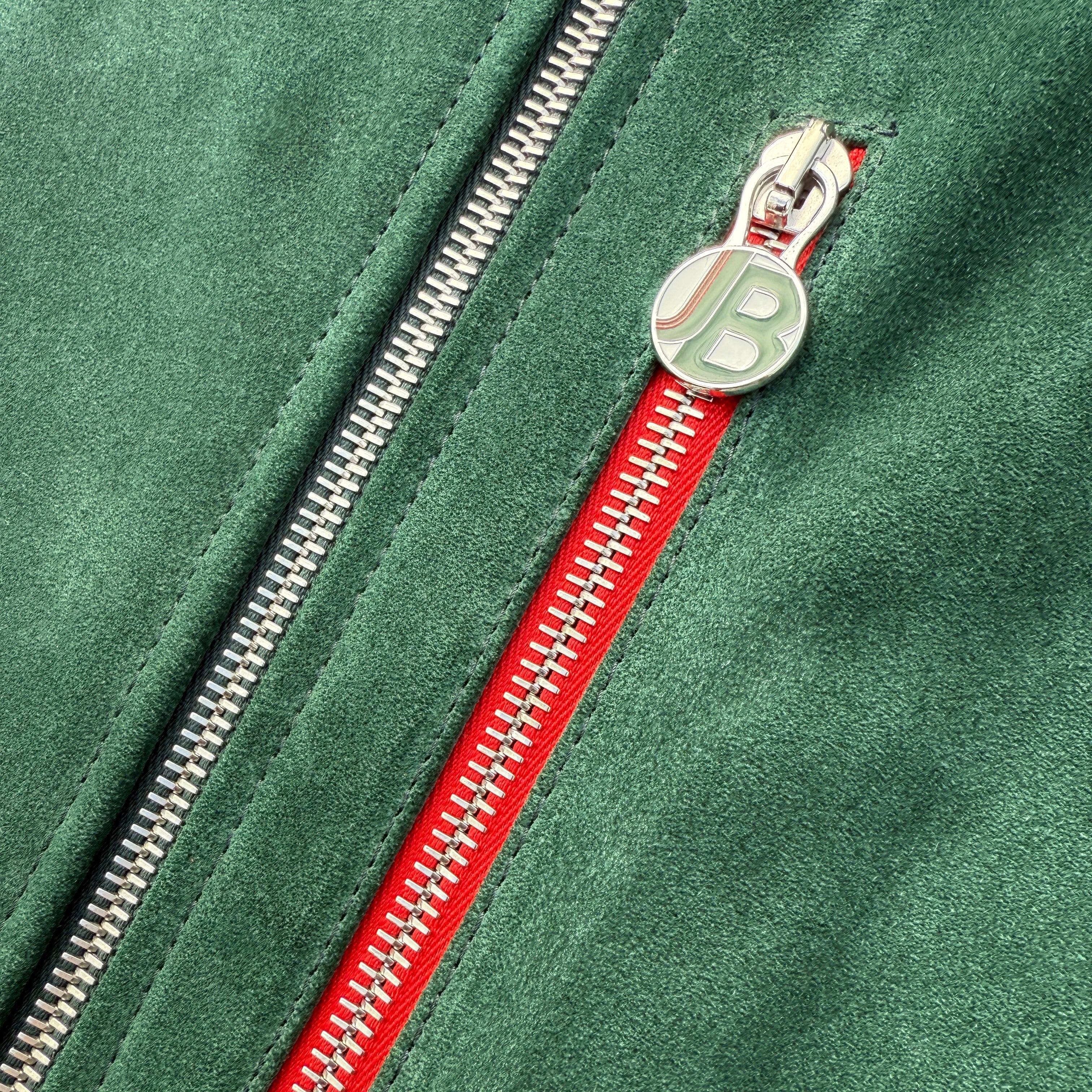
That is where genuine craftsmanship separates itself from novelty. Proportions are considered in relation to the vehicle. Handles, closures and reinforcement are chosen for repeated use. Materials are selected not merely because they look luxurious, but because they wear beautifully and support the intended purpose. A full-grain Tuscan leather, for instance, offers depth, character and longevity, while a resilient lining can protect against the practical realities of travel. Even the zip matters. Hardware such as YKK Excella has a place in luxury luggage because it feels precise in the hand and performs with reassuring consistency.
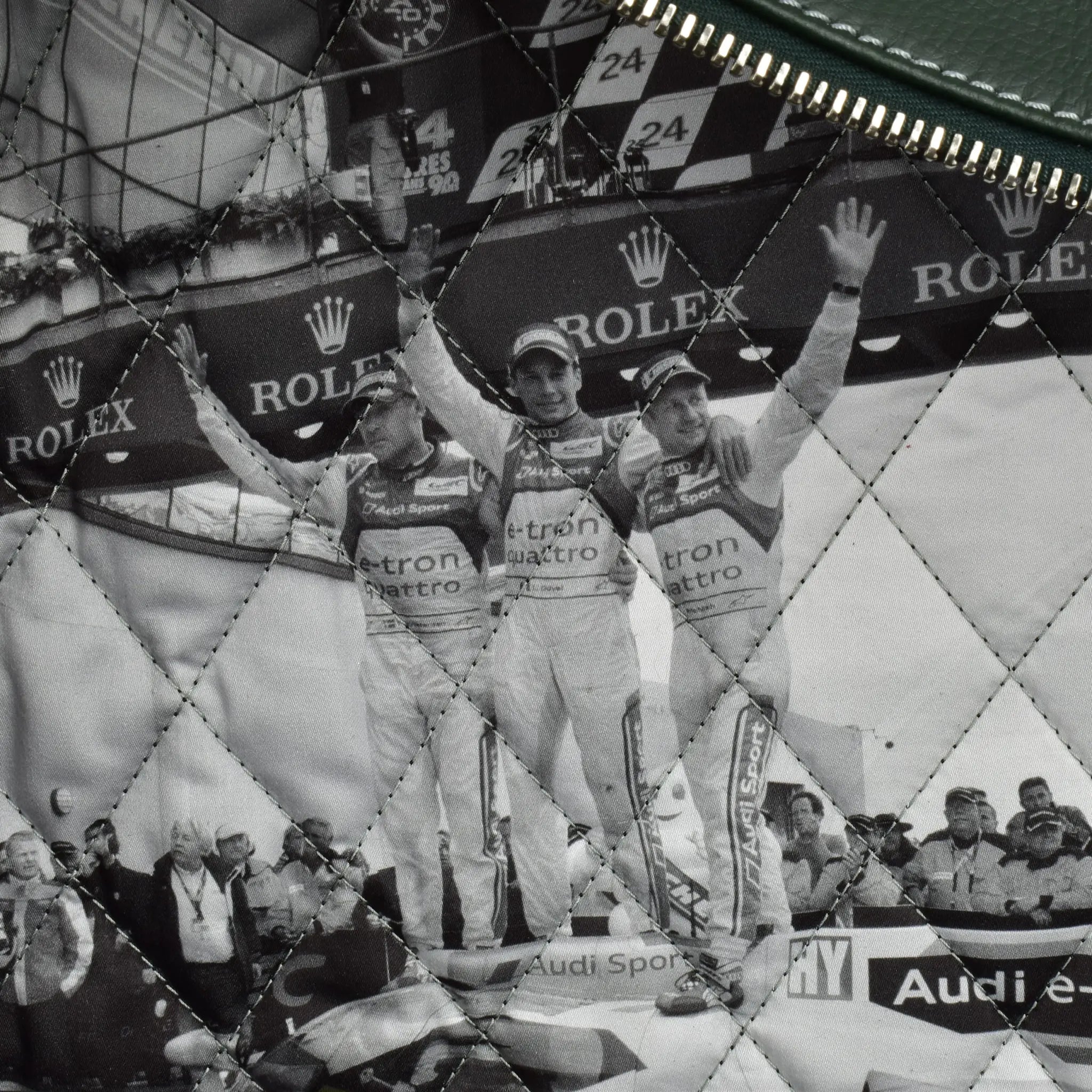
Personalisation is part of the process, but it should never feel decorative for decoration's sake. The best commissions use colour, lining, quilting, perforation, embossing and trim in a way that reflects either the car or the client's own history with it. Motorsport numbers, racing stripes, chassis-inspired details or cabin-matched stitching can all be compelling, if applied with restraint.
Why off-the-peg rarely satisfies the enthusiast
Ready-made luxury luggage can be excellent, but it is still built for an average customer and an average use case. Automotive ownership at the upper end is rarely average. A collector may want a weekender that mirrors the interior of a specific 911. A driver heading to Goodwood may need a race day kit bag that accommodates helmet, gloves, boots and technical layers without becoming cumbersome. Someone using a GT for regular European travel may prefer a garment carrier and a pair of soft cases shaped precisely around a car's luggage bay.
Mass-produced luggage cannot answer these questions particularly well because it is not designed around them. It tends to prioritise broad appeal, production efficiency and standard dimensions. Bespoke work does the opposite. It allows a maker to consider how a bag is packed, carried, stowed and seen. That may sound nuanced, but for a client who notices panel fit on a coachbuilt car or the feel of a machined switchgear component, nuance is the whole point.
There is also the matter of longevity. Luxury is too often treated as surface deep, yet pieces crafted for life are those that age with dignity. A proper leather holdall should gain patina rather than simply show wear. A well-made garment bag should retain structure and refinement after years of use. Bespoke pieces tend to invite that kind of relationship because they were made with a known owner in mind, rather than a notional market segment.
Bespoke automotive luggage as a marker of taste
In the luxury world, true distinction rarely announces itself loudly. It reveals itself in proportion, restraint and consistency. Bespoke automotive luggage belongs to that quieter form of expression. It signals that the owner values detail beyond the obvious, and understands that the most satisfying objects are those that feel integrated into a wider life.
There is, of course, a status element. To commission luggage made specifically for your car is undeniably exclusive. Yet exclusivity on its own is thin. What gives it substance is the meeting of personal narrative and artisanal skill. A leather helmet bag lined in a colour drawn from a competition car's interior. A holdall that echoes historic racing roundels without lapsing into costume. A briefcase whose shape and stitching nod to a client's grand tourer rather than shouting about it. These are symbols of individuality because they are rooted in something real.
British design has always understood this balance well. There is a long tradition of understatement paired with deep technical confidence - from tailoring and shoemaking to coachbuilding and motorsport engineering. When combined with hand-made Italian production, that sensibility can become especially compelling. The result is not flamboyance for its own sake, but refinement with warmth, precision and tactility.
The craft behind bespoke automotive luggage
For all the romance attached to luxury leather goods, their credibility rests on process. The most successful pieces are not merely attractive in photographs. They must work beautifully in the hand and over time. Pattern cutting, edge finishing, stitch consistency, structural reinforcement and hardware selection all contribute to that feeling of quiet excellence.
This is where the language of automotive craftsmanship becomes relevant. The same way one admires tight shut lines, balanced steering weight or the click of a properly engineered control, one recognises quality in a bag through precision and ease. The zip should glide. The handles should sit naturally. The leather should feel substantial without stiffness. The lining should not bunch, sag or fray prematurely. These are small judgements, yet luxury is built from exactly such judgements.
The trade-off, naturally, is time. Genuine bespoke work cannot be rushed without compromising what makes it desirable. Clients who are accustomed to instant gratification may find the lead time unfamiliar. There is also a financial commitment. Handcrafted luggage made in small numbers, using premium materials and specialist labour, will never compete with generic luxury goods on price. But then it is not trying to. It offers rarity, relevance and permanence rather than volume.
Who bespoke automotive luggage is really for
Not every driver needs it. If luggage is simply a practical necessity for occasional travel, there are many competent options available. Bespoke becomes meaningful when travel, driving and ownership are part of a broader identity. It suits the client who notices how a bag sits in the car, how its leather complements the cabin, and how it reflects a personal story.
That story might be rooted in collecting, in motorsport or in the rituals of refined travel. It may belong to someone who attends concours events, drives alpine routes, flies between residences or keeps a helmet and racewear prepared for the next track day. What unites these people is not only affluence, but discernment. They want objects that belong to their world rather than approximating it.
For such clients, bespoke automotive luggage is less an accessory than a finishing touch. It brings order to the practical side of travel while reinforcing the emotional pleasure of ownership. In that sense, it shares DNA with the best cars themselves. Both are made to serve, certainly, but also to stir something deeper.
Jordan Bespoke understands this territory because it sits at the intersection of British motoring culture, luxury design and Italian artisanal making. That combination matters. It means the finished piece can feel rooted in heritage while remaining entirely personal.
Choosing well
If you are considering a commission, the right starting point is not colour alone, but use. Think first about the journeys you actually make, the car you intend to pair it with and the items you regularly carry. A beautifully made holdall is of limited value if it is too tall for the boot opening or too formal for a race weekend. Equally, a highly themed design can date quickly if every detail is tied too literally to a passing enthusiasm.
The most enduring bespoke work tends to be specific, but not theatrical. It references the vehicle and the owner with confidence, then leaves enough room for the object to mature gracefully over years of use. That is the difference between something commissioned on impulse and something crafted for life.
A well-made car deserves company of equal calibre. When luggage is designed with the same care as the machine it travels in, the entire experience feels complete - not louder, simply more considered.