

A Ferrari parked outside a grand hotel makes an impression before the engine has even cooled. The luggage carried from its boot should do the same. That is where a bespoke Ferrari luggage set example becomes useful - not as a generic mood board, but as a clear illustration of how a truly commissioned set can echo the character of the car, the owner and the journey itself.
For discerning owners, luggage is not an afterthought. It sits in the same world as tailored driving gloves, coachbuilt details and carefully specified interiors. A well-conceived set should feel as though it belongs to the car from the outset, rather than having been bought later from a luxury boutique with no understanding of proportion, fit or marque identity.
What a bespoke Ferrari luggage set example should show
The best bespoke commissions begin with discipline, not decoration. A bespoke Ferrari luggage set example should demonstrate three things clearly: physical fit within the vehicle, aesthetic harmony with the cabin, and practical performance for real travel. If one is missing, the result may still be expensive, but it will not feel resolved.
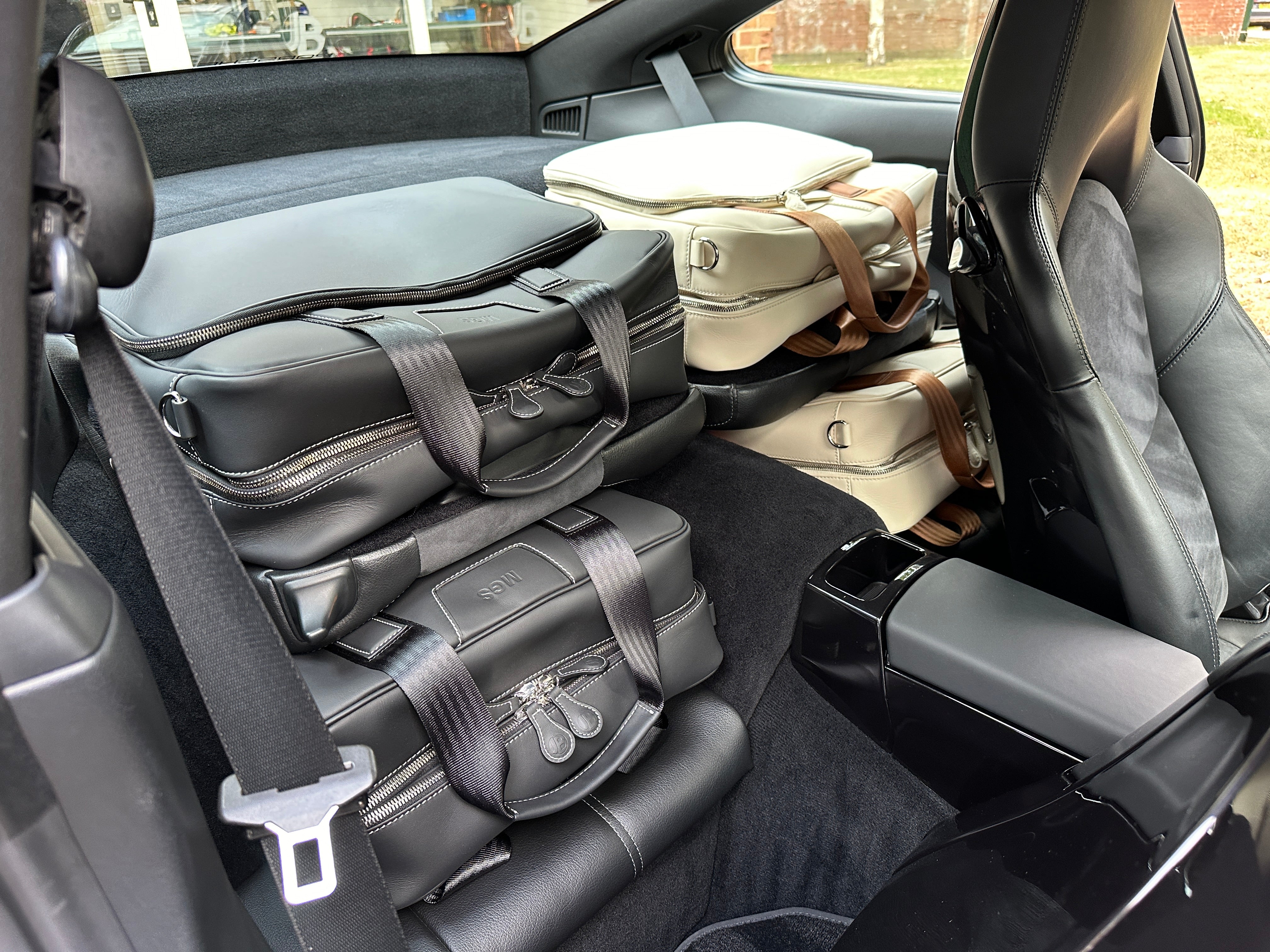
Take a grand tourer such as the Ferrari Roma or 812 Superfast. The owner may want a pair of holdalls, a garment carrier and smaller cases for watches, cables or driving essentials. In a mid-engined Ferrari, the brief often changes. Boot space is shallower, more sculpted and less forgiving, so each piece must be considered against actual dimensions rather than assumed capacity. Bespoke matters most when packaging must be exact.
That is the central difference between customisation and true commission. Adding initials to an off-the-shelf bag is a pleasant flourish. Designing a luggage set around the architecture of a Ferrari is a far more exacting exercise.
A refined Ferrari set starts with the car
Every serious commission starts by reading the car properly. Exterior paint, interior leather, contrast stitching, seat centre panels, Cavallino embroidery, carbon trim and even wheel finish can all inform the design language. The objective is not to copy every detail literally. That can become heavy-handed rather quickly. The aim is to create a family resemblance.
Imagine, for example, a set created for a Ferrari in Blu Tour De France with Cuoio leather interior. A sophisticated approach might use deep navy Tuscan leather as the principal material, with warm tan handles, clochette details and interior binding to pick up the cabin tone. Contrast stitching in a lighter tobacco shade could reference the seats without turning the bags into replicas of the upholstery.
Equally, a more assertive specification might suit a Rosso Corsa car with Nero interior and subtle yellow accents. Here, smooth black leather with restrained Rosso piping and a yellow micro-stripe in the lining may feel more elegant than making the entire set bright red. With Ferrari, restraint is often what separates taste from theatre.
Materials matter more than logos
Luxury luggage lives or dies by material quality. In this category, clients are not merely paying for a badge or a silhouette. They are paying for touch, ageing character and the confidence that every panel, zip and handle has been selected with intent.
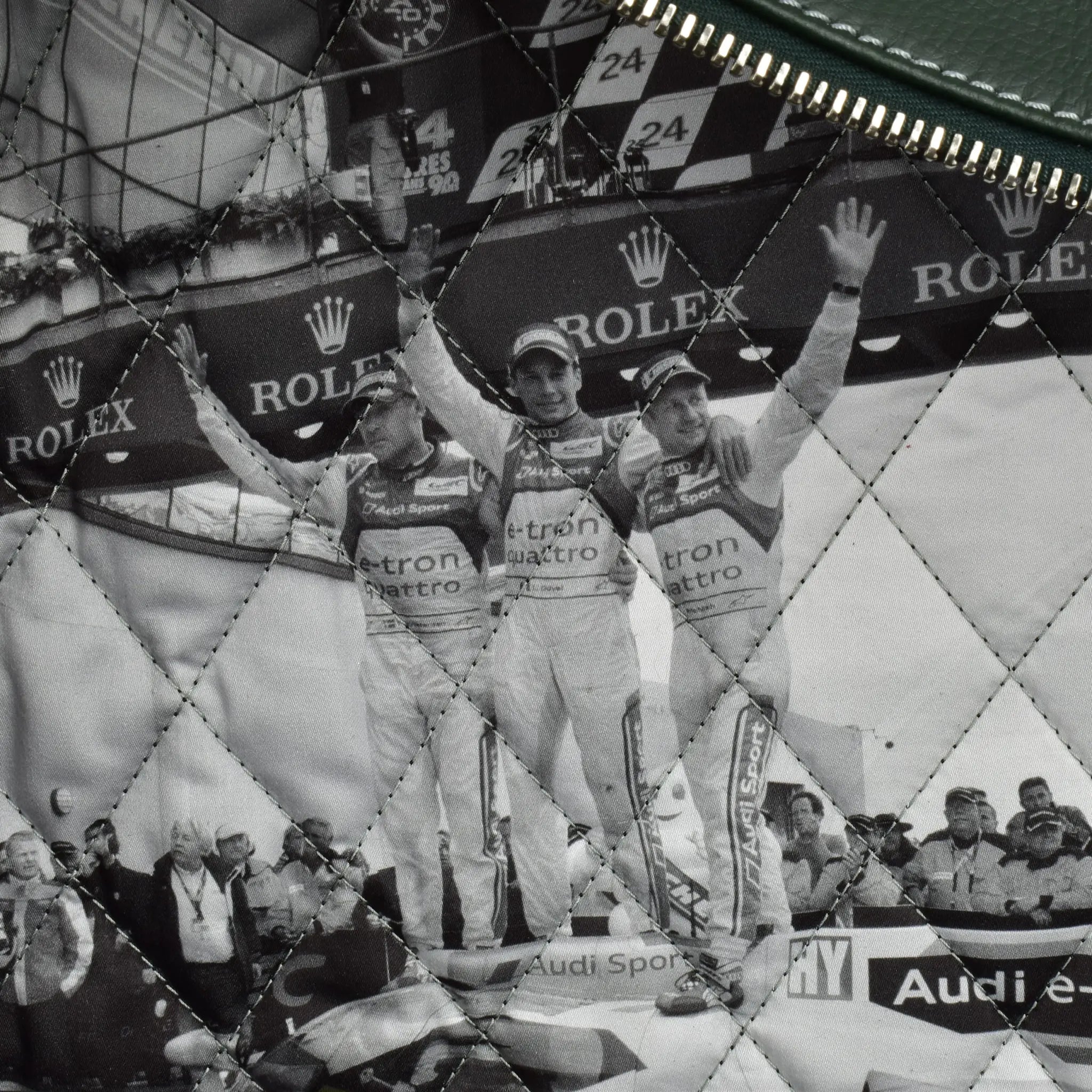
A strong bespoke Ferrari luggage set example would usually centre on full-grain leather, chosen for both suppleness and structure. Not every panel should be soft. Some areas require body to preserve shape over years of use, particularly larger holdalls and document cases. The lining deserves the same level of thought. Alcantara-style microfibre, quilted cotton, canvas or leather-lined compartments each create a different mood and practical benefit.
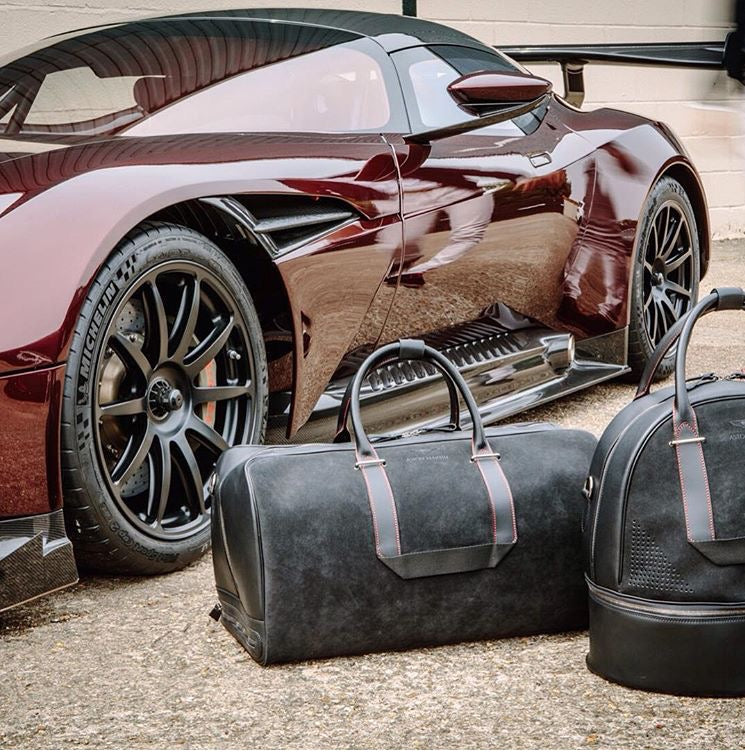
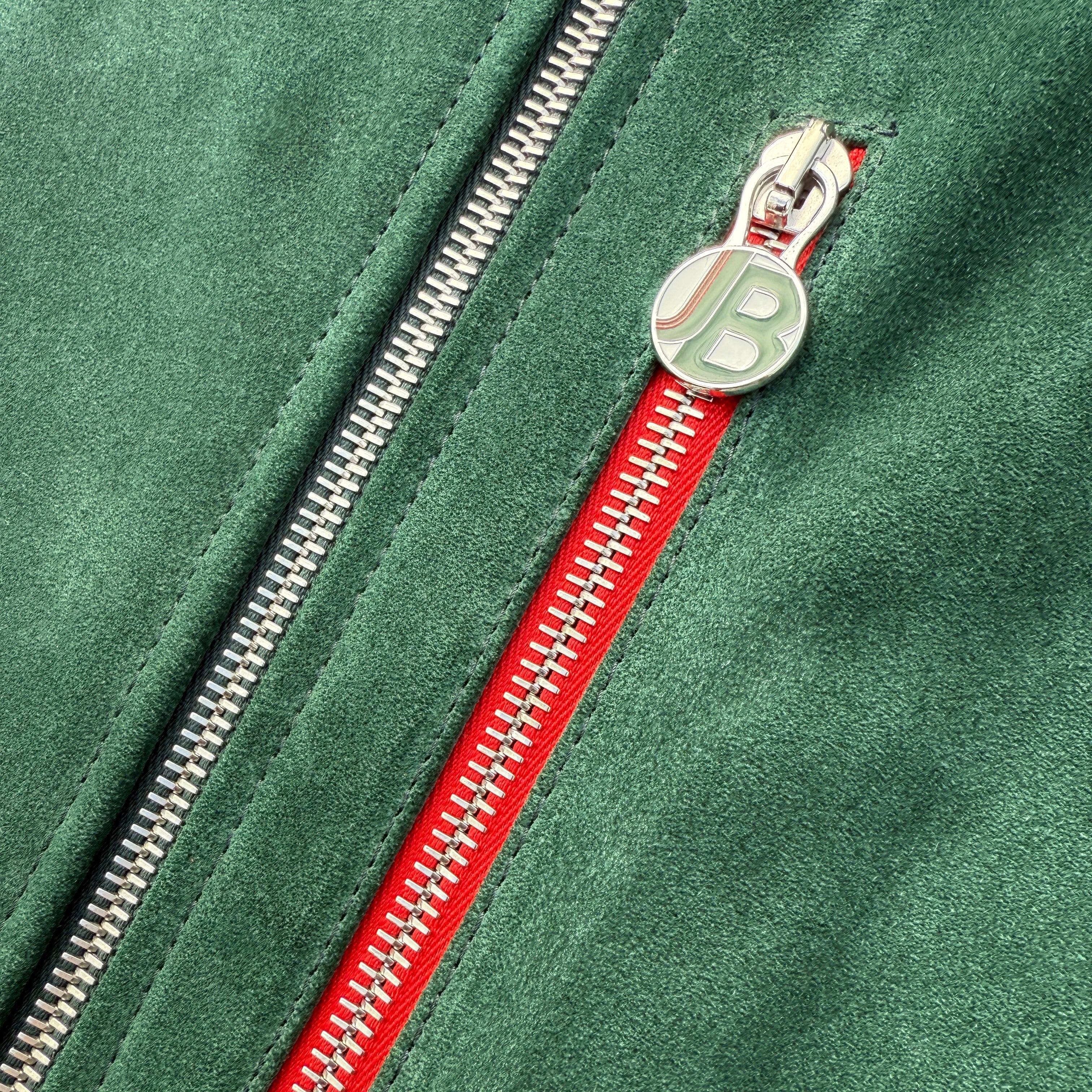
Hardware is another area where many luxury brands reveal compromise. For a proper commission, the finish should work with the broader palette. Brushed palladium, polished gunmetal or subtle matte black often feel more contemporary than bright gold. YKK Excella zips, hand-finished pullers and carefully reinforced corners are not decorative trivia. They are the details that make a case feel composed in the hand.
Bespoke Ferrari luggage set example: a four-piece commission
Consider a four-piece set commissioned for a Ferrari Roma used for weekend touring between London, the Cotswolds and the Continent. The owner wants luggage that fits the boot cleanly, carries easily into a hotel, and avoids the obviousness of overt branding.
The first piece is a structured weekender, broad enough for two nights away but not so deep that it wastes precious luggage volume. It is cut in navy vegetable-tanned leather with a gentle natural grain, finished with tan rolled handles and a detachable shoulder strap lined in nubuck for comfort. The base is protected with low-profile metal feet so it can be set down on stone forecourts and polished lobby floors alike.
The second piece is a matching companion holdall with a slightly lower profile, designed to sit beside the larger bag within the boot aperture. This one includes a dedicated compartment for driving shoes and a removable wash pouch. Such details matter because owners often travel in one pair of shoes and dine in another. A good commission anticipates behaviour rather than merely holding possessions.
The third piece is a slim garment carrier. This is where many luggage sets become awkward, because garment bags can look impressive but prove cumbersome in use. A better interpretation is a softly structured fold-over carrier for a tailored jacket, shirt and eveningwear essentials. It should remain elegant enough to carry into a private club or hotel without looking like airline paraphernalia.
The fourth piece is a small accessory case for watch rolls, charging cables, sunglasses and travel documents. In practice, this often becomes the most frequently used item in the set. It can be lined in a contrasting microfibre, perhaps in a shade drawn from the Ferrari seat inserts or brake calipers, adding a quiet moment of personality revealed only when opened.
Discreet personalisation completes the set: embossed initials beneath the handles, a hand-painted leather plaque inside each piece, and a custom lining motif inspired by a favourite Ferrari circuit or chassis detail. That last element is where craftsmanship becomes storytelling.
The balance between Ferrari inspiration and overstatement
There is always a question of how far to lean into marque cues. Some clients want clear motorsport references - racing stripes, numbered roundels, contrast panels and more visible insignia. Others prefer understatement, especially if the luggage will travel beyond automotive settings.
Neither instinct is wrong. It depends on the owner, the car and the intended use. A set for concours travel may justify stronger visual identity. A set intended for boardroom trips, villas and city hotels often benefits from greater discretion. The finest bespoke work respects both possibilities.
This is where an experienced maker earns their place. They know when to suggest a subtle nod rather than an obvious graphic. They understand that a particular shade of red thread or a hidden interior trim can say more than a large emblem across the front panel. Luxury, at this level, is often about confidence rather than volume.
Why fit and function still come first
Even in the rarefied world of bespoke leather goods, romance must meet reality. A luggage set that matches the car beautifully but is awkward to pack or unpleasant to carry has missed the mark. Owners who actually tour in their Ferraris know this immediately.
Weight is one practical consideration. Thick leather, metal trim and rigid construction can feel magnificent, but too much of each will make a case cumbersome. A good commission balances presence with usability. The same is true of internal organisation. Too many compartments can make a bag fussy; too few make it chaotic.
There is also the question of wear. Ferrari ownership is emotional, but luggage must cope with hotel porters, rain, tarmac, security trays and the occasional hurried departure. Natural materials should age beautifully, not collapse under normal use. That is why hand-making in Italy, where leatherworking traditions are deeply rooted, remains so compelling when executed to the right standard.
What makes a commission feel truly personal
The most memorable sets are not simply matched to a car. They are matched to a life. One owner may want a helmet bag and race day kit carrier to accompany track events. Another may need a pair of refined holdalls for Alpine weekends. A collector with multiple cars may commission a set that nods to Ferrari while remaining versatile enough to travel in an Aston Martin or Bentley too.
That is the beauty of bespoke. It allows room for exactness without forcing a formula. A house such as Jordan Bespoke understands that a client is not buying storage alone. He is commissioning symbols of individuality, crafted for life and shaped by the same instincts that led him to specify his car so carefully in the first place.
A fine Ferrari deserves more than luggage that merely fills its boot. It deserves pieces with proportion, purpose and character - objects that make sense the moment they are lifted from the car and carried onwards into the next part of the journey.