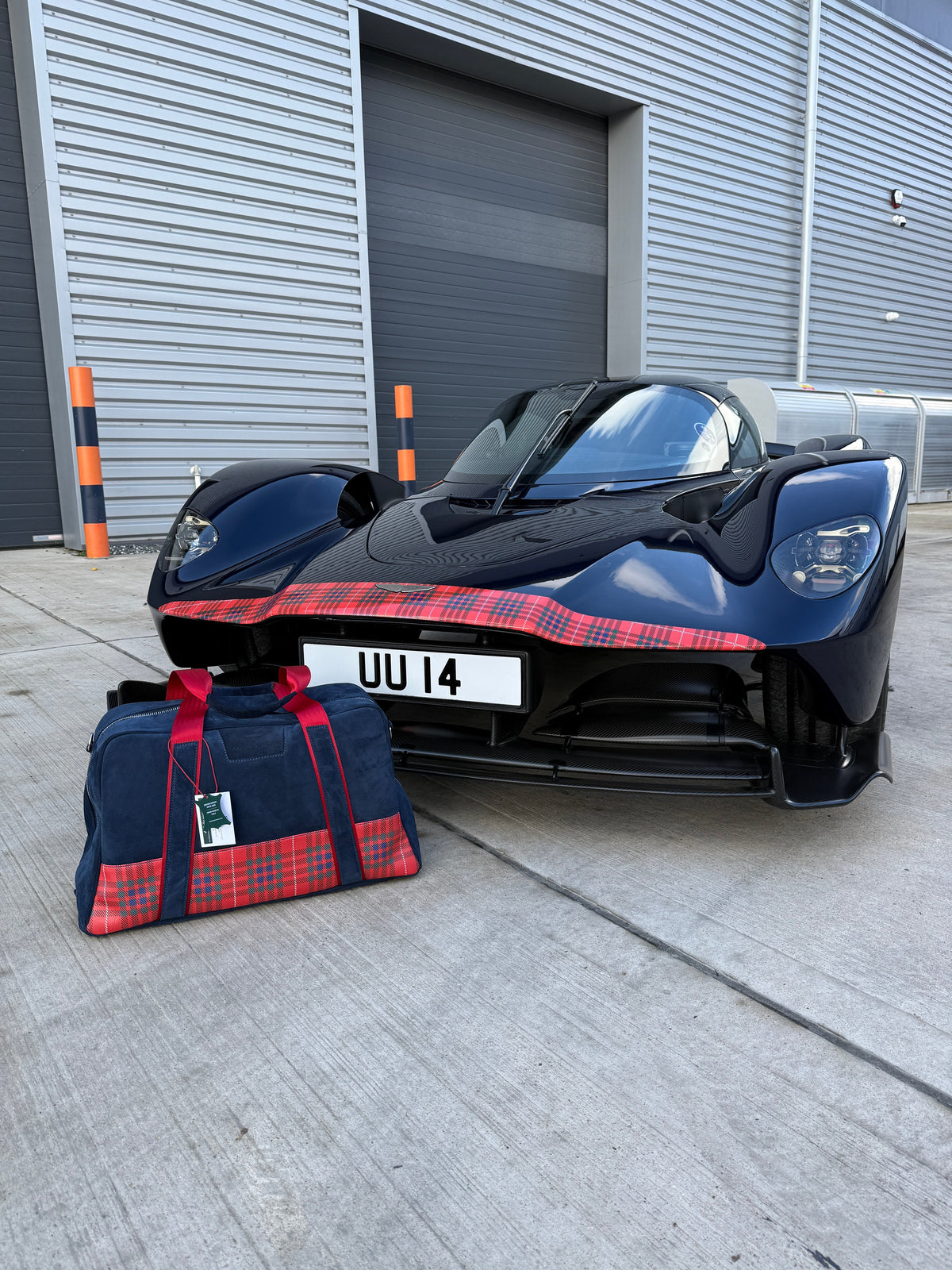


A weekend holdall should acquire the character of the journeys it has made: the hotel portico in the rain, the paddock before first light, the passenger seat of a much-loved grand tourer. That is why the question of full grain versus corrected leather deserves more than the usual shorthand of “best” and “lesser”. Both can be excellent materials when chosen for the right purpose, properly tanned and intelligently made.
For a discerning owner, the difference is not merely visual. It affects how a bag feels in the hand, how it responds to use, how it ages, and how precisely its surface can be matched to an interior, livery or personal commission. The right answer depends on whether you prize natural character, a highly controlled finish, exceptional consistency, or a balance of all three.
Full grain versus corrected leather: the essential difference
Full-grain leather retains the hide’s original outer surface, known as the grain. The leather is not sanded or buffed to remove natural marks, pores, wrinkles or subtle variations. It is usually selected from higher-quality hides because there is nowhere to disguise their character. Those small, individual signs of life are not faults in the luxury sense. They are evidence that the material is genuine, organic and unique.
Corrected leather, sometimes described as corrected-grain leather, has had the surface lightly sanded or buffed to reduce visible imperfections. A new grain pattern may then be embossed, followed by a protective pigment or finish. This creates a more uniform appearance from panel to panel and offers considerable scope for colour, texture and surface performance.
Neither description alone confirms quality. A beautifully tanned and skilfully finished corrected leather can be a more suitable choice than a poorly sourced full-grain hide. The meaningful question is how the material has been selected, tanned, finished and used within the design.
The character of full-grain leather
A fine full-grain hide has an immediate presence. Its surface may reveal delicate pores, tonal shifts and occasional healed marks, with no two pieces precisely alike. In a hand-made travel bag, this gives each panel its own identity, much like the variation in a natural wood veneer or a well-chosen piece of saddle leather.
Over time, full-grain leather can develop a rich patina. Handling darkens areas gently, oils from the hand settle into the surface, and the material becomes increasingly personal. For clients who see luggage as a companion crafted for life rather than a disposable accessory, this ageing is part of the appeal.
It also tends to breathe more naturally than heavily coated leather. Depending on the tannage and finish, it can feel supple and tactile rather than plasticky. A full-grain leather holdall in a deep tobacco, racing green or hand-finished navy can sit beautifully alongside a classic car interior, particularly where depth of colour and honest material expression matter more than perfect uniformity.
There are practical considerations. Full-grain leather may show scratches, scuffs and water spotting more readily, especially with an aniline or semi-aniline finish. These marks can often be softened through careful conditioning and use, but they are not always erased. That is precisely the point for some owners, and entirely unsuitable for others.
When full grain is the natural choice
Full grain is particularly compelling for a bespoke weekend bag, briefcase or leather accessory intended to age gracefully. It suits commissions where the client welcomes natural variation and wants the material to tell its story over years of travel.
It is also an excellent choice when the design calls for a restrained, timeless finish. The leather becomes the visual focus, rather than relying on an embossed pattern or a high-gloss coating to make its impression.
Why corrected leather has a place in luxury goods
Corrected leather is too often dismissed by people who equate visible natural grain with quality in every circumstance. That overlooks its strengths. When executed to a high standard, corrected leather offers a controlled, refined surface that can be remarkably practical for travel and automotive use.
The correction process allows a maker to achieve consistency across larger panels, which matters on a generously proportioned duffel, garment carrier or race-day kit bag. It can also make certain colours and finishes more stable and repeatable. If a client wishes to echo the precise shade of an upholstery hide, an exterior paint colour or a motorsport-inspired detail, the predictability of a corrected finish can be valuable.
Protective surface treatments usually make corrected leather more resistant to staining, moisture and everyday abrasion. For luggage that will pass through airports, sit in a boot, accompany regular business travel or be handled by others, that resilience is far from trivial. A well-made corrected leather can retain its composed appearance with less visible evidence of use.
The trade-off is that a heavily pigmented or heavily embossed finish may feel less natural and may develop less patina than full grain. It can also lack the visual depth that connoisseurs associate with the finest uncorrected hides. The key distinction is degree: a lightly corrected, beautifully finished leather occupies a very different category from the stiff, synthetic-feeling leather found on mass-produced goods.
Grain is only one part of the specification
Choosing leather by label alone is rather like judging a motor car by its engine capacity. It is relevant, but it does not reveal the whole experience. Tannage, thickness, temper, dyeing method, finish and construction all shape the eventual quality of a piece.
Vegetable-tanned leather, for example, is admired for its depth, firmness and capacity to age. Chrome tanning can produce an exceptionally supple, colourfast material suited to softer bags and complex constructions. Semi-aniline leather may preserve much of the hide’s natural feel while adding a modest protective layer. Pigmented leather provides stronger day-to-day protection and a more even presentation.
The intended use should guide the specification. A helmet bag needs a degree of structure, scuff resistance and a lining that protects both helmet and visor. A soft weekend holdall may benefit from a leather with fluid drape and a finish that feels inviting from the first journey. A briefcase often calls for a balance: enough body to hold its silhouette, enough resilience to remain impeccable in frequent use.
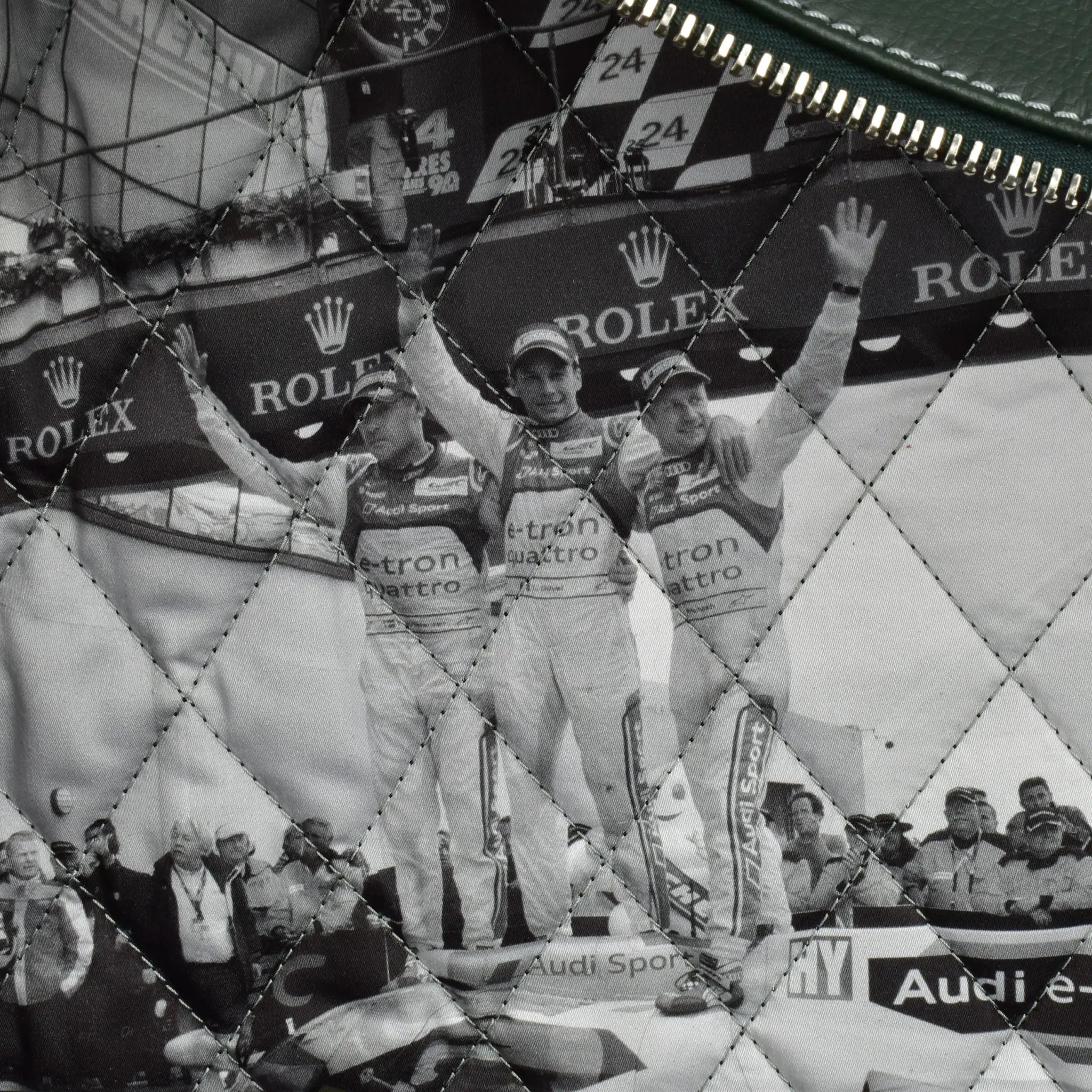
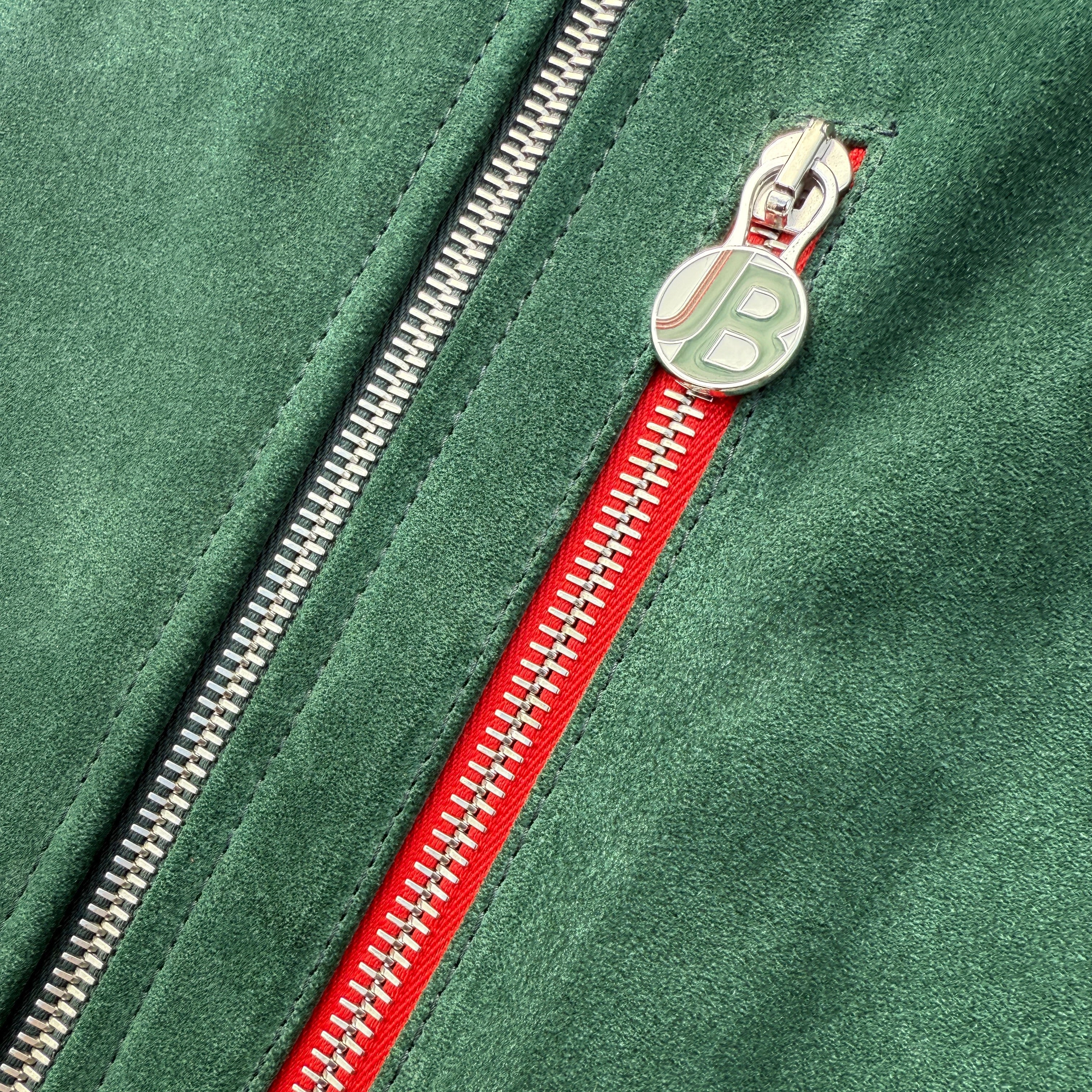
At Jordan Bespoke, this is where bespoke work becomes more meaningful than simply choosing a colour from a swatch. Leather, lining, hardware and construction can be considered as one composition. A particular hide may complement contrast stitching inspired by a car’s cabin, while another is better suited to a cleaner, more architectural form with polished hardware and YKK Excella zips.
How each leather performs over time
Full-grain leather generally rewards care with greater visual richness. Fine scratches may blend into the developing patina, and the surface can become softer and more individual. It asks the owner to accept change as a mark of ownership.
Corrected leather tends to remain visually consistent for longer, particularly where it carries a protective coating. It may be easier to wipe clean after travel and less likely to show minor scuffs immediately. Yet, if its finish is damaged deeply, repair can be more complex because restoring the original texture and pigment requires specialist work.
Neither material should be treated carelessly. Keep leather luggage away from sustained direct heat, dry it naturally if caught in rain, and avoid overfilling a bag until seams and panels are under needless strain. Use an appropriate leather conditioner sparingly, particularly on finished leathers, as excessive product can alter the sheen or leave residue. Storage also matters: support the bag’s shape, keep it dust-covered and avoid plastic, which can trap moisture.
Choosing for your own motoring and travelling life
Choose full grain when you want the leather itself to be the story. It is for the owner who values natural variation, enjoys patina and regards a well-earned scuff as part of a piece’s history. It is especially persuasive for heirloom-minded commissions, classic motoring and quieter, richly tactile designs.
Choose corrected leather when the brief demands a highly even surface, a specific colour match, greater resistance to daily marks, or a particular embossed texture. It is a considered option for frequent travellers, practical automotive pieces and designs where disciplined uniformity is central to the aesthetic.
Many of the finest collections need not choose one philosophy exclusively. A structured case may benefit from a refined corrected exterior, while a hand-held grip or small leather good can celebrate the natural grain of an exceptional hide. What matters is that the material serves the object, rather than being chosen to satisfy a label.
The finest luggage is not defined by how little it changes, but by how convincingly it remains yours. Select the leather that suits the journeys ahead, then allow exceptional craftsmanship to give it a life worth carrying.