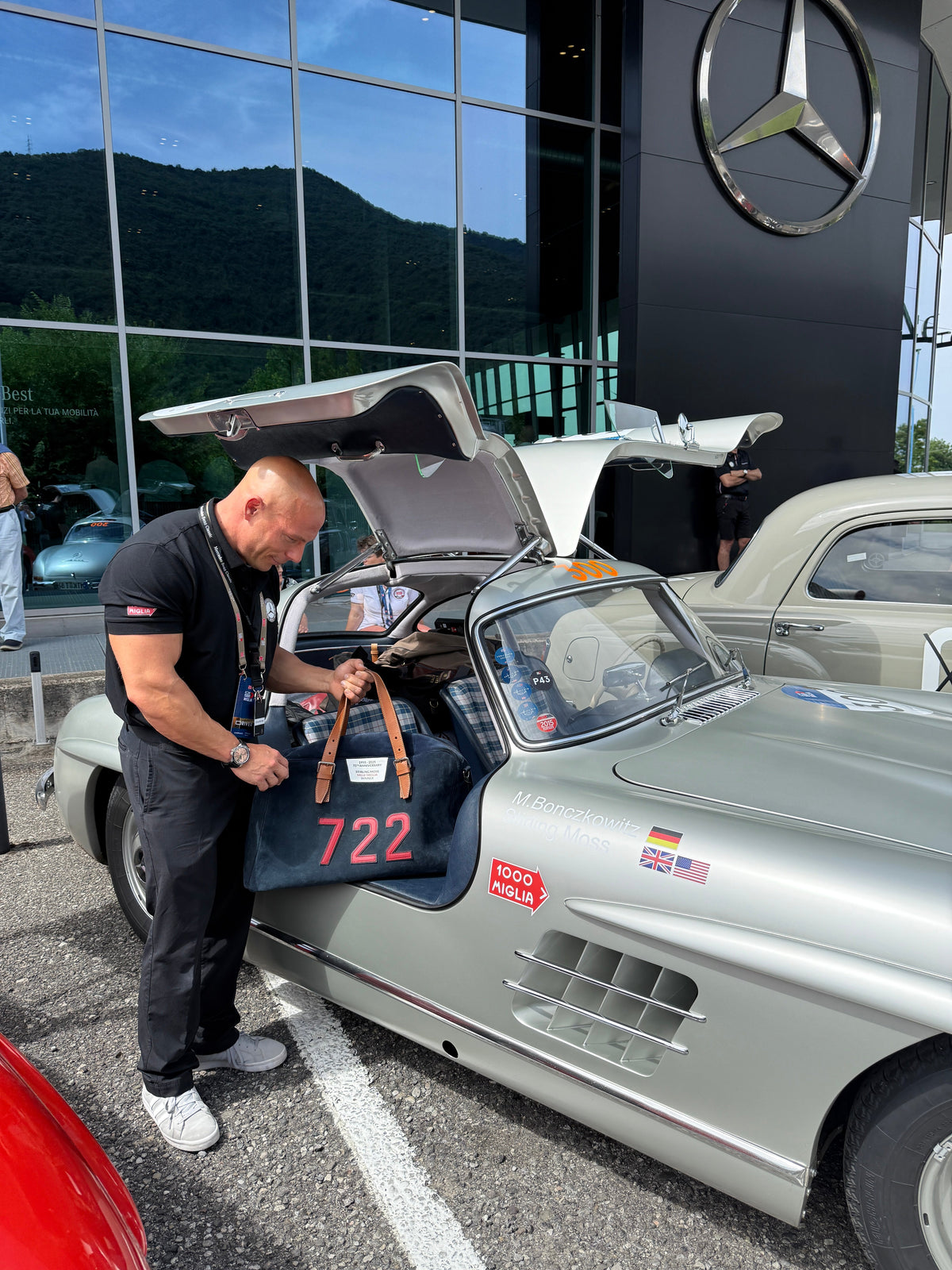


A great car is never merely a way of getting somewhere. It is a statement of taste, a record of decisions, and often the result of years spent refining every detail. Bespoke holdalls deserve the same consideration. They accompany the concours weekend, the early start for a continental drive, the race meeting and the hotel arrival, carrying not only what is needed but something of the owner’s character.
For the discerning motorist, the right holdall is not an afterthought purchased at the airport. It is a piece designed to sit naturally within a particular life: proportioned for a grand tourer’s luggage shelf, selected in materials that improve with use, and finished with details that hold personal meaning. That is where bespoke craftsmanship becomes more than decoration.
What makes a holdall genuinely bespoke?
Personalisation can be superficial. A set of initials stamped into an otherwise standard bag is pleasant, but it does not alter how the piece performs, feels or belongs to its owner. A genuinely bespoke holdall begins with a conversation about the person, the car and the journeys it will serve.
Its dimensions may be determined by a specific boot, rear shelf or luggage compartment. A compact two-seat sports car requires a different solution from a long-wheelbase grand tourer or a race support vehicle. The shape matters too. A lower, wider profile may use an awkward space far better than a conventional upright duffel, while a structured holdall can protect clothing and keep its form during a busy weekend away.
Material selection provides another level of authorship. Full-grain Tuscan leather offers depth, natural character and a patina that becomes increasingly individual over time. Suede linings bring a softer, more intimate quality to the interior, while performance textiles or aerospace-grade materials can be a considered choice for clients who favour a lighter, more technical expression. There is no universal answer. The best combination depends on whether the bag is intended for regular road trips, occasional aviation travel, paddock use or display alongside a collector car.
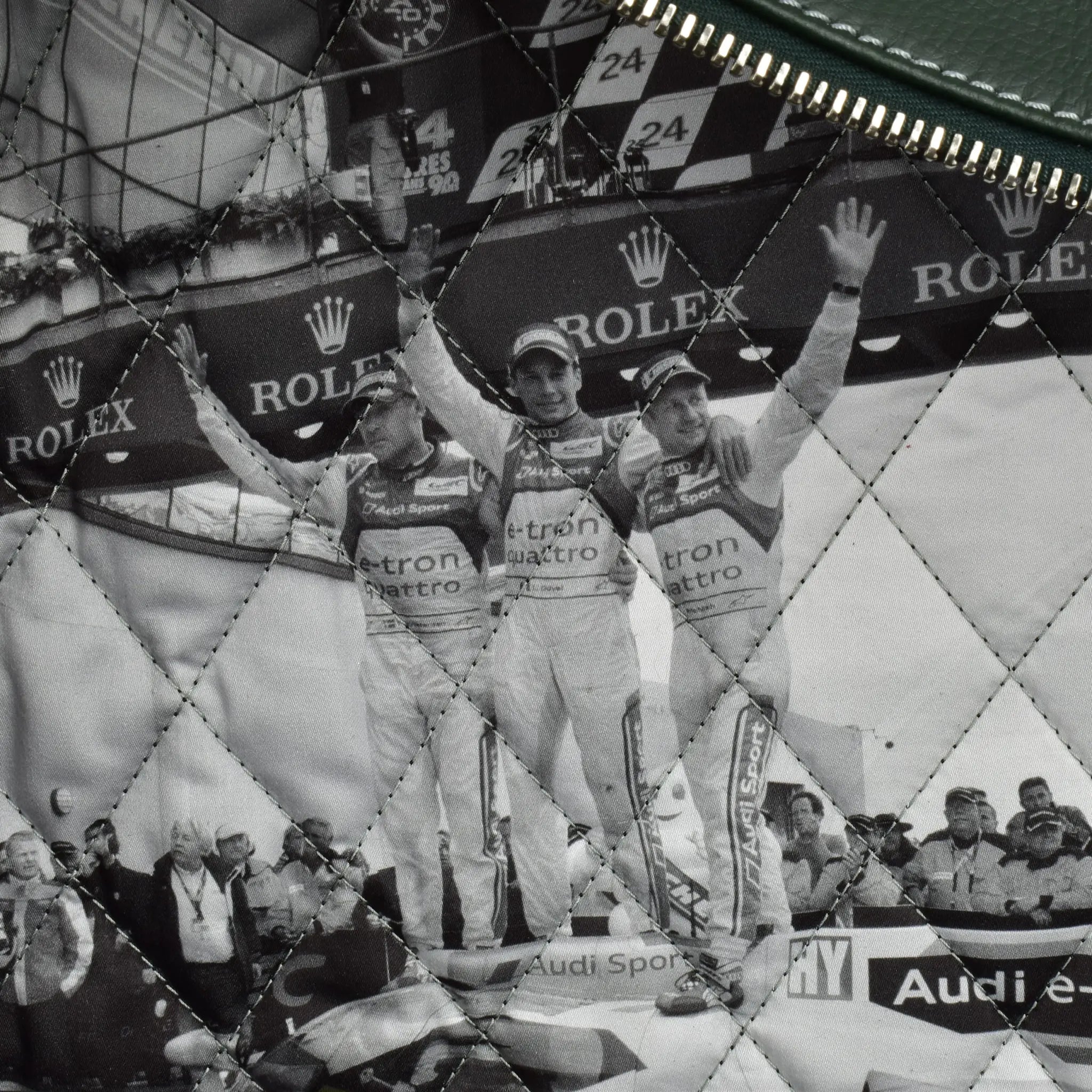
Then come the details that make the piece unmistakably yours: contrast stitching inspired by a cabin, leather piping that echoes a body colour, a lining drawn from a favourite racing livery, hand-painted edges, discreet embroidery or a commissioned plaque. These choices should feel integrated rather than theatrical. The strongest bespoke work rewards a closer look.
Bespoke holdalls and the art of proportion
In luxury design, proportion is often what separates an object that looks expensive from one that feels resolved. A holdall should be substantial enough to carry a weekend wardrobe, yet controlled enough to move easily from garage to hotel reception. Overly large bags become cumbersome when full. Undersized ones force awkward compromises, particularly where driving shoes, knitwear or a change of clothes for an evening engagement are concerned.
For a typical weekend away, the ideal capacity depends on how one travels. A relaxed country escape may call for roomier soft-sided construction and an adaptable interior. A one-night city stay can suit a more compact, architectural form. For road rallies or race weekends, organisation takes priority: separate compartments for footwear, wash kit, chargers and documents prevent the familiar scramble at the bottom of an unstructured bag.
Handles deserve equal attention. They must sit comfortably in the hand when the bag is full, with a drop length that works over the shoulder when required. A removable shoulder strap is useful for terminals and long paddock walks, although some clients prefer the cleaner silhouette of hand carry alone. Such decisions are not minor specifications. They determine whether a holdall remains a pleasure to use years after it is commissioned.
Materials that gain character on the road
The appeal of fine leather lies partly in its response to life. Unlike synthetic surfaces designed to remain visually unchanged, excellent leather develops a record of use. Gentle creasing, a deepening of tone and a softened handle are not flaws. They are evidence of journeys made.
That said, leather must be chosen honestly. A softer hide can deliver a wonderfully relaxed appearance, but may show marks more readily. A firmer, more structured leather offers greater shape retention and may be the better choice for frequent travel. Pebble-grain leathers are often practical for use around cars, hotels and air travel, while smooth calfskin has a more formal presence but asks for a little more care.
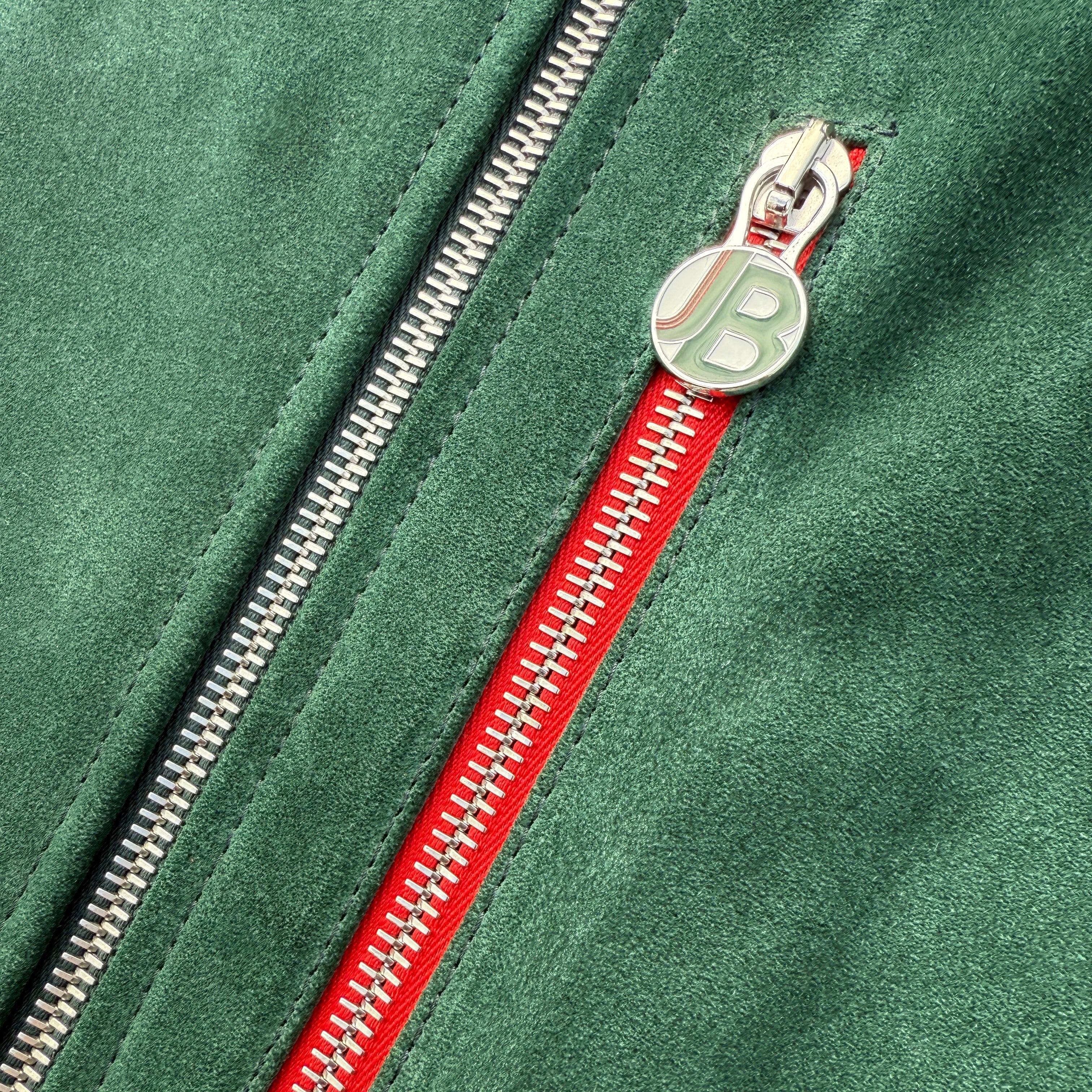
Hardware is another quiet marker of quality. YKK Excella zips are valued for their weight, polish and dependable action, particularly on a holdall that will be opened and closed repeatedly. Solid metal feet can protect the base when placed on a garage floor or luggage trolley. Thoughtful reinforcement at corners and stress points ensures the bag is prepared for genuine use rather than a life spent on a shelf.
A well-made holdall should not be precious. It should be respected, conditioned occasionally and protected from unnecessary exposure to rain or harsh surfaces, but it should also be taken on the trip. Craftsmanship proves itself in the real world.
Designing around a car, without becoming novelty luggage
Automotive references are powerful when they are handled with restraint. The objective is not to turn a holdall into a piece of branded merchandise. It is to create a connection that an owner recognises instinctively.
A cabin-inspired colour pairing can be more enduring than an obvious logo. The warm tan of a vintage grand tourer, a deep oxblood associated with a cherished interior, or a precise shade of racing green can set the direction for leather, stitch and lining. A motorsport client might choose a contrasting stripe concealed beneath the zip, a race-number detail inside the bag, or lining colours that recall a significant season. These are private signatures, not visual noise.
There are occasions when a direct vehicle match makes perfect sense. A commissioned luggage set for a newly restored classic, a car-specific pair of weekend bags, or an anniversary gift for a collector can justify exact colour matching and special dimensions. Yet even here, balance is essential. The luggage should complement the car’s design language, not compete with it.
Jordan Bespoke approaches this process with the same respect for individuality found in coachbuilding and Savile Row tailoring: the client’s story informs every decision, while Italian hand-making gives those decisions enduring form.
The details worth discussing before commissioning
Before selecting colours, begin with purpose. How many nights will the holdall usually cover? Will it travel primarily by car, train or aircraft? Does it need to fit a particular luggage space? Will it carry a helmet, driving shoes or race-day kit alongside clothing? Clear answers lead to a piece that serves its owner rather than simply photographs well.
It is also worth deciding how formal the bag should feel. A highly polished leather holdall with tonal stitching may work beautifully with tailoring and a luxury hotel setting. A more relaxed grain, contrast thread and technical lining may be better suited to regular driving events. Neither is inherently superior. The right choice is the one that reflects the rhythm of its use.
Inside, considered organisation is more valuable than excessive compartmentation. A secure zipped pocket for valuables, a dedicated sleeve for a tablet or documents, and a washable section for shoes can be useful. Too many fixed divisions, however, reduce flexibility and make a holdall harder to pack. Bespoke should mean deliberate, not overdesigned.
A piece made to travel with you
The most satisfying bespoke holdalls are not defined by their price, badge or the number of custom options selected. They are defined by recognition: the sense that no off-the-shelf bag could have been quite right after this one was made.
Choose the leather you will enjoy touching, the proportions your journeys require and the details that speak quietly to your automotive life. Then give the bag the purpose it was made for: load it, take the long route, and allow every mile to add to its story.