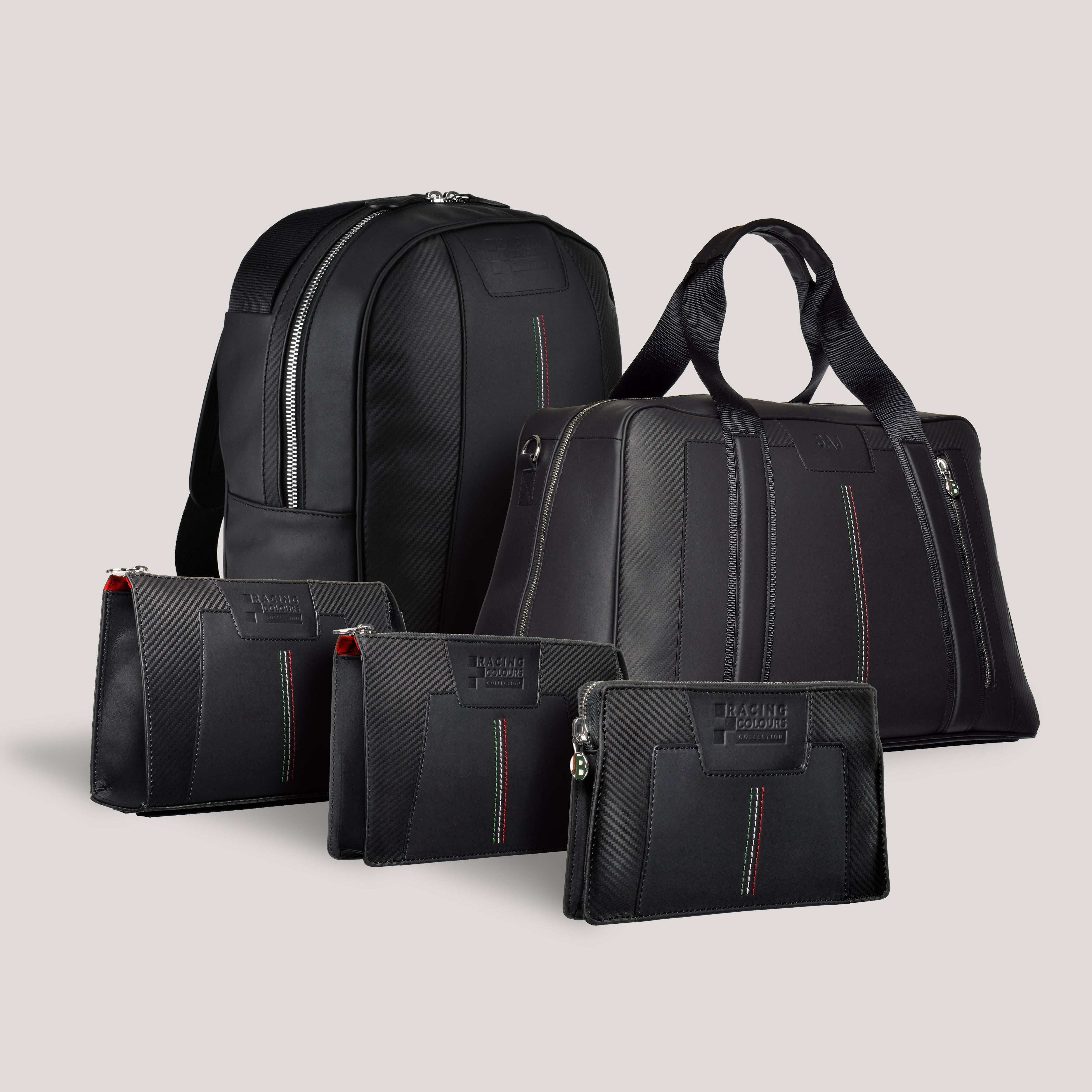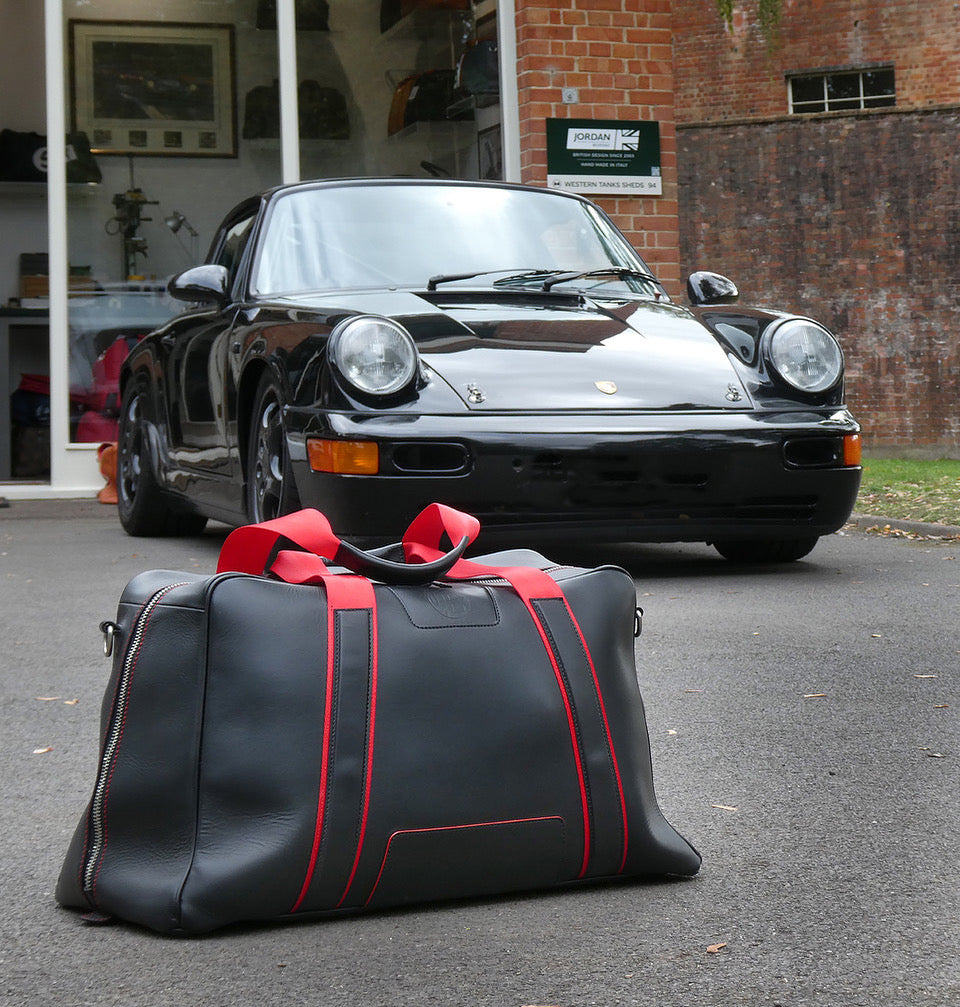


A beautifully specified cabin has its own language: the grain of the leather, the restraint of the stitching, the cool precision of metal switchgear. So, can leather bags match car interiors without becoming a novelty? Absolutely - provided the bag is treated as a considered part of the ownership experience, not as an attempt to reproduce every surface in the vehicle.
For the discerning driver, luggage is often the first object lifted from the boot on arrival at a country hotel, race circuit or weekend retreat. It should feel at home beside the motor car that carried it there. The strongest pairings share a design vocabulary: material integrity, proportional discipline and details chosen with purpose.
Can leather bags match car interiors naturally?
They can, but an exact replica is rarely the most elegant answer. A cabin and a holdall perform different roles. Automotive leather must withstand years of heat, sunlight, friction and cleaning; bag leather needs to age handsomely, hold its shape and feel supple in the hand. The aim is not duplication. It is harmony.
Begin with the character of the interior. A grand tourer trimmed in tobacco hide, dark walnut and brushed metal invites a different response from a lightweight sports car with black Alcantara, carbon fibre and contrasting harness-inspired stitching. One may suit a warm, full-grain leather weekend holdall with antique brass-toned hardware. The other may call for a more technical expression: charcoal leather, graphite hardware and a restrained flash of the cabin’s accent colour.
The connection may be direct, using a closely matched hide, or more subtle. A bag in deep navy can sit beautifully with a saddle-tan interior when its lining, piping or hand stitching picks up the warm tone. That measured approach often has more longevity than trying to match an unusual shade precisely.
Start with the interior’s dominant materials
Colour is the obvious starting point, but it is not the only one. The visual weight of leather, suede, woven fabric, carbon fibre and metal matters just as much. A pale cream interior paired with an equally pale travel bag can look refined, yet it demands confidence and care. Lighter leather marks more readily in real travel conditions, particularly around airport floors, luggage compartments and damp paddocks.
Darker bags are usually the pragmatic choice for frequent use. Black, racing green, oxblood, tobacco and midnight blue are capable companions for most prestige interiors, and they develop character with use. If a client wishes to echo a lighter cabin, a dark exterior with a lighter lining offers a more protected and private reference.
Texture deserves equal attention. Smooth semi-aniline leather has a clean, contemporary presence and works particularly well with modern cabins. A naturally tumbled hide introduces softness and depth, making it a compelling partner for heritage-inspired cars. Suede or Alcantara details can be exceptional when used sparingly, perhaps on a grab handle or interior panel, but they are less forgiving in wet weather and require more attentive care.
Match the mood, not just the shade
Two leathers can share a colour yet still clash. A high-gloss, corrected-grain bag may look out of place beside an interior finished in open-pore wood and richly natural leather. Equally, a deliberately rustic bag can undermine the crisp architecture of a contemporary performance car.
Think in terms of finish. Is the vehicle formal or sporting? Understated or extrovert? Is it a car designed for long continental miles, spirited Sunday drives or the ritual of a race weekend? The bag should answer those questions with the same clarity as the car’s specification.
A British racing green exterior with a biscuit interior does not require green luggage. A biscuit or chestnut holdall with green lining, hand-painted edging or a discreet stripe can feel more assured. For a car with vivid contrast stitching, a single echo in the bag’s thread or zip pull is usually enough. Repeating every visual cue risks turning a personal commission into costume.
Details that create a credible connection
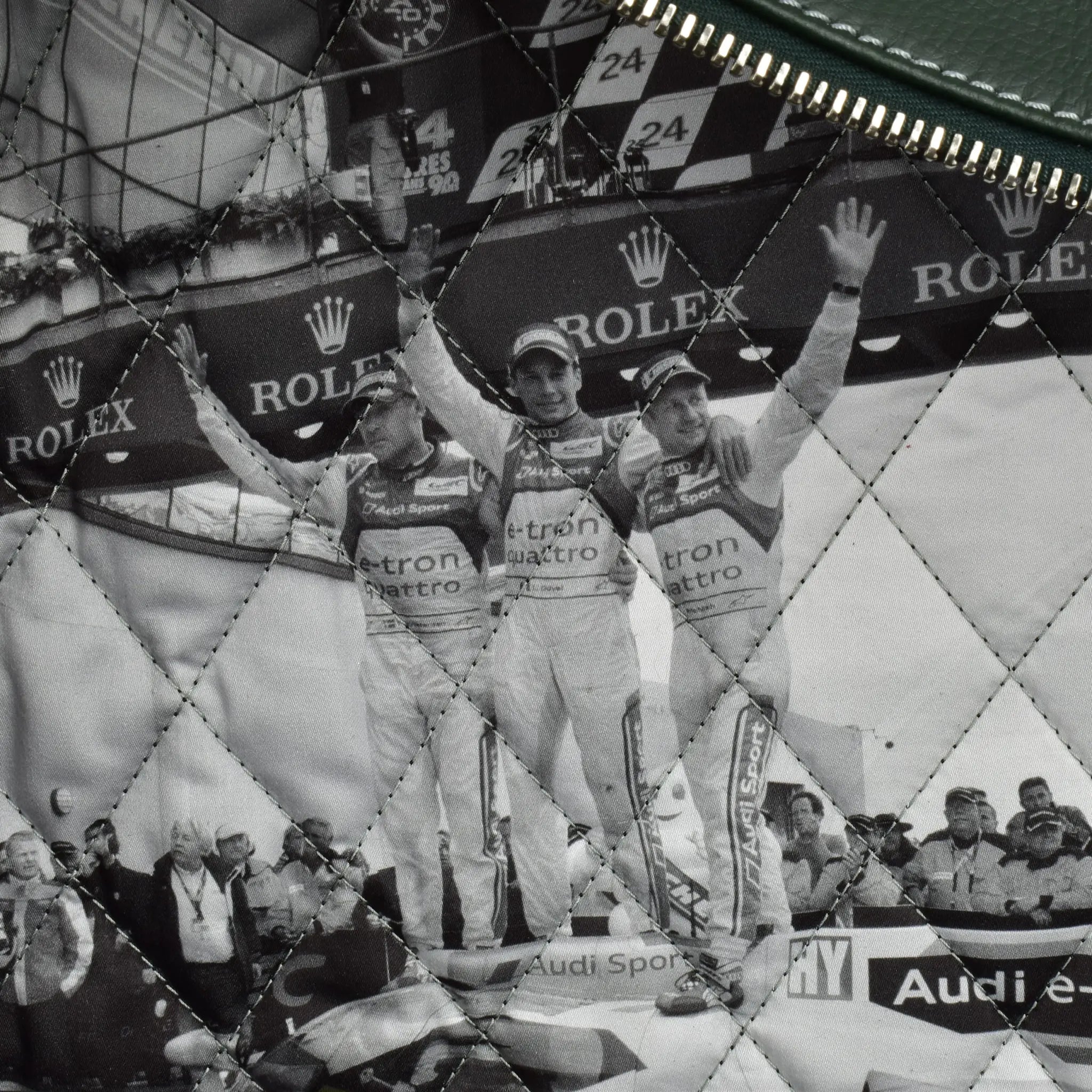
The finest matches are often found in the details a casual observer might miss. Stitching can reflect the thread colour used on seats or steering wheel, while the choice of piping can reference a seat insert, door pull or exterior paintwork. A custom lining may carry a much bolder colour than the exterior, making the relationship personal rather than performative.
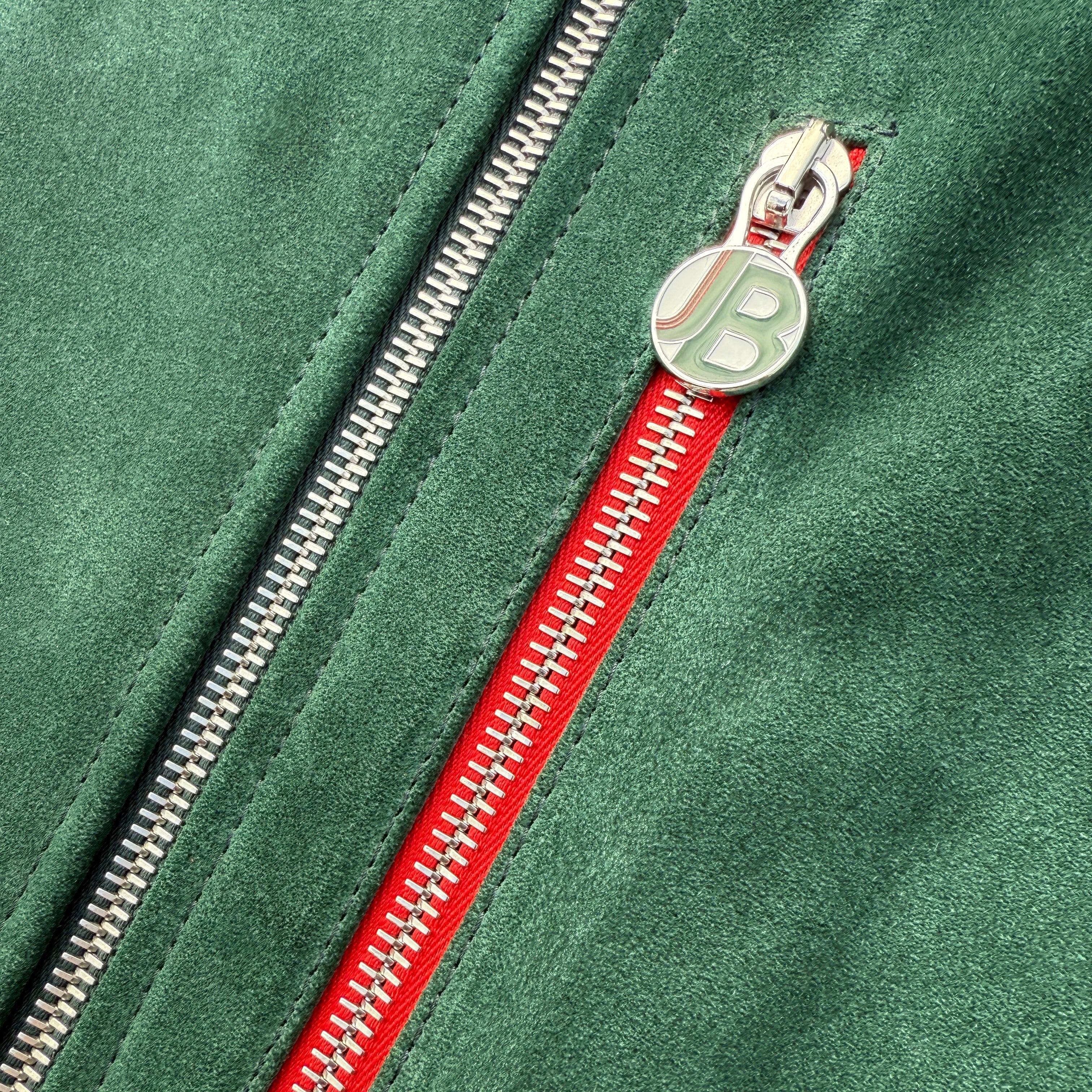
Hardware is another useful bridge. Polished nickel, satin black, antique brass and gunmetal each alter the bag’s character. Selecting hardware that converses with the cabin’s switchgear, wheel centres or brightwork brings coherence without forcing a literal match. Premium components also matter functionally. A precisely engineered zip, such as a YKK Excella zip, has the tactile authority expected of a bag made to travel with an exceptional motor car.
Personalisation should be handled with the same restraint. Initials, a race number, a significant date or a discreet embossed motif can give a piece genuine meaning. A period-correct roundel or a reference to a family racing story may be fitting for an enthusiast whose car has a known competition connection. A large logo applied simply because space permits is less likely to endure.
Consider the car’s practical realities
A bag must fit the motor car as well as visually complement it. Luggage spaces in performance cars can be surprisingly particular: shallow openings, sculpted sides, narrow loading lips and reduced height beneath a parcel shelf. A bespoke piece is valuable not merely because it is exclusive, but because it can be proportioned around these constraints.
For a weekend away, one well-shaped holdall may be more useful than a conventional suitcase. It can conform slightly to the contours of a boot and is easier to lift through a restricted aperture. For race days, a helmet bag and kit bag should protect their contents while remaining easy to carry across a busy paddock. A garment carrier makes sense for formal events or business travel, particularly when the driver wants tailoring to arrive with the same composure as the rest of the journey.
The trade-off is clear. Very soft leather offers flexibility but may provide less structure; heavily structured luggage holds its line but can be less accommodating in an irregular boot. The right answer depends on the vehicle and the owner’s use of it. A bag commissioned for a classic coupé, for example, may need different dimensions and protective features from one intended for a modern grand tourer.
Why bespoke is different from colour matching
Bespoke luggage has a deeper purpose than choosing leather swatches. It allows an owner to translate the care invested in a car specification into an object used beyond the driver’s seat. The process can bring together exterior paint references, interior leather, contrast details, preferred hardware and the practical dimensions of the luggage compartment.
That does not mean every bag must be tied to one car forever. The most successful commissions retain enough independence to travel well in other settings. A rich navy carryall with a specific tan lining, for instance, may complement a particular cabin while remaining entirely appropriate beside a private aircraft seat, in a hotel lobby or on the back seat of another vehicle.
This is where craftsmanship earns its place. Hand-made Italian production, carefully selected Tuscan leathers and considered construction create a piece that becomes more individual with each journey. It should develop a patina rather than simply show wear, much like a well-driven motor car with a story behind it.
Jordan Bespoke approaches this relationship as a dialogue between machine, material and owner. The goal is never luggage that shouts for attention. It is luggage that feels inevitable: made for the discerning individual, crafted for life, and ready for the next road, circuit or crossing.