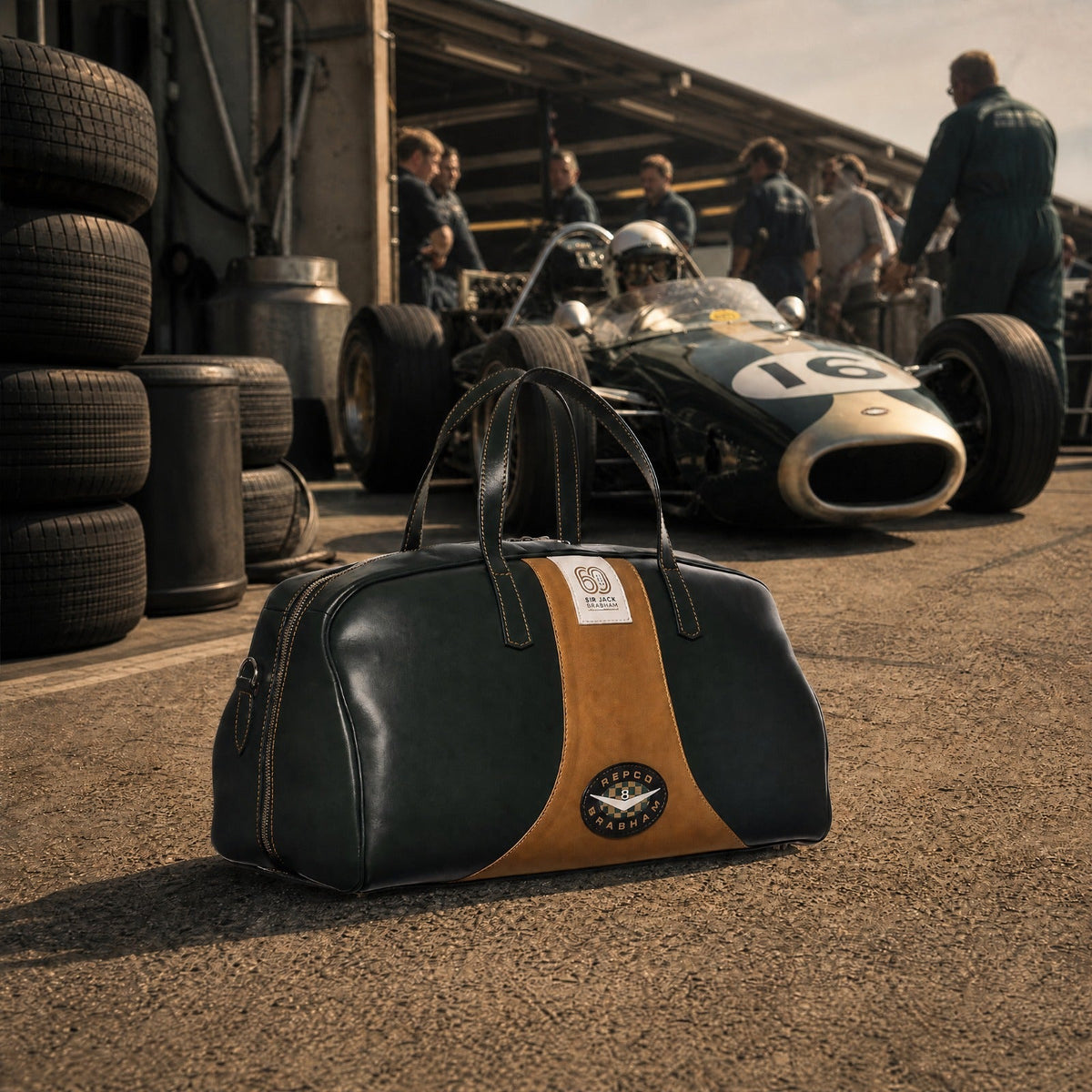


The best racing luggage earns its place long before the paddock gates open. It carries a race suit without crushing it, protects a helmet from careless handling, keeps documents and electronics to hand, and looks entirely at home beside a well-prepared motor car. For the discerning driver, it should feel less like generic travel equipment and more like part of the ritual.
A race weekend asks rather more of a bag than an ordinary overnight stay. There are early starts, weather changes, scrutineering paperwork, damp kit after a session and the persistent need to move quickly between garage, hospitality and hotel. The right luggage brings order to that movement while expressing the same judgement applied to the car itself.
What makes the best racing luggage different?
Racing luggage is defined by purpose, not by a chequered-flag motif. A fine holdall must be generously proportioned yet disciplined in shape, capable of taking clothing, shoes, casual layers and wash kit without becoming an awkward, overstuffed burden. It should travel well in the boot of a GT car, sit neatly in a motorhome locker or accompany its owner through an airport lounge without sacrificing its character.
Materials matter because they change how a piece lives over time. Full-grain leather develops a rich patina from miles travelled and weekends remembered. It also has structure: a properly made leather holdall retains its presence rather than collapsing around its contents. This is particularly valuable when luggage is stowed alongside helmets, race equipment or valuable clothing.
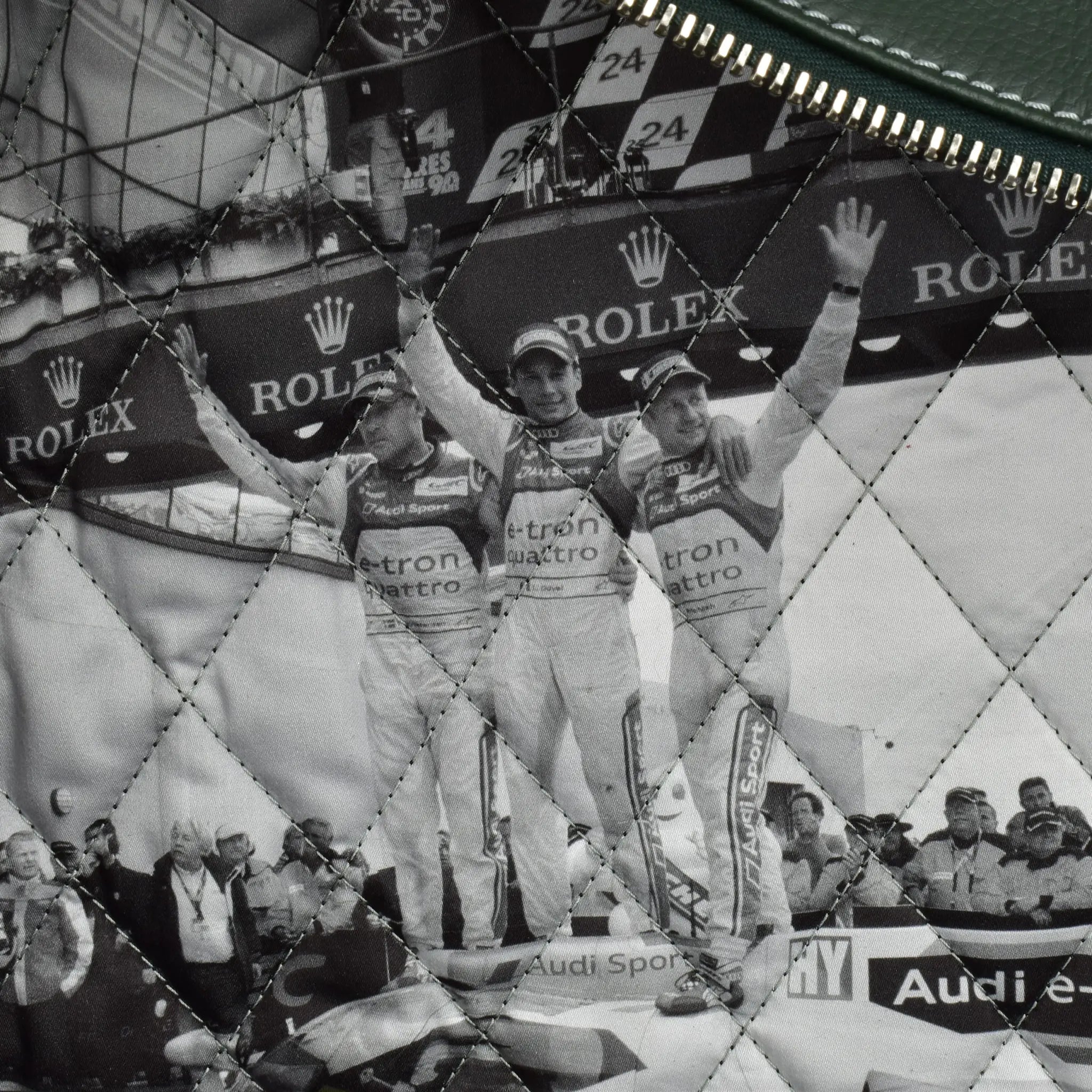
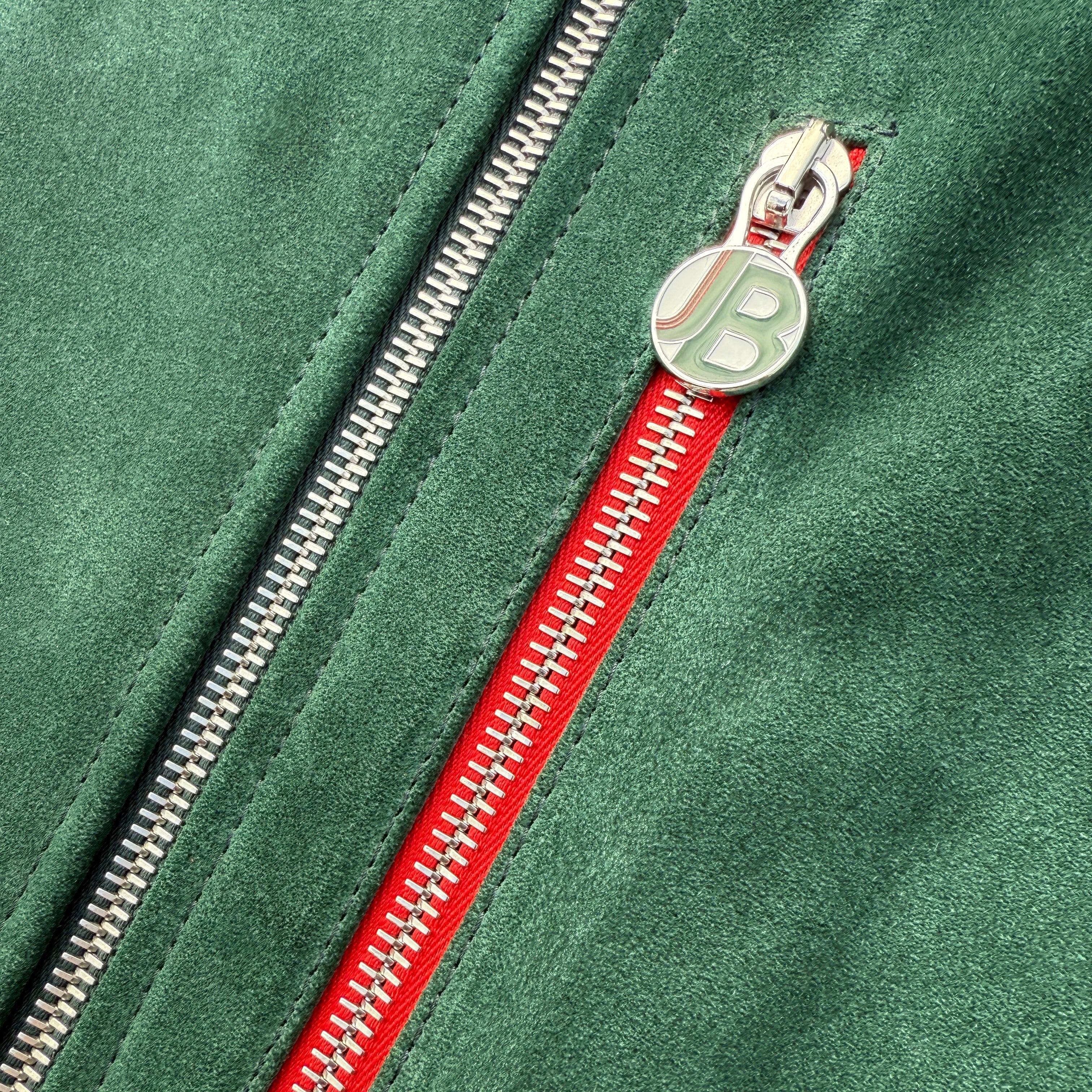
Yet leather is not the only consideration. Race-day bags benefit from purposeful linings that tolerate the realities of motorsport, reinforced bases that can meet a damp garage floor, and hardware selected for repeated use. A YKK Excella zip, for example, has the reassuring action and durability expected of an object made to be handled often. The best pieces combine this engineering with restraint. They do not need to shout about their quality.
Capacity should follow the weekend
There is no single correct size. A one-night track day may require a compact carryall with room for a change of clothes, trainers, waterproof layer and documents. A three-day historic meeting, particularly one involving dinners or hospitality, calls for a larger weekend holdall that can accommodate more than driving kit alone.
The mistake is buying purely by litre count. Consider the objects that need their own shape and protection. A race suit folds differently from knitwear. Driving shoes should not be pressed against a freshly laundered shirt. A watch roll, tablet, sunglasses and vehicle papers deserve a secure internal pocket rather than a loose corner of the main compartment. Good internal organisation is quiet but transformative.
Choose luggage around the equipment you actually carry
The most useful racing luggage is usually a considered set rather than one oversized bag. It allows each item to do its job, avoids unnecessary bulk and brings a sense of order to a busy departure.
The weekend holdall
The holdall is the foundation of the collection. Look for a wide opening, comfortable leather handles and a removable shoulder strap for longer walks through a circuit or station. A structured base is worth having, particularly if the bag will spend time in garages or paddocks. It prevents clothing from settling into a heap and helps the holdall keep its silhouette.
For drivers who travel in a sports car, exterior dimensions deserve close attention. The most capacious bag is not necessarily the most useful if it fights the contours of the boot. Bespoke luggage has a particular advantage here: dimensions can be considered around the car, not merely around a standard production pattern.
The helmet bag
A helmet is both essential safety equipment and a personal object. It should not travel loose, nor should it be placed in a thin drawstring bag that offers little defence against knocks, zips and other luggage. A dedicated helmet bag with padded construction, a soft lining and a substantial zip protects the finish while making transport far easier.
Ventilation is useful after a demanding day, but it must be balanced against dust and rain. If you regularly carry a communications system, HANS device or spare visor, choose a helmet bag with enough capacity to avoid pressure on fittings. A close, elegant fit is desirable; compression is not.
The garment carrier
For many race weekends, the garment carrier is the overlooked essential. Whether it holds a tailored jacket for an evening event, team apparel or a spare suit, it avoids the creasing that comes from forcing formal clothing into a conventional bag. The finest examples fold intelligently for travel but open to provide enough length for proper garment care.
A garment carrier is especially worthwhile for those who move between a circuit and a city hotel. Motorsport may be the reason for the journey, but the weekend often extends beyond the garage. Luggage should be able to make that transition with the same assurance as its owner.
The smaller cases
A compact tech case, wash bag or document wallet brings calm to the details. These are not indulgent additions when they prevent chargers tangling with timing transponders, or keep driving licences and insurance documents accessible at the moment they are needed. Smaller leather goods are also where personalisation becomes especially satisfying: a contrast lining, discreet initials or a colour drawn from a car's interior can turn a practical object into something unmistakably personal.
Craftsmanship is felt in the details
Luxury luggage should not be judged by leather alone. Examine the way handles are attached, the precision of the stitching, the quality of edge finishing and the firmness of the bag's structure. These details determine how a piece will feel after years of lifting, packing and travelling.
Handcrafted Italian production remains compelling because skilled makers understand tension, proportion and material behaviour. Leather must be cut with grain direction in mind. Handles need reinforcement that does not look heavy. Corners should be protected without becoming clumsy. The result is not simply visual polish; it is longevity built into the form.
Colour also deserves more consideration than the usual black-or-brown decision. Deep racing green, oxblood, tobacco, navy and charcoal each age beautifully, while a contrasting interior can echo a favourite cabin trim, racing stripe or team colour. The key is discretion. The most enduring commissions make a private reference rather than an obvious statement.
At Jordan Bespoke, this approach draws on British automotive culture and Italian hand-making, allowing a luggage collection to be specified with the same care as a cherished motor car: leather, lining, stitching, hardware and personal details chosen as a coherent whole.
When bespoke racing luggage is worth it
Ready-to-own luggage is an excellent choice when you want proven proportions, immediate availability and an established design language. It suits the enthusiast who knows what they need and values the confidence of a finely resolved object.
Bespoke becomes compelling when the requirements are more specific. Perhaps your helmet, HANS device and radio gear need to travel together. Perhaps a particular car has an unusually shaped luggage compartment. Or perhaps you want luggage that quietly reflects a restoration, a significant race season or a long-held family connection to a marque.
The trade-off is time. Properly bespoke work requires discussion, material selection and patient making. That is precisely the point for clients who value things crafted for life. It replaces the cycle of replacing adequate bags with the pleasure of commissioning something with a lasting place in the journey.
Care for luggage as you would the car
Good racing luggage is designed to acquire character, but it still deserves sensible care. Empty it after each event, especially if damp clothing or shoes have been carried. Wipe away surface dust before it settles into the leather, allow the bag to dry naturally if caught in rain, and store it lightly filled so the form is retained.
Avoid leaving a fine leather holdall in a hot car for extended periods, and do not load it with tools or sharp hardware simply because it is strong. Racing luggage is made for kit, clothing and travel essentials, not for replacing a workshop case. Treat it well and the marks it gains will read as history rather than neglect.
The right bag does more than move possessions from one place to another. It gives the race weekend a sense of readiness - a considered beginning before the engine fires, and a familiar companion long after the circuit falls quiet.