

A proper heritage racing commission example begins not with a colour chart, but with a memory: the sweep of a wing at dawn in the paddock, the patina on a wooden steering wheel, the particular shade of a racing stripe seen beneath pit-lane light. For the discerning collector or driver, luggage should not merely accompany the motor car. It should feel as though it belongs to its story.
A bespoke race-day holdall, helmet bag or garment carrier can express that relationship with remarkable precision. The aim is not to create a leather souvenir covered in obvious references. It is to translate the character of a cherished competition car into an object crafted for life - useful on a continental drive, composed in a hotel lobby and entirely at home beside the car in the garage.
What a Heritage Racing Commission Really Means
Heritage racing carries its own visual language. It may be defined by a period livery, a famous circuit, an owner-driver’s initials or a material detail that only a close observer would recognise. The best commissions work quietly. A flash of lining may recall the car’s cockpit trim; hand-painted edging may echo the coachwork; a discreet embossed number may refer to the original race entry.
This is where bespoke work differs from simple monogramming. A set of initials is personal. A carefully considered commission is narrative. It considers what the car has meant to its owner, how it is used now and how the piece will age alongside it.
For a concours car that seldom sees rain, the brief may favour immaculate calf leather, polished hardware and a more formal silhouette. For a regularly campaigned historic racer, the preference may be for a slightly more relaxed holdall in grained hide, chosen for its resilience and the handsome way it acquires marks over time. Neither is more correct. The right answer depends on whether the owner values pristine presentation, practical endurance or a balance of both.
A Heritage Racing Commission Example in Detail
Consider a fictional commission for the owner of a 1960s British GT racer - finished in deep racing green, with a narrow ivory centre stripe, saddle-toned cockpit trim and a competition number that has followed the car through decades of historic events.
The central piece might be a tailored weekend holdall, proportioned to fit the luggage area without wasting space. Its exterior could be cut from rich racing-green Tuscan leather, selected for depth of colour rather than a flat, uniform finish. A single ivory leather stripe would run with restraint along the length of the bag, positioned to suggest the car’s livery without turning the piece into costume.
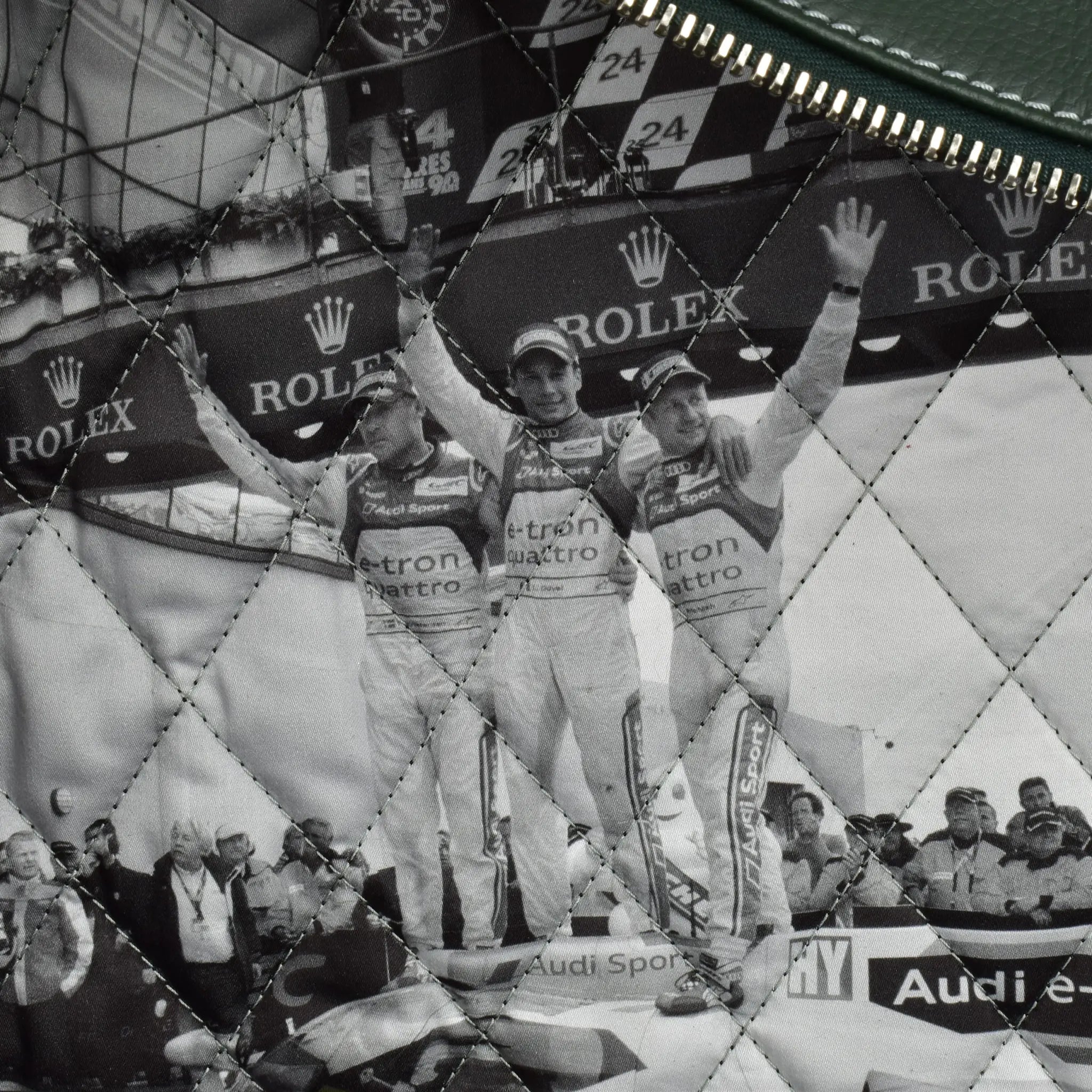
Inside, a warm tobacco suede lining would make a more intimate reference to the cockpit. Rather than printing the competition number prominently on the exterior, it could be debossed beneath the flap of an internal pocket - a detail for the owner, not the room. The zip pulls may be finished with small saddle leather tabs, while the hardware is chosen in a muted antique finish rather than bright polished metal.
Alongside the holdall, a matching helmet bag could provide proper protection for a period helmet and communications equipment. Its padded structure would be purposeful, yet the exterior language would remain consistent. A garment carrier in the same leather would complete a race-weekend set, carrying driving suits, dinner jackets or fresh clothes with equal assurance.
This is not about reproducing every surface of the car in leather. It is about choosing the details that matter most, then giving them room to breathe.
Proportion Comes Before Decoration
The first question should always be practical: what must the piece carry, and where will it travel? A holdall for grand touring has different requirements from one intended for the pit lane. The former may benefit from a generous main compartment and a more refined profile; the latter may need reinforced bases, considered internal divisions and easy access to gloves, documents and chargers.
For owners who travel with a helmet, tailored fit matters. A bag that is too large allows the contents to shift. One that is overly compact becomes frustrating when a HANS device, visor cloth, earplugs and other essentials need to be carried together. The same discipline applies to handles, shoulder straps and zip placement. Luxury is felt in these decisions long before it is seen in a badge.
Materials Should Carry the Story
A heritage-led commission earns its character through material choice. Full-grain leather offers warmth, scent and a natural evolution that synthetic alternatives cannot replicate. Yet leather alone is not the answer to every brief. A client who frequently moves through wet paddocks or flies with race equipment may prefer a considered combination of leather and technical cloth, with leather used where the hand meets the bag and durable fabric employed where it makes sound functional sense.
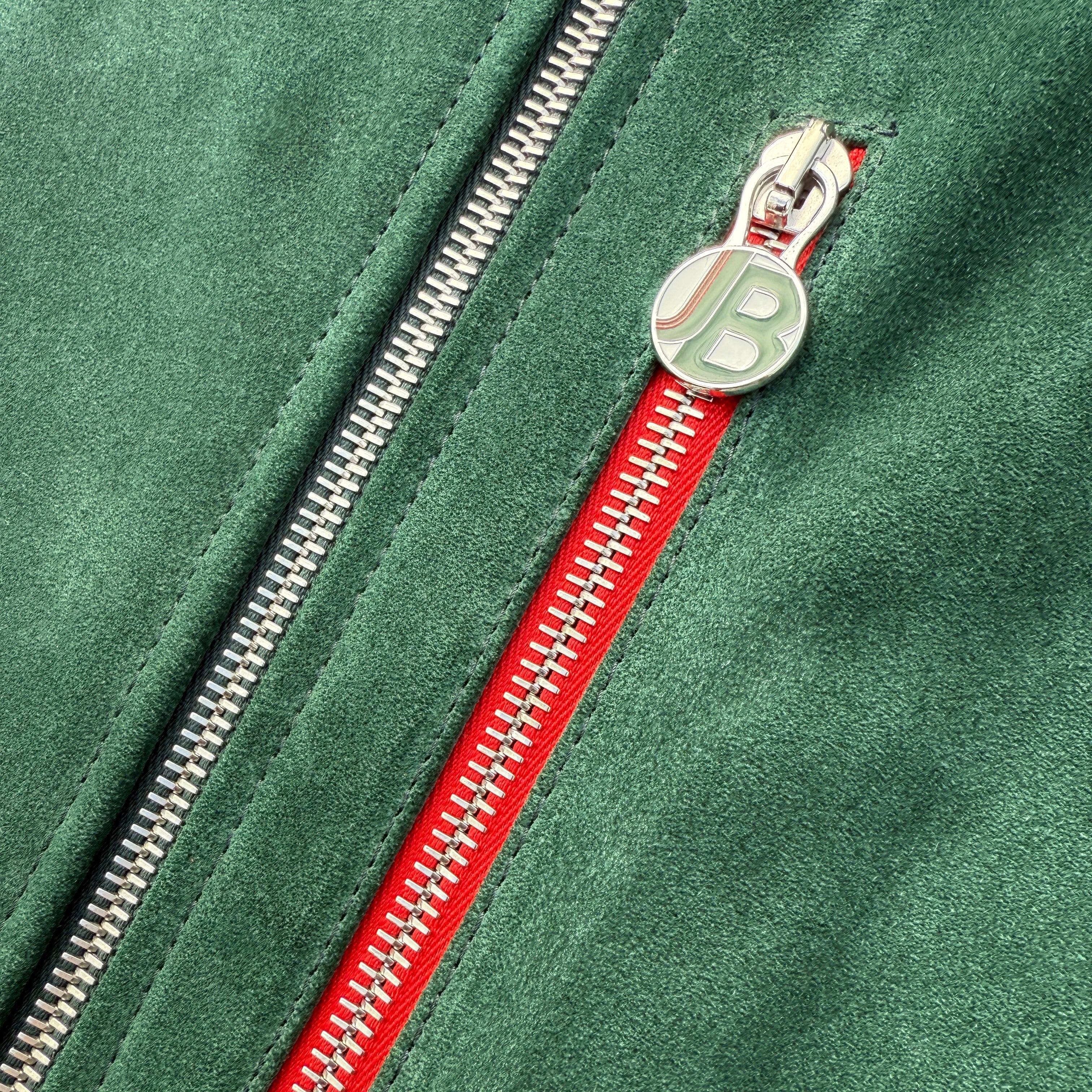
Hardware also deserves attention. YKK Excella zips bring a satisfyingly precise action and a finish worthy of the surrounding leather. Suede-lined compartments protect watches, eyewear and instruments from abrasion. A reinforced base, carefully finished rather than visibly overbuilt, helps the bag retain its composure on workshop floors and airport lounges alike.
The point is not to add costly components for their own sake. Each material should support the commission’s purpose and give the owner confidence that the piece will become better known, rather than simply worn out.
The Discipline of Restraint
Motorsport is rich with graphic possibility: roundels, sponsor markings, national colours, race numbers and circuit maps. Used without judgement, these can make a beautifully made bag feel promotional rather than personal.
A more enduring approach is to choose one dominant cue and two supporting details. A livery stripe may be the dominant cue; a lining colour and discreet number embossing can support it. That is often enough. The result retains its connection to the car while remaining appropriate for everyday travel, a private members’ club or an evening away.
There are occasions when bolder expression is right. A team owner commissioning kit bags for a racing programme may need clear identification, durable contrast panels and practical external labelling. A private collector commissioning a personal travel set usually benefits from a subtler hand. Bespoke design should respond to context, not impose a fixed aesthetic.
From Archive Detail to Finished Piece
The most rewarding commissions begin with a proper conversation. Reference images are useful, but the less obvious details often prove more revealing: a photograph of the dashboard, a close-up of seat piping, a race programme, an old scrutineering sticker or the story behind a particular number.
From there, the brief becomes a coherent palette of leather, lining, thread, hardware and proportion. Samples matter because racing green is never simply racing green. Under daylight, a hide may appear almost black; in a warm garage, its green may emerge with greater depth. Ivory can read as crisp or creamy. Saddle leather can be orange, tan or quietly brown. These distinctions are the difference between a piece that merely matches and one that feels properly resolved.
Italian hand-making gives the process its final authority. The cutting, skiving, stitching and edge finishing must be executed with the same care that an enthusiast applies to the preparation of a significant car. At Jordan Bespoke, this attention allows a client’s ideas to become symbols of individuality rather than generic luxury goods.
A Commission That Ages With Its Owner
The value of heritage racing is not frozen in the past. It is carried forward each time a car is driven, shown, prepared or handed to the next custodian. A well-made leather piece can take part in that continuity. Its surface will soften, its handles will become familiar, and its subtle references will remain meaningful long after a seasonal fashion has passed.
If you are considering a commission, begin with the one detail you would miss if it were absent. It may be the colour of a seat, the arc of a stripe or the number on a door. Start there, then let craftsmanship and purpose shape everything around it.