

A well-cut jacket should arrive with the same authority with which it left the wardrobe. That simple requirement is the starting point for any guide to luxury garment carriers. For the discerning traveller, a garment carrier is not an afterthought or a substitute for careful packing. It is a purpose-made companion for tailoring, eveningwear and race-day attire, designed to preserve the line, finish and character of the clothes within.
The difference becomes apparent at the hotel wardrobe, the paddock changing room or the private members' club. A standard soft cover may keep dust away, but it rarely protects a hand-finished shoulder, a pressed trouser crease or the structure of a tailored coat. A properly considered luxury garment carrier brings together intelligent proportions, exceptional materials and hardware built for years of movement.
What Defines a Luxury Garment Carrier?
Luxury is not simply a matter of adding leather to a conventional travel bag. The best garment carriers are designed around the practical realities of carrying formal clothing: how a jacket folds, where pressure builds, how hangers sit, and what happens when the bag is placed in an overhead locker or the boot of a grand tourer.
A carrier should open flat enough to make packing calm and precise. Inside, it needs a secure hanging point and carefully positioned straps that hold garments in place without creating hard compression lines. The exterior should be substantial enough to protect its contents, yet not so rigid or heavy that it becomes inconvenient between terminal, car and hotel.
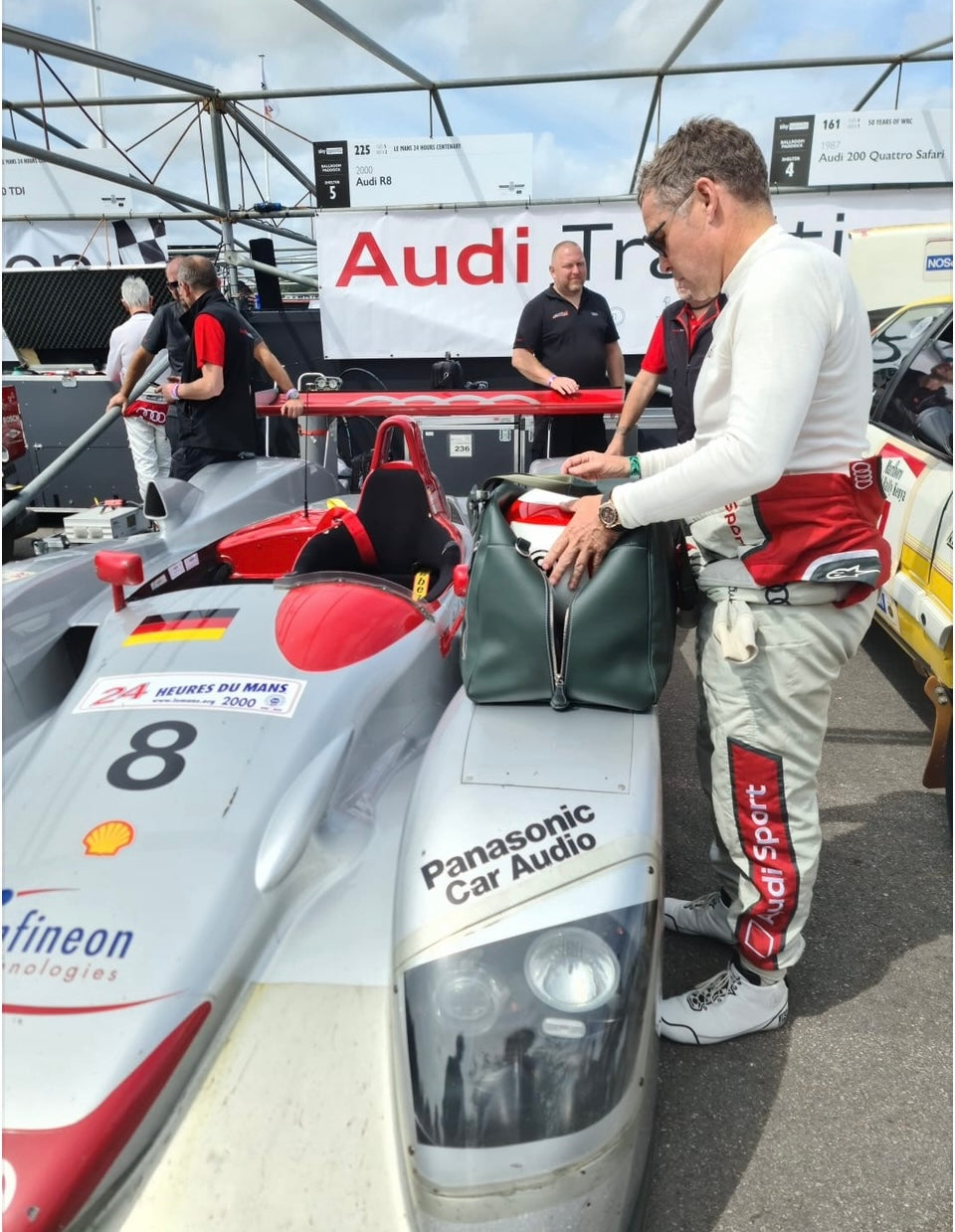
For many clients, a garment carrier also serves as a symbol of individuality. The leather, lining, stitching and metalwork can reflect the colours of a cherished car, a racing number, a team heritage or the quieter code of a favourite suit. Such details are meaningful when they are integrated with restraint. A distinctive piece need not announce itself from across the room.
Choosing the Right Format for Your Journey
There is no single correct format. The right luxury garment carrier depends on whether you are travelling overnight for a board meeting, spending a long weekend at a concours, or flying out for a race weekend with several changes of clothing.
The fold-over carrier
The classic fold-over design is often the most elegant solution for one or two suits. A jacket is laid flat, trousers are folded with care, and the carrier closes across the middle. This keeps the overall profile slim and makes it easy to carry alongside a briefcase or weekend holdall.
Its compromise is capacity. Overfilling it with knitwear, shoes and thick shirts defeats the point, placing strain on the zip and introducing creases exactly where the carrier is intended to prevent them. For a short business trip, however, the discipline of a focused packing list is part of its appeal.
The garment duffel
A garment duffel combines a fold-out garment section with the volume of a compact holdall. It is especially useful for a two- or three-night journey, where shirts, shoes, wash kit and casual layers must travel with tailored clothing. It is also a natural choice for a race weekend, when smart eveningwear may need to sit alongside driving kit and lighter off-duty pieces.
The trade-off is bulk. A garment duffel can become heavy quickly, particularly when made in full-grain leather. Look for thoughtful internal organisation, a stable base and a shoulder strap that is properly engineered rather than merely decorative.
The structured wardrobe case
For formalwear with a more exacting silhouette, a structured case offers the greatest protection. It can be the preferred option for dinner jackets, dresses, longer coats or garments travelling with delicate embellishment. The rigid or semi-rigid construction reduces external pressure and keeps the carrier composed throughout a journey.
It is less adaptable in a crowded cabin and can be more cumbersome at the kerbside. This is a piece for journeys where presentation takes precedence over travelling light.
Materials That Earn Their Place
The material of a luxury garment carrier must do more than look convincing in the lounge. It must age well, protect the contents and remain pleasurable to handle after years of use.
Full-grain Tuscan leather remains a compelling choice because it develops character rather than merely showing wear. A carefully selected hide offers a supple hand while retaining enough body to give the carrier shape. It should be cut and constructed with an understanding that leather is a living material: it will soften, deepen in tone and take on the marks of a life well travelled.
For lighter use, technical textiles can be equally appropriate. Aerospace-grade fabrics, tightly woven canvas and high-performance nylon offer impressive resistance to moisture and abrasion at a lower weight. This can be the wiser choice for frequent flyers or clients who favour a carrier that moves easily from airport to circuit. Leather trim, handles and reinforcing panels can retain a sense of occasion without making the whole piece unnecessarily heavy.
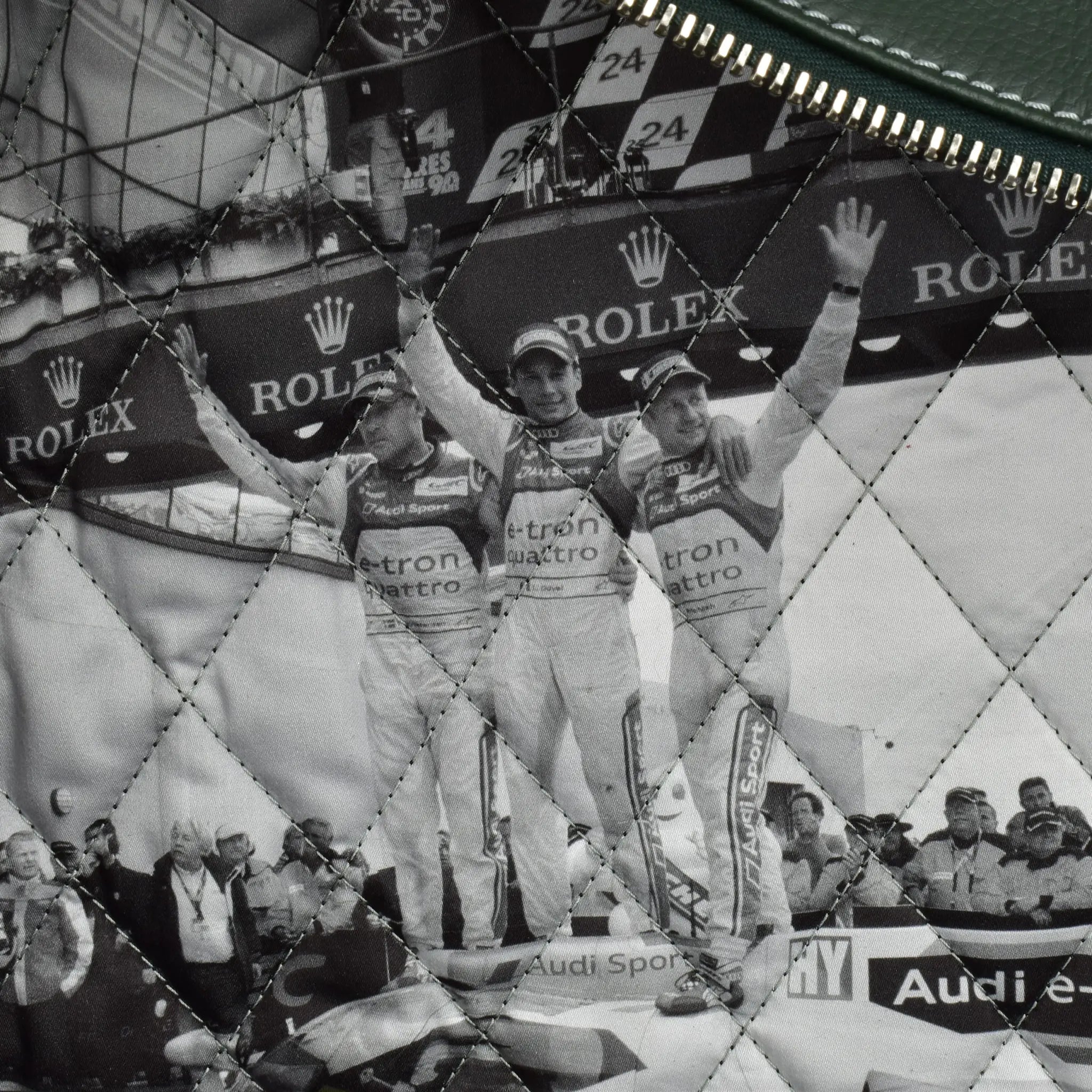
Inside, lining deserves equal scrutiny. A smooth, durable lining allows garments to slide into place rather than catching at the shoulders or sleeves. Bespoke linings offer an opportunity for personality, whether inspired by a vehicle interior, a racing livery or a more private personal reference. The important thing is longevity: a beautiful lining that wears through prematurely is not a luxury detail.
Construction Details Worth Examining
A carrier can look handsome on a luggage stand and still disappoint when used. Before commissioning or choosing one, inspect the practical details that separate fine craftsmanship from surface-level finish.
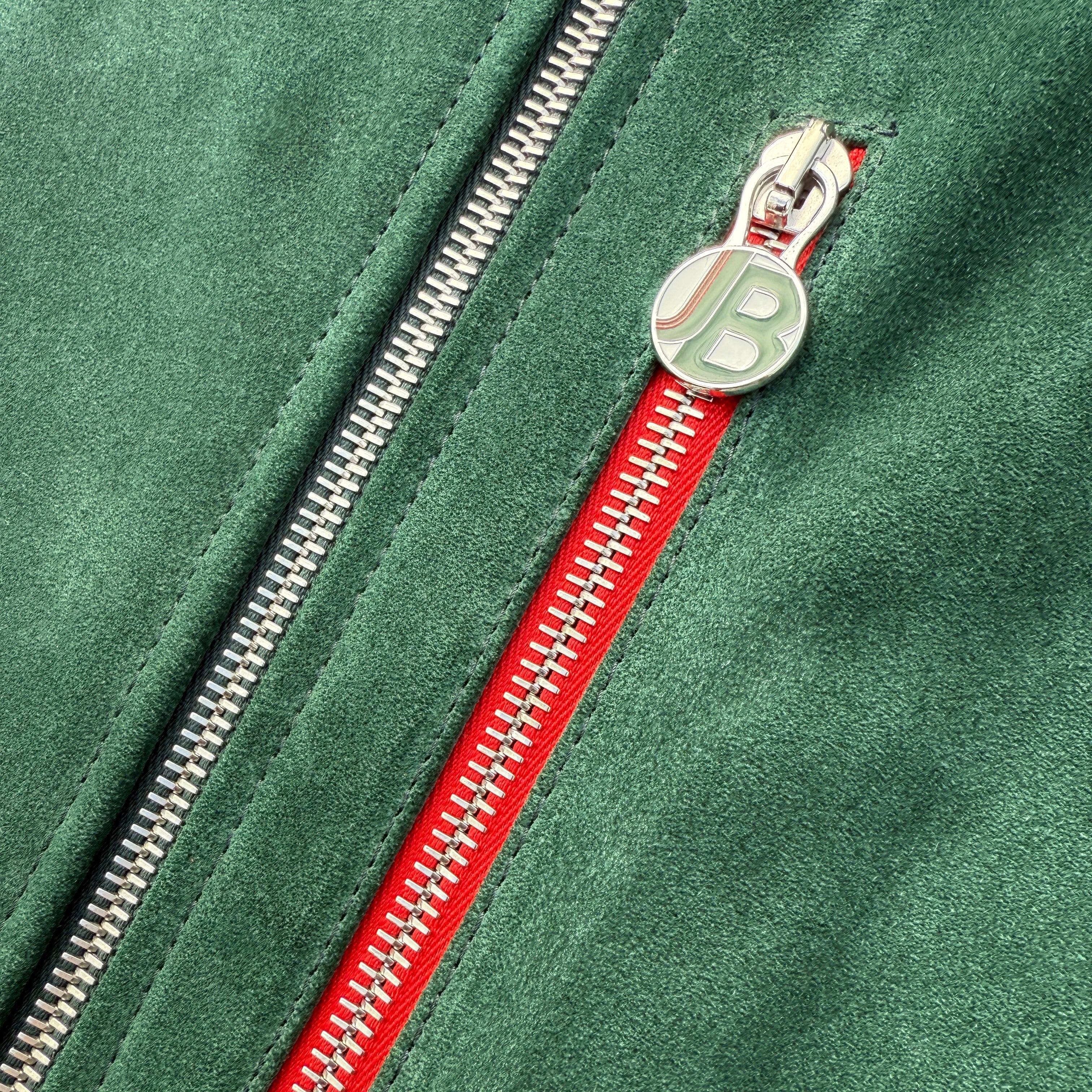
A full-length, smooth-running zip is essential. YKK Excella zips are favoured in high-end leather goods for their polished metal teeth, reliable action and substantial feel. They should run cleanly around curves without catching the lining. Reinforced zip ends matter too, as this is where repeated tension accumulates.
The hanger system should be secure but uncomplicated. A metal hook or reinforced aperture needs to accept quality hangers without distorting the top of the carrier. Internal retaining straps should be adjustable, ideally with soft leather or fabric guards where they meet a jacket. A poorly placed buckle can leave an unwanted impression in fine cloth.
Handles merit more attention than they usually receive. They should be balanced at the carrier's centre of gravity, comfortable in the hand and securely anchored through reinforced panels. If a shoulder strap is included, it should be removable, properly padded and fitted with hardware that feels proportionate to the bag. Lightweight clasps on a substantial leather carrier are a warning sign.
Finally, consider the base. Protective feet can be useful on a garment duffel, but a very slim fold-over carrier may benefit from a cleaner, softer profile. The right answer depends on the format and how it will be used.
Packing Tailoring Without Compromise
Even the finest carrier cannot correct careless packing. Begin with garments that have been properly brushed and allowed to rest after pressing. Fasten jacket buttons lightly, turn the collar flat and place the jacket with its shoulders aligned to the carrier's upper section. Fold only where the carrier is designed to fold.
Trousers should be laid with the crease straight, rather than rolled tightly. Shirts travel best when folded neatly around a support, with collars protected from pressure. A thin knit can provide gentle cushioning between layers, but avoid adding bulky items simply to fill empty space.
Shoes, wash bags and chargers should generally travel elsewhere. If the carrier has dedicated compartments for them, use them only when they are separated from clothing by a substantial panel. Leather soles, metal accessories and loose cables have a talent for finding the one place they should not be.
For air travel, do not assume that a garment carrier will always qualify as cabin luggage. Airline allowances vary, and a full carrier may exceed the preferred dimensions even when it appears slim. If the occasion truly demands immaculate tailoring on arrival, carrying the piece on board is usually preferable to checking it in. When this is not possible, use a protective outer cover and avoid placing it beneath hard-sided luggage.
Bespoke Details That Have Lasting Meaning
Bespoke luggage is most compelling when it answers a real personal brief. A hand-painted edge in a chosen interior colour, contrast stitching drawn from a historic racing stripe, a discreet monogram or a lining that recalls a significant motor car can make a garment carrier unmistakably yours.
Jordan Bespoke approaches these commissions much like the configuration of an exceptional motor car: the choice of leather, lining, hardware and finishing is considered as a whole, not selected as a series of unrelated extras. Hand-made Italian production provides the precision, while British design brings a particular appreciation for tailoring, touring and motorsport tradition.
Restraint remains the hallmark of good taste. One or two details with genuine provenance will often feel more considered than an abundance of visible customisation. The goal is a carrier that belongs naturally beside the car you drive and the clothes you choose to wear, without becoming costume.
Care Between Journeys
After travelling, empty the carrier and let it air in a dry room before storing it. Remove any luggage tags, receipts or loose objects that may mark the lining. A soft cloth will deal with routine dust on leather, while a specialist leather conditioner should be used sparingly and only when the hide calls for it.
Store the carrier lightly filled or laid flat, rather than compressed under other luggage. Keep it away from prolonged direct sunlight and central heating, both of which can dry leather and affect its colour. If it becomes wet, allow it to dry naturally at room temperature - never force the process with a radiator or hairdryer.
The finest garment carrier does not merely transport a suit. It gives the clothes you have chosen, and the occasions they are chosen for, the consideration they deserve.