

The paddock is full of equipment that performs a function. Far less of it says anything meaningful. This motorsport team case study considers how a team’s travel and trackside kit can become part of its identity: not a promotional afterthought, but a visible expression of standards, history and intent.
For a serious racing operation, every object is judged under pressure. It must travel well, organise the essentials, endure repeated handling and look entirely at home beside the car. When those demands are addressed with real care, a helmet bag, holdall or garment carrier becomes more than luggage. It becomes part of the ritual of going racing.
The brief: create a team presence beyond the car
Consider a fictional but familiar scenario: a privately backed GT team preparing for a European season. The car is finished in a restrained livery, informed by the owner’s road-going collection and a family connection to historic competition. Its drivers are well appointed, its engineering is exacting, and its hospitality has an understated confidence. Yet the equipment carried through airports, hotel lobbies and pit garages is generic.
This is not a superficial concern. Motorsport teams are built on detail. The visual language around the car either supports that discipline or dilutes it. A mismatched collection of nylon cases may be practical, but it leaves no impression and tells no story.
The team’s requirement, then, is not simply branded merchandise. It is a considered collection for drivers and senior crew: helmet bags for race weekends, generous holdalls for travel, garment carriers for appearances and dinner engagements, and smaller cases for cables, watches, passports and technical essentials. Each piece must feel suitably discreet in London, Monza or the Côte d’Azur, while proving capable in a working paddock.
The challenge of making it personal without making it loud
The usual answer is to apply a large logo. For a discerning team, that is rarely the right answer. Motorsport identity is often strongest when it is encoded rather than announced.
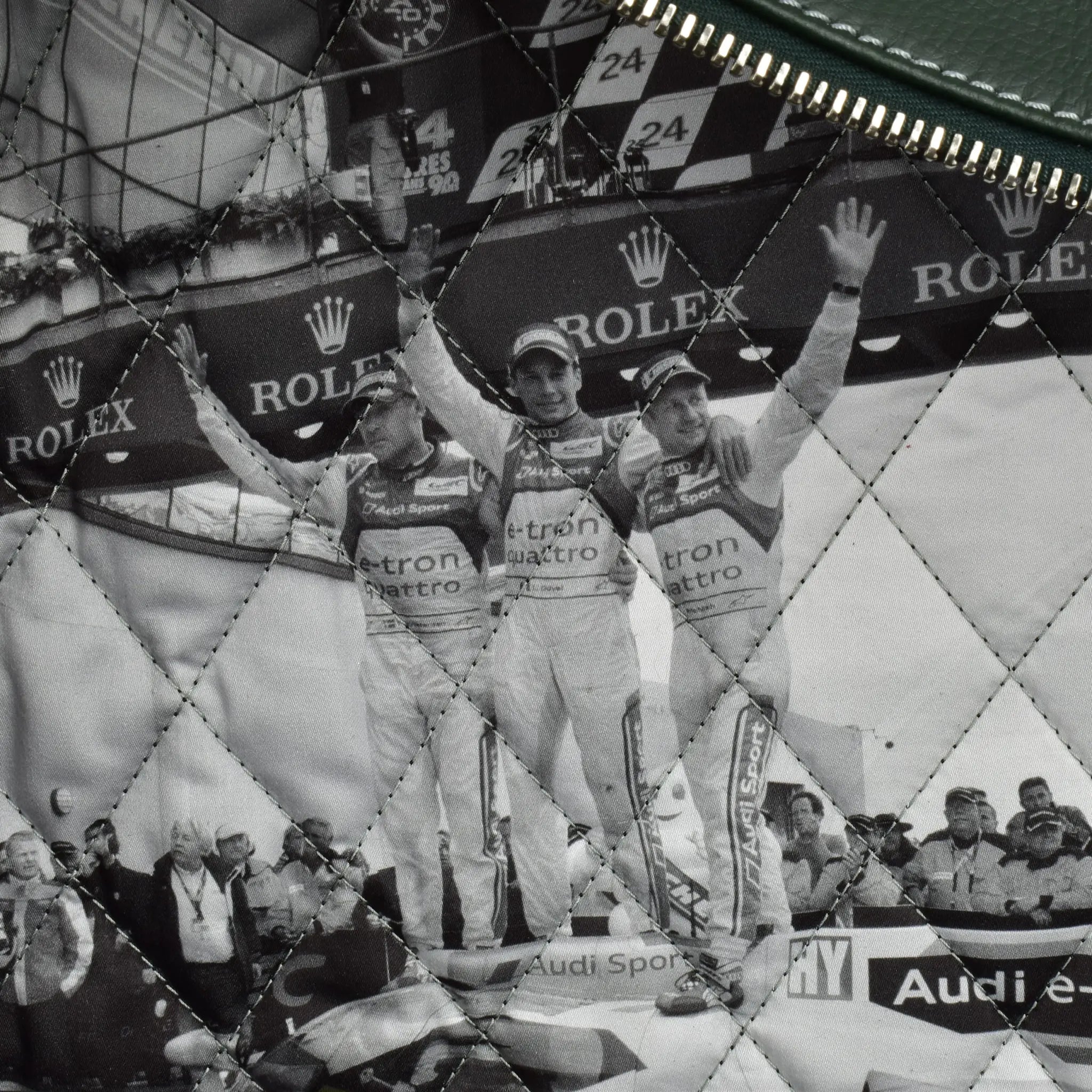
The design direction in this case draws on the car’s interior rather than its exterior. A deep racing green leather echoes the cabin trim. Contrast stitching takes its cue from a fine pinstripe used within the livery. A warm saddle-coloured suede lining recalls the driver’s gloves, while a modest enamelled badge carries the team monogram. The result is recognisable to those who know the story, without turning every item into a billboard.
That distinction matters. Sponsors may require visibility at the circuit, but personal equipment has a different role. It accompanies its owner through the parts of race weekend where taste is more persuasive than volume: the hotel arrival, the pre-race briefing, the walk to the garage and the journey home after a difficult Sunday.
Motorsport team case study: designing for the race weekend
A well-conceived collection begins with use, not ornament. The helmet bag is a good example. A racing helmet is not merely expensive equipment. It is an intensely personal object, fitted to one driver and carried from circuit to circuit. It deserves protection that is appropriately engineered and visually commensurate with its importance.
For this team, a structured leather helmet bag has a wide, easy-opening top, a protective padded interior and a separate compartment for a HANS device, visor and communication equipment. The lining is chosen not only for colour but for its ability to protect polished paintwork and delicate fittings. A discreet name strip prevents confusion when two drivers run similar helmets, while a serialised interior plaque gives every piece a sense of provenance.
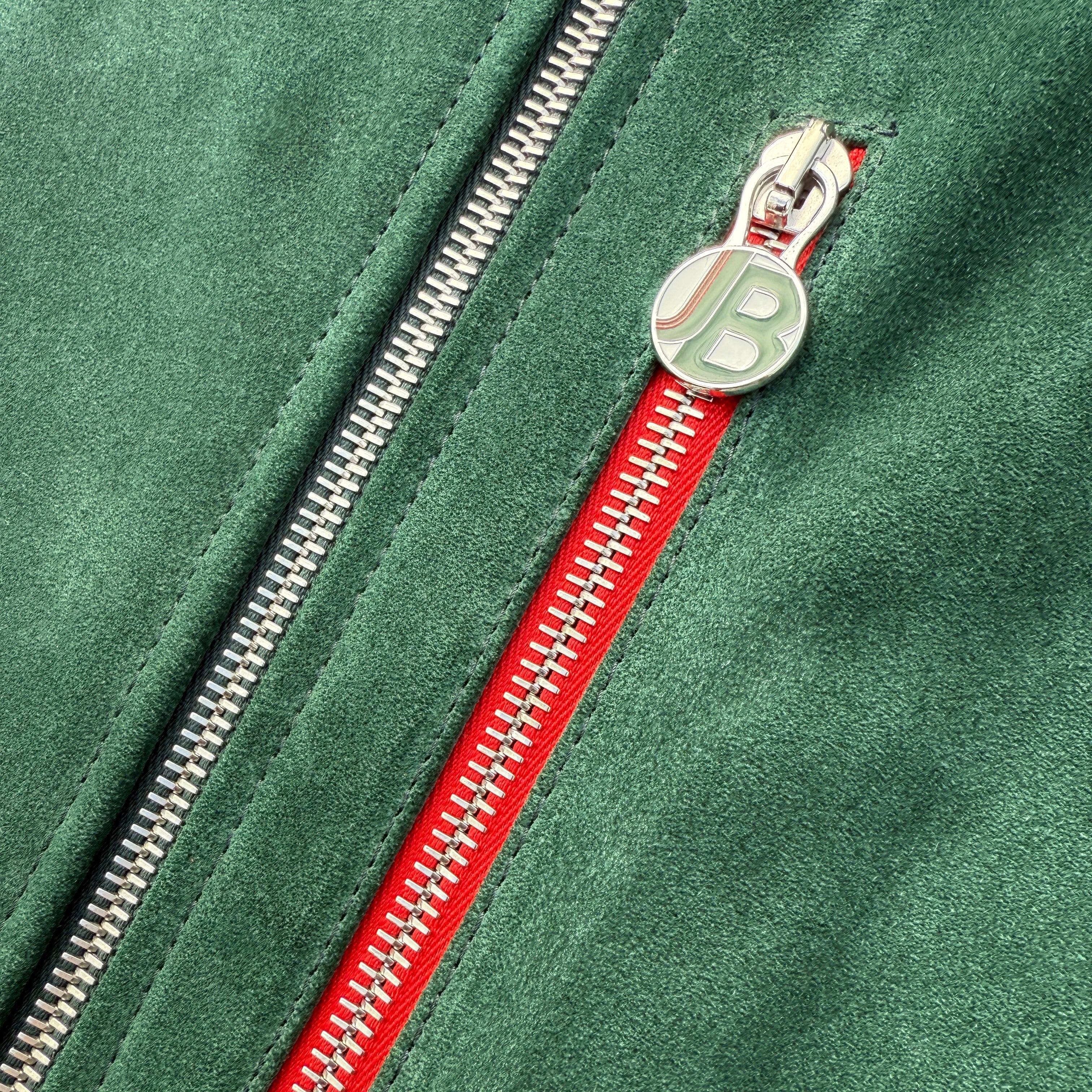
The holdall calls for a different balance. It has to accommodate a two- or three-night race programme, but it should not become cumbersome in a busy garage or overhead locker. Soft Tuscan leather offers the right suppleness and character, while reinforced base panels and thoughtfully placed feet protect the bag from unforgiving surfaces. Hand-finished handles, a removable shoulder strap and YKK Excella zips bring everyday usability without compromising the visual purity of the piece.
There are trade-offs. A fully leather holdall has presence, ageing beautifully with use, but it will never be as light as technical fabric. Conversely, an aerospace-grade textile can reduce weight and improve weather resistance, though it creates a more contemporary expression. The correct choice depends on how the team travels, how often the bags are exposed to the elements and whether the desired character is classic grand touring or modern endurance racing.
A collection that works as a system
The value of a bespoke commission becomes clearer when each item relates to the next. The garment carrier is cut to protect a race suit or tailored jacket without excessive bulk. The tech case keeps timing equipment, chargers and small electronics from drifting through the main bag. Card holders, luggage tags and key cases repeat the same leather, stitch and lining language at a more intimate scale.
This cohesion is especially useful for teams whose members move between competitive and social settings. A driver may arrive with a garment carrier for an evening event, carry a helmet bag into the garage at dawn, then use a compact case for credentials and personal effects. The objects belong together, but each serves a precise purpose.
For the team manager, this system also makes administration easier. Individual initials, racing numbers or role-specific details can be incorporated with restraint. A driver’s bag might receive a number embossing under the flap; crew pieces might use a colour-coded lining tab. The outward appearance remains unified, while the practical organisation happens quietly.
Craftsmanship carries the story further
The difference between a branded item and a genuinely bespoke one is often found where few people look first. It is in the weight and feel of the zip pull, the alignment of a stripe across a pocket, the way leather is turned at the edge, and the confidence of stitching around a handle that will be lifted hundreds of times.
Hand-made Italian production is particularly suited to this level of consideration because it allows materials and construction to answer the brief. Full-grain leathers can be selected for a particular grain and finish. Alcantara or suede linings can be matched to an interior or historic racing colour. Hardware can be specified in polished nickel, antique brass or a darker gunmetal finish, depending on the character of the car and team.
These decisions should not be treated as decoration alone. A pale lining improves visibility inside a dark bag. A darker exterior may be more forgiving around tyre dust and garage floors. A leather that develops a natural patina is ideal for a team that values longevity; a more protected finish may suit frequent international travel. Bespoke work earns its place when it improves both the experience of ownership and the practical life of the piece.
Why this matters to clients, partners and drivers
Motorsport is an environment in which people notice the details. A sponsor sees how a team presents itself before the first meeting begins. A client joining a track day recognises when a brand has considered the whole experience, rather than only the car on display. Drivers, who often spend more time travelling than competing, appreciate equipment designed around their actual routines.
There is also a quieter commercial benefit. A coherent team collection creates objects worth keeping long after a season has ended. Unlike disposable event gifts, a well-made holdall or helmet bag can acquire personal significance. It may carry the marks of journeys to Spa, Silverstone and Le Mans. It may be passed from one racing programme to the next. It may eventually sit in a collector’s garage as a reminder of a particular car, partnership or championship campaign.
That is where luxury and motorsport share common ground. Both reward longevity, provenance and a relationship with material. The finest things do not become less meaningful once their immediate purpose has passed. They gather evidence of the life around them.
The lesson for a discerning team
A team does not need an extravagant fleet of accessories to create this effect. In many cases, a small, highly resolved collection is more powerful: two driver helmet bags, several holdalls, a handful of garment carriers and the essential small pieces. What matters is that every choice has a reason, from the leather colour to the placement of an initial.
For Jordan Bespoke, that is the enduring appeal of commissions shaped by automotive culture. They allow a racing story to be carried beyond the pit lane, in pieces crafted for life rather than a single appearance.
The best race-day equipment should never compete with the car for attention. It should do something more refined: make the entire experience feel as intentional as the machine waiting in the garage.