

The wrong bag announces itself the moment you try to fit it through a narrow boot opening, wedge it behind a seat, or retrieve a jacket without unpacking everything else. That is why knowing how to choose driving luggage matters. For anyone who values the ritual of the journey as much as the destination, luggage should work with the car, not against it.
Driving luggage sits in a category of its own. It is not simply travel luggage that happens to be carried in a motor car. It must respect limited space, awkward proportions, fine interiors, and the particular cadence of road travel - from a quick overnight escape to a continent-crossing grand tour. The best pieces feel considered at every touchpoint, from the way they load into the vehicle to how they age after years of use.
How to choose driving luggage for the car you own
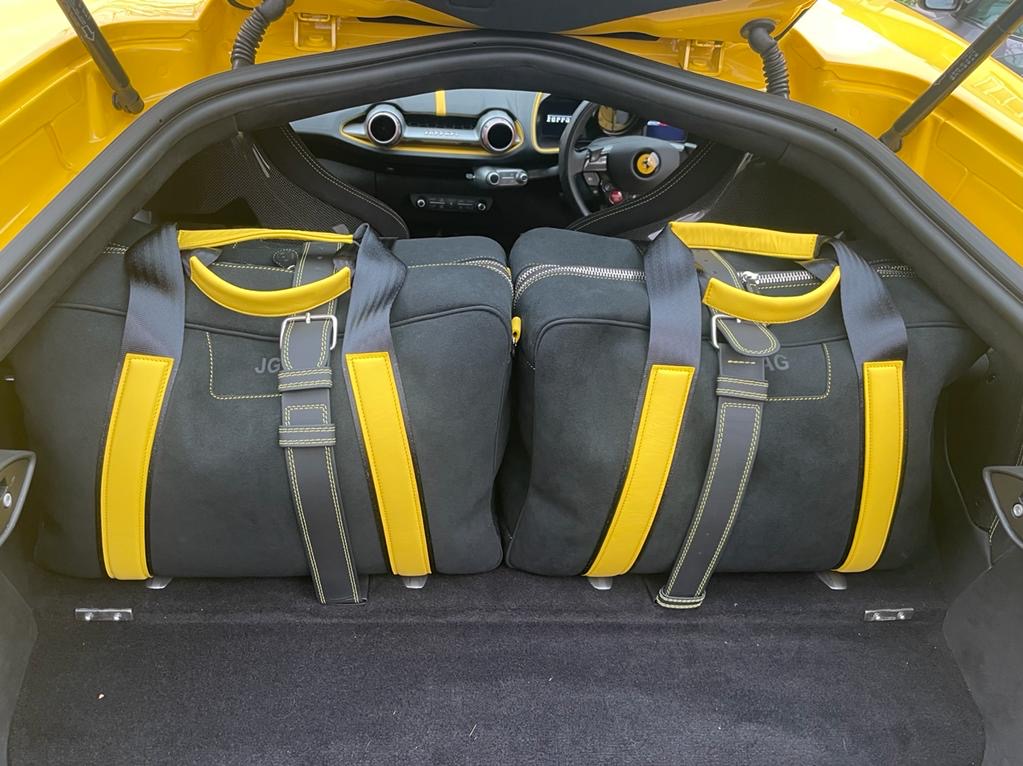
Start with the vehicle, because the car dictates far more than many buyers expect. A two-seat sports car, a classic GT and a modern performance saloon all ask different things of luggage. Boot aperture matters as much as quoted capacity. A wide, shallow boot may accept soft holdalls beautifully, while a deep but narrow compartment might punish anything too structured.
The practical mistake is buying by litres alone. Driving luggage should be chosen by shape, compressibility and ease of placement. A softer-sided holdall with a disciplined profile often proves more useful than a hard-edged case, even if the latter appears more formal. If you drive a car with a high sill, limited depth or an irregular boot floor, flexibility is not a luxury - it is the difference between elegant packing and needless compromise.
If possible, think in sets rather than single bags. One large piece can be less effective than two medium holdalls and a slim garment carrier, especially in a car where luggage must be arranged around the contours of the rear compartment. Bespoke makers understand this well. They design to the vehicle rather than asking the vehicle to tolerate the luggage.
Measure the spaces you actually use
There is no glamour in guesswork. Measure the boot opening, the internal width at its narrowest point, the height beneath any parcel shelf, and any secondary storage area you rely on. If you regularly place a bag on the rear seats, account for that as well. These dimensions will tell you more than any generic product description.
Just as importantly, consider access. If you stop frequently, a bag that opens cleanly from the top without sprawling across the pavement is often a better companion than one with a clamshell format. How the luggage behaves at a hotel entrance, a paddock, or a country house drive matters.
Prioritise purpose over general travel claims
The phrase driving luggage can cover very different needs. A weekend in the Cotswolds, a route through the Alps, and a race meeting at Goodwood all demand different packing behaviour. The right choice depends on what you actually carry and how often you need to reach it.
For touring, a well-proportioned holdall remains the most versatile option. It should be generous enough for several changes of clothing yet restrained enough to load and unload without wrestling. For business-led motoring, a garment carrier or structured weekender may be the better answer, preserving tailoring while keeping shoes, documents and smaller essentials in order.
For motorsport use, interior layout becomes more critical. You may need dedicated space for race boots, overalls, gloves, a helmet visor, technical items and a change of clothes. In that setting, the romance of a handsome exterior must be matched by a disciplined internal architecture.
Ask how often you will pack and unpack
Frequent access changes the brief. If you are constantly opening the bag during a journey, a large undivided cavity can become tiresome. Compartments for chargers, sunglasses, wash kit items and travel documents save time and preserve order. On the other hand, too many divisions can make a bag rigid and fussy.
This is where judgement matters. A beautifully made driving bag should feel edited, not overdesigned. Every pocket should earn its place.
Material choice is about more than appearance
Leather is the natural language of luxury driving luggage, but not all leather performs in the same way. Full-grain hides with a supple hand and substantial finish offer depth of character and the sort of patina that rewards long ownership. They also sit more comfortably in refined automotive interiors than synthetic alternatives that can feel flat or overly technical.
That said, there are trade-offs. A heavily structured leather case can add weight before you have packed a single shirt. If you drive often and pack lightly, a softer construction may be preferable. It will conform more willingly to the car and is usually easier to handle on shorter stops.
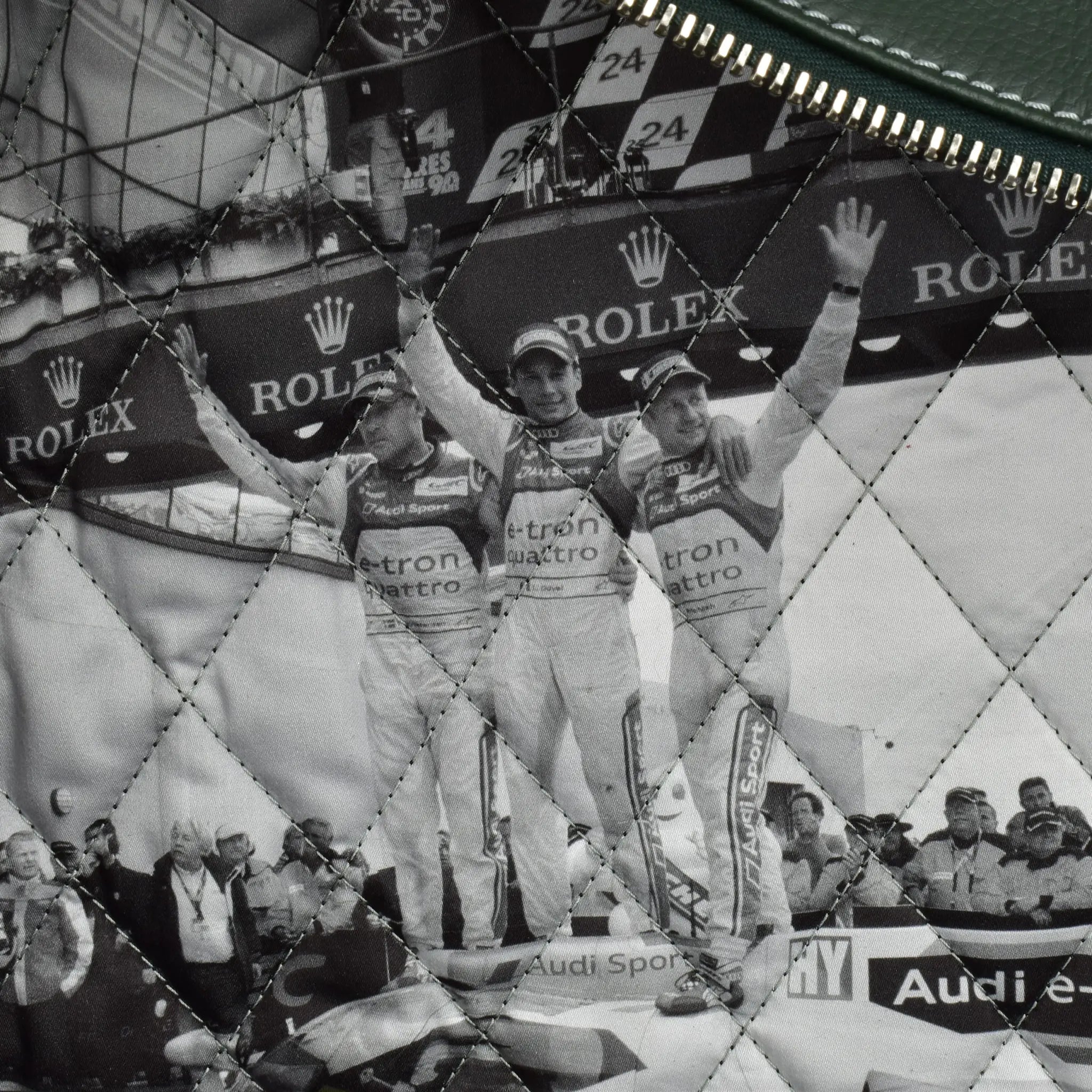
Lining matters too. A finely chosen interior does more than look elegant when the zip opens. It protects contents, improves visibility, and adds a layer of personal expression. For the discerning individual, custom linings, contrast stitching and details drawn from a car's cabin or racing heritage turn a good bag into a symbol of individuality.
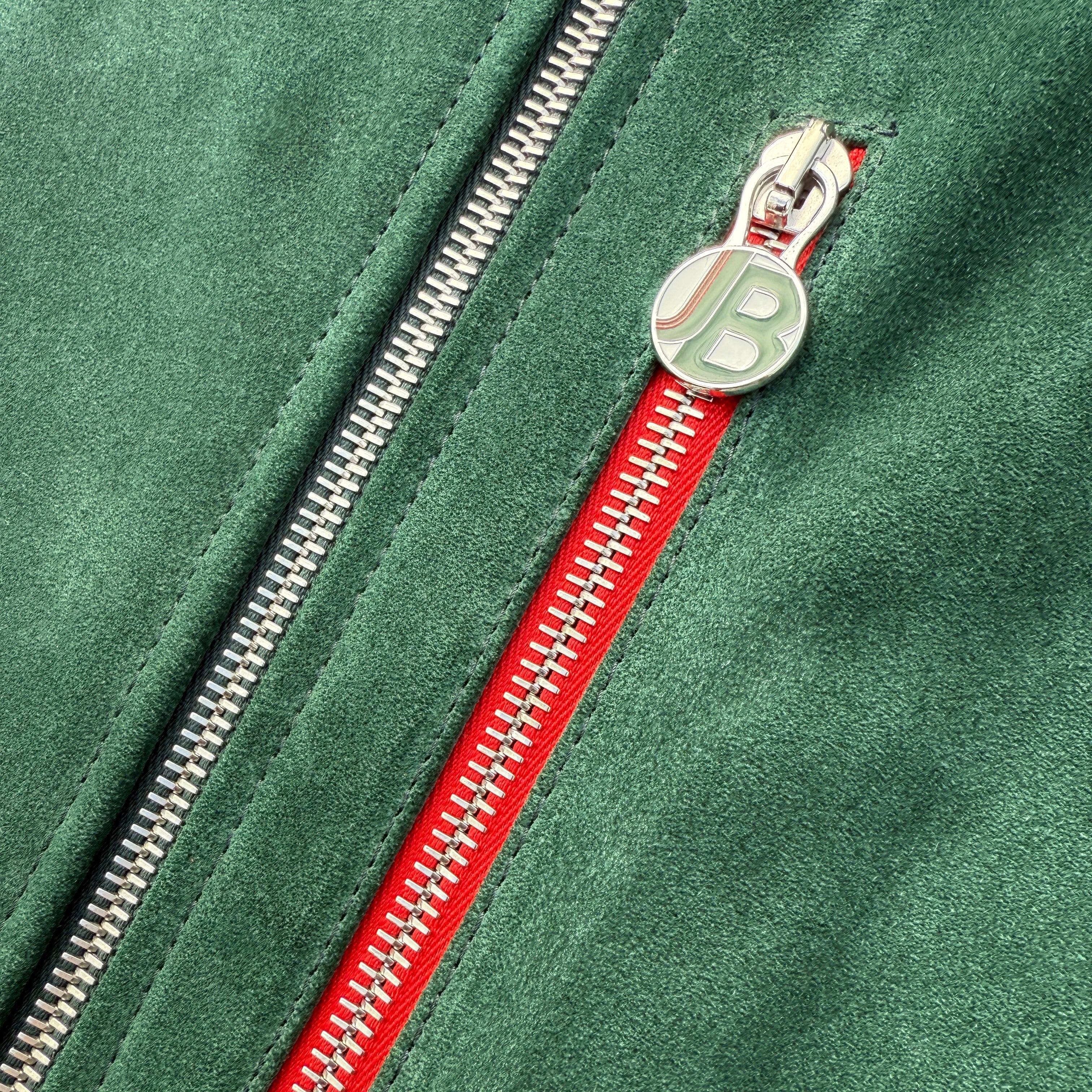
Hardware should never be an afterthought. Smooth-running metal zips, well-shaped handles and properly engineered shoulder straps affect the experience every time the bag is used. Cheap hardware betrays itself early. Fine hardware grows quieter and more assured with age.
The best driving luggage balances softness and structure
A common misconception is that softer always means less premium. In reality, the finest driving luggage often blends the two. Enough structure is needed to hold a handsome profile, protect contents and make packing intuitive. Enough softness is needed to work within the tight realities of an automotive space.
This balance becomes especially important in performance and classic cars. Interiors can be delicate, with leather, wood, alcantara or painted surfaces worth protecting. A bag with hard corners and abrasive trim may be handsome on a shelf but careless in use. Rounded forms, refined edge finishing and considered base construction make a genuine difference.
Think also about what happens when the bag is not in the car. It should carry well through a hotel lobby, sit confidently in a members' enclosure, and feel as appropriate at a private airfield as it does in the boot of a grand tourer. True luxury lies in versatility without dilution.
Personalisation is not decoration for its own sake
At this level, personalisation should deepen the relationship between owner, car and object. The best custom details feel integral rather than performative. A leather matched to the cabin, a lining inspired by period racing silks, discreet initials, or stitching that echoes a marque's interior palette can transform luggage into something far more enduring than an accessory.
This is where handcrafted, made-to-order work distinguishes itself from standard luxury retail. Jordan Bespoke, for example, approaches luggage much as an elite coachbuilder approaches a commission - with respect for proportion, material harmony and the owner's story. That difference is felt not only in appearance but in how naturally the piece belongs within a motoring life.
Still, restraint is part of good taste. Not every bag benefits from every possible flourish. The most successful personalised luggage tends to make one or two strong decisions and execute them impeccably.
Buy for the journey you actually lead
It is tempting to buy for a fantasy of endless touring, concours weekends and race paddocks. Sometimes that fantasy is well founded. Often, however, the luggage that serves best is the piece you will use without hesitation for an overnight stay, a dinner booking in the country, or a swift run to the coast.
So ask a simple question: what sort of journeys fill your calendar? If they are mostly short breaks in a sports car, choose lighter, adaptable pieces that pack efficiently and are easy to store. If your life includes formal travel, invest in a bag that carries tailoring with dignity. If you spend time around circuits and events, choose organisation and durability over pure minimalism.
Price should be viewed in the same spirit. Fine driving luggage is crafted for life, but value lies in relevance. A beautifully made bag that suits neither your car nor your habits is not a wise indulgence. One that fits both precisely becomes part of the experience every time you turn the key.
The finest driving luggage does not shout for attention. It belongs - in the car, in the hand, and in the life of its owner. Choose with care, and the bag becomes part of the journey's pleasure long before you arrive.