

 A travel bag says more about its owner than most people realise. Long before it is placed in the boot, carried through a terminal or set beside the passenger seat, it signals taste, routine and standards. That is why understanding how to personalise leather travel pieces properly matters. Done well, personalisation does not feel decorative. It feels considered, coherent and entirely yours.
For the discerning traveller, the aim is not to add initials simply because one can. The aim is to create a piece that belongs to your life in the same way a tailored jacket belongs to your frame or a carefully specified motor car belongs to your character. The difference is subtle but decisive.
What personalisation should achieve
The finest personalised luggage never looks overworked. It carries identity without shouting for attention. A holdall, garment carrier or tech case should feel complete in its proportions, materials and detailing first. Personalisation should then sharpen that identity, not compete with the design.
That is where many off-the-shelf options fall short. A generic embossing service may give you initials, but it rarely creates a truly individual object. Real personalisation considers how you travel, what you carry, which car you drive, what colours have meaning to you, and whether the piece needs to sit naturally in a grand tourer, a track paddock or a first-class cabin.
In practice, this means looking beyond surface treatments and thinking in layers. Leather choice, stitch colour, lining, hardware, shape and interior layout all contribute to a more sophisticated result than monogramming alone.
How to personalise leather travel pieces with intention
The strongest starting point is not the font of your initials. It is the context in which the piece will be used. A weekender for European driving tours calls for a different sensibility from a race day kit bag or a slim briefcase for regular business travel.
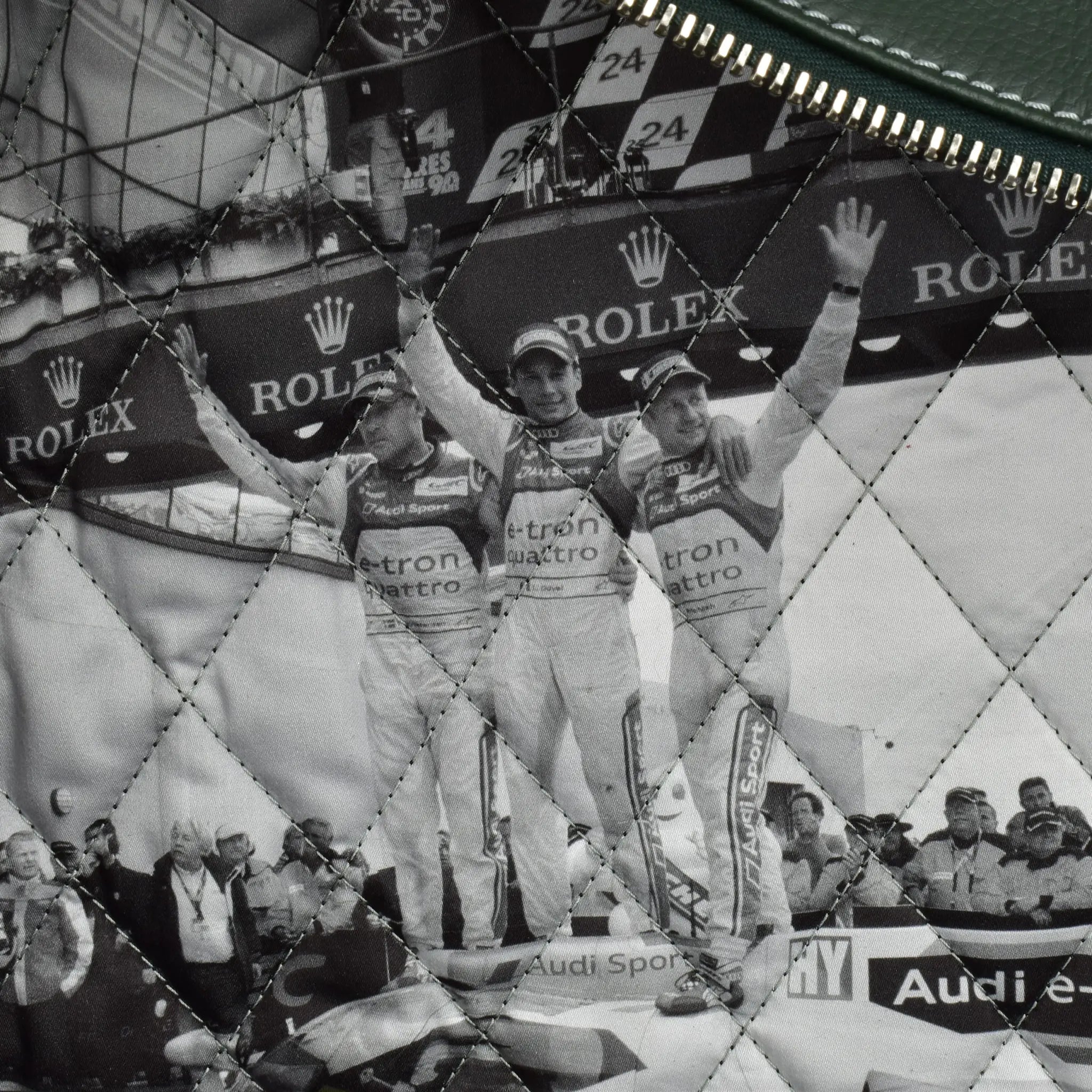
If your travel is tied to a particular motor car, that car often provides the clearest design language. The exterior leather might echo the cabin trim, while the lining could reference a contrast seat insert, painted coachline or heritage racing livery. For some clients, the connection is overt. For others, it is visible only to those who know what they are looking at. Both approaches can be compelling. It depends on whether you want the piece to declare its inspiration or quietly reward attention.
This is where restraint becomes a luxury in itself. A bag trimmed in rich saddle leather with a deep oxblood lining and polished metal hardware may say more than a large embossed crest ever could. Personalisation is often at its strongest when it is woven into the construction rather than added on top.
Start with the leather itself
Leather is the foundation, and it determines the emotional tone of the piece. Full-grain hides with a natural hand and depth of character tend to age with the sort of dignity discerning owners appreciate. They develop patina rather than simply showing wear.
Choosing the right leather is partly aesthetic and partly practical. A softer, more supple hide can lend a relaxed elegance to a holdall, while a firmer leather may suit a structured briefcase or document case. Grain, sheen and colour all matter. Black and dark chocolate remain timeless, but navy, racing green, tan and deep burgundy often create a more personal signature without losing sophistication.
For automotive enthusiasts, the leather can also become a subtle point of dialogue with a favourite cabin. Tuscan leather in a warm tan, for instance, can evoke classic grand touring interiors, while a charcoal or graphite finish feels more contemporary and technical. The right choice should feel like an extension of your world, not a trend borrowed from someone else’s.
Use colour where it counts
Colour is often the most effective way to distinguish bespoke leather goods. It can be introduced with admirable discretion through stitching, piping, edge paint or interior lining, and each choice affects the overall character of the piece.
Contrast stitching inspired by steering wheel detailing or seat quilting can give a travel bag an unmistakably automotive sensibility. Likewise, a vivid lining can add a private note of personality every time the zip is opened. This approach has the advantage of keeping the exterior refined while allowing the owner to enjoy a more expressive interior.
There is, however, a balance to strike. Too many colour cues can make a piece feel thematic rather than timeless. One or two decisive accents usually age better than an excess of statements.
The details that make it truly yours
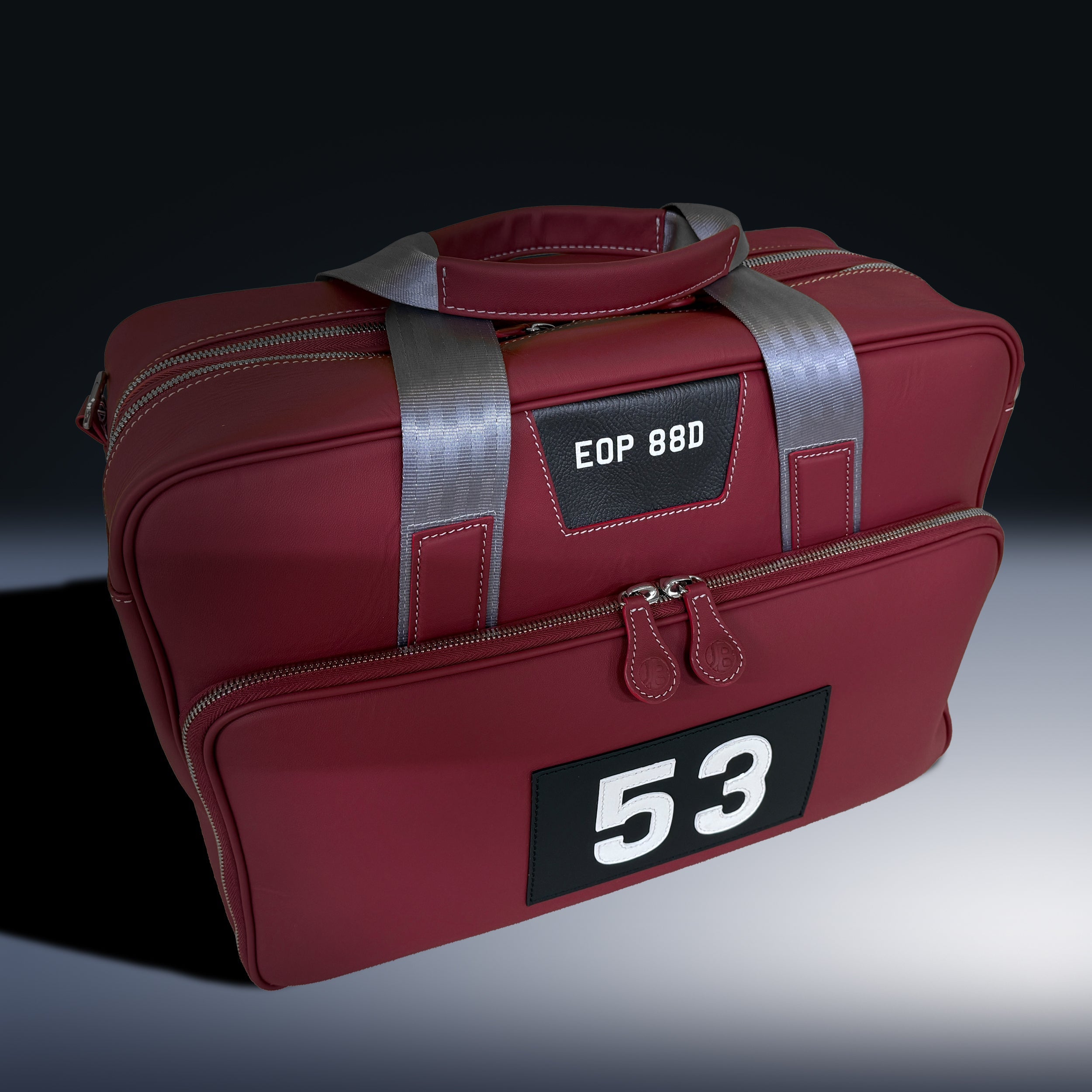
Initials remain a classic choice because they are elegant, direct and personal. Yet even here, quality lies in the execution. Placement, scale and finish should be handled with care. A discreet blind emboss to a luggage tag or interior pocket often feels more assured than oversized lettering across the main body of the bag.
Dates, chassis numbers, race numbers or meaningful coordinates can also be incorporated with greater subtlety than many clients first imagine. These references work particularly well when they carry personal history, perhaps the number of a cherished car, the year of a significant event, or a destination that matters to your family or motoring life.
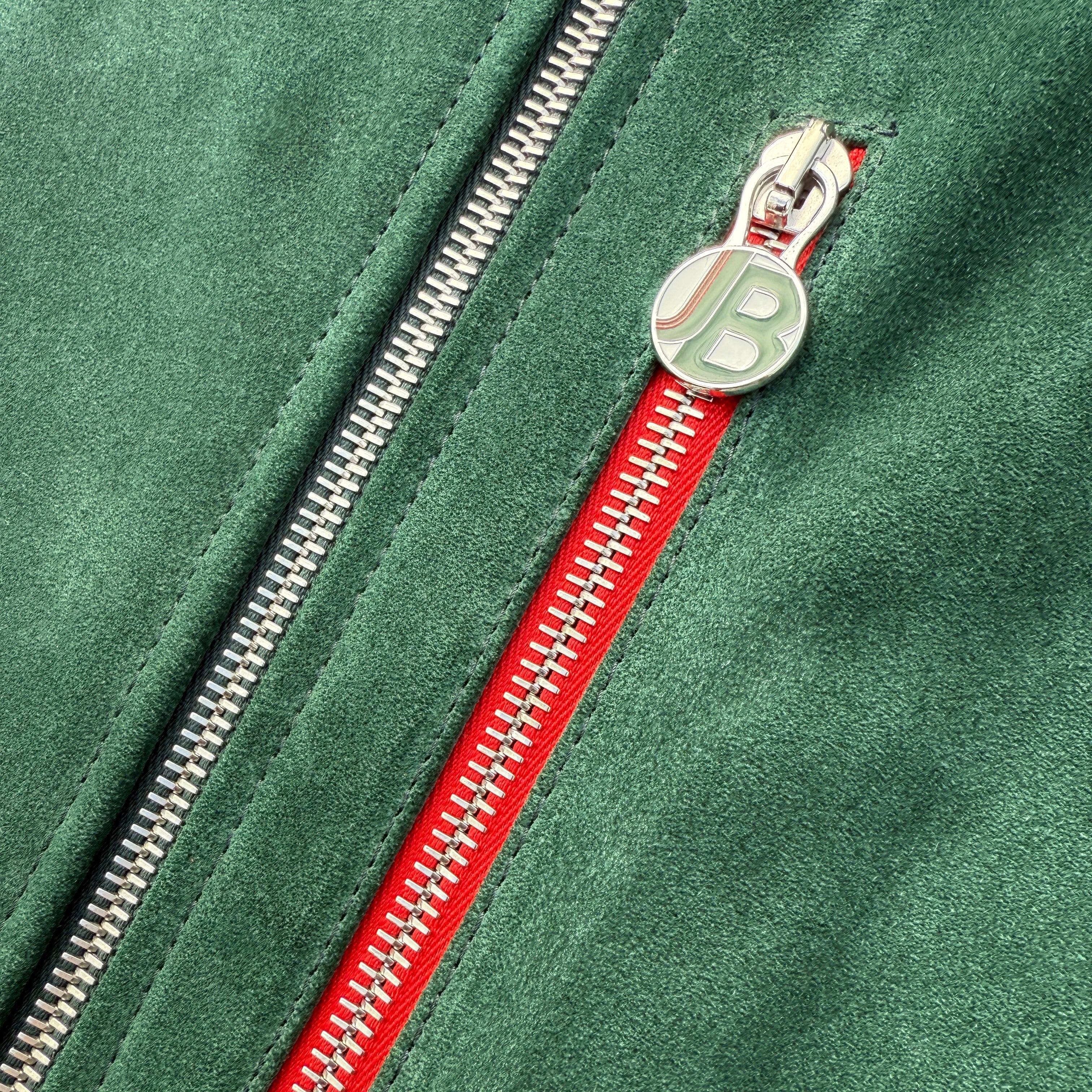
Hardware is another overlooked opportunity. The choice between bright metal and a more muted finish changes the mood at once. So does the zip. A finely engineered metal zip, such as YKK Excella, brings a crisp, elevated finish that feels entirely appropriate in a luxury context. Small details like these do not read as custom in a loud way, but they are often what make the piece feel complete.
Shape and function matter as much as decoration
A personalised leather travel piece should not only reflect who you are. It should also make sense for how you move through the world. This is where bespoke design surpasses standard luxury luggage.
If you travel with watches, driving gloves, a tablet, charging leads or race day documents, the internal architecture should account for that. A dedicated pocket for sunglasses, a secure compartment for keys, or a garment section that keeps tailoring in order can transform how often you use the bag and how much satisfaction it gives over time.
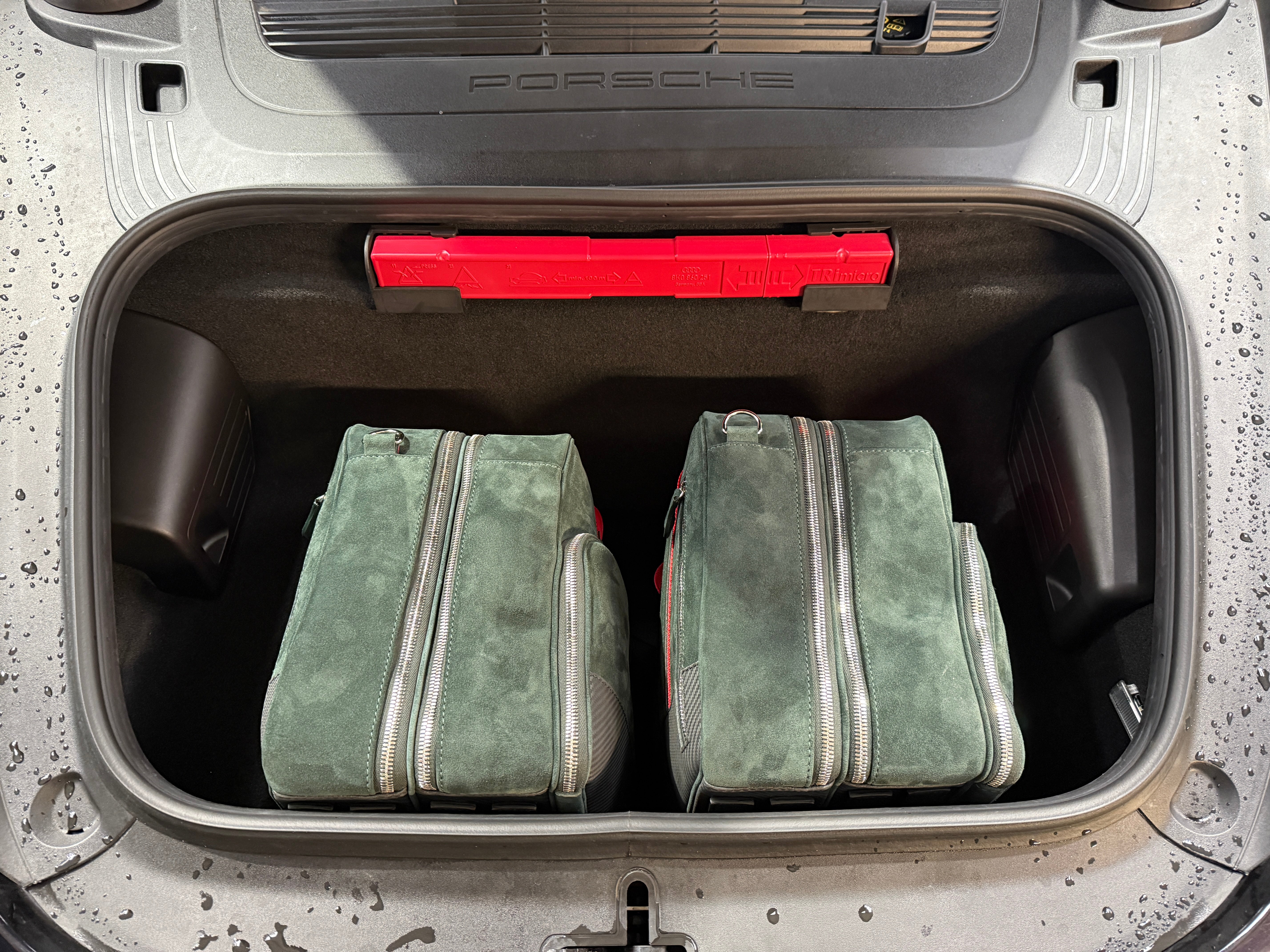
The same principle applies to dimensions. Some owners need a holdall that sits perfectly in the rear luggage shelf of a particular sports car. Others want a cabin-sized piece that avoids compromise at the airport. In both cases, proportion is part of personalisation. It is not merely about style. It is about fit, utility and rhythm.
Personalisation through automotive and motorsport cues
For those steeped in driving culture, travel goods become far more interesting when they carry an authentic link to the automotive world. The key word here is authentic. There is a difference between tasteful inspiration and novelty.
Quilted panels can reference seat patterns. Stripe details may echo historic racing colours. Perforated leather, contrast centres or Alcantara accents can bring a subtly sporting tone. When handled with precision, these cues feel intelligent rather than theatrical.
This is especially effective when the references are personal rather than generic. A bag inspired by your own motor car, your family’s racing history or a marque you have collected for years will always feel more distinguished than one that borrows broad ideas from motoring as a trend. Bespoke work is at its best when it tells your story, not merely the story of a category.
Know when to stop
One of the most valuable instincts in luxury design is knowing what to leave out. If every surface carries a motif, every panel a contrast and every fitting a flourish, the result can lose the calm authority that makes fine leather goods desirable in the first place.
The most enduring pieces usually centre on one clear idea. Perhaps it is a leather and lining combination inspired by a cherished car. Perhaps it is a beautifully proportioned holdall with discreet initials and polished hardware. Perhaps it is a race day bag whose interior is configured precisely for helmet accessories, gloves and personal effects. Whatever the concept, coherence matters more than quantity.
For that reason, the best commissions often begin with a conversation rather than a menu of options. A thoughtful maker will ask how you travel, what you value and what references genuinely mean something to you. That process tends to produce pieces with more elegance and more longevity.
A finely personalised leather travel piece should feel as though it could belong to no one else, yet never seem forced. It should look right on the move, age beautifully, and gain meaning with every journey. If it is crafted with care and specified with restraint, it becomes more than luggage. It becomes part of the life you have chosen to build.