

The wrong bag can jar more than a poor wheel choice. Set a finely trimmed cabin against generic nylon luggage and the contrast is immediate. For those who care about materials, proportion and the theatre of departure, learning how to match luggage to car interiors is less about vanity and more about coherence. A well-chosen travel set should feel as though it belongs with the car, not merely happens to be carried in it.
Why matching luggage to a car interior matters
In a prestige motor car, the interior is never incidental. Leather grain, stitch line, piping, seat perforation, veneer tone, metal finish and even the weight of a zip pull all contribute to a particular atmosphere. Luggage sits directly within that environment, so it becomes part of the composition.
That does not mean everything must be identical. An exact match can be exceptional in a bespoke commission, particularly when the luggage has been designed around a specific vehicle. Yet there is also a risk of making the result feel overworked if every panel, accent and thread tries too hard to imitate the cabin. The more sophisticated approach is often to echo the car's language rather than copy it slavishly.
When it is done well, the effect is subtle but unmistakable. The cabin feels more considered, the act of packing feels more deliberate, and the owner’s taste is expressed with the same precision as a carefully specified motor car.
How to match luggage to car interiors without overdoing it
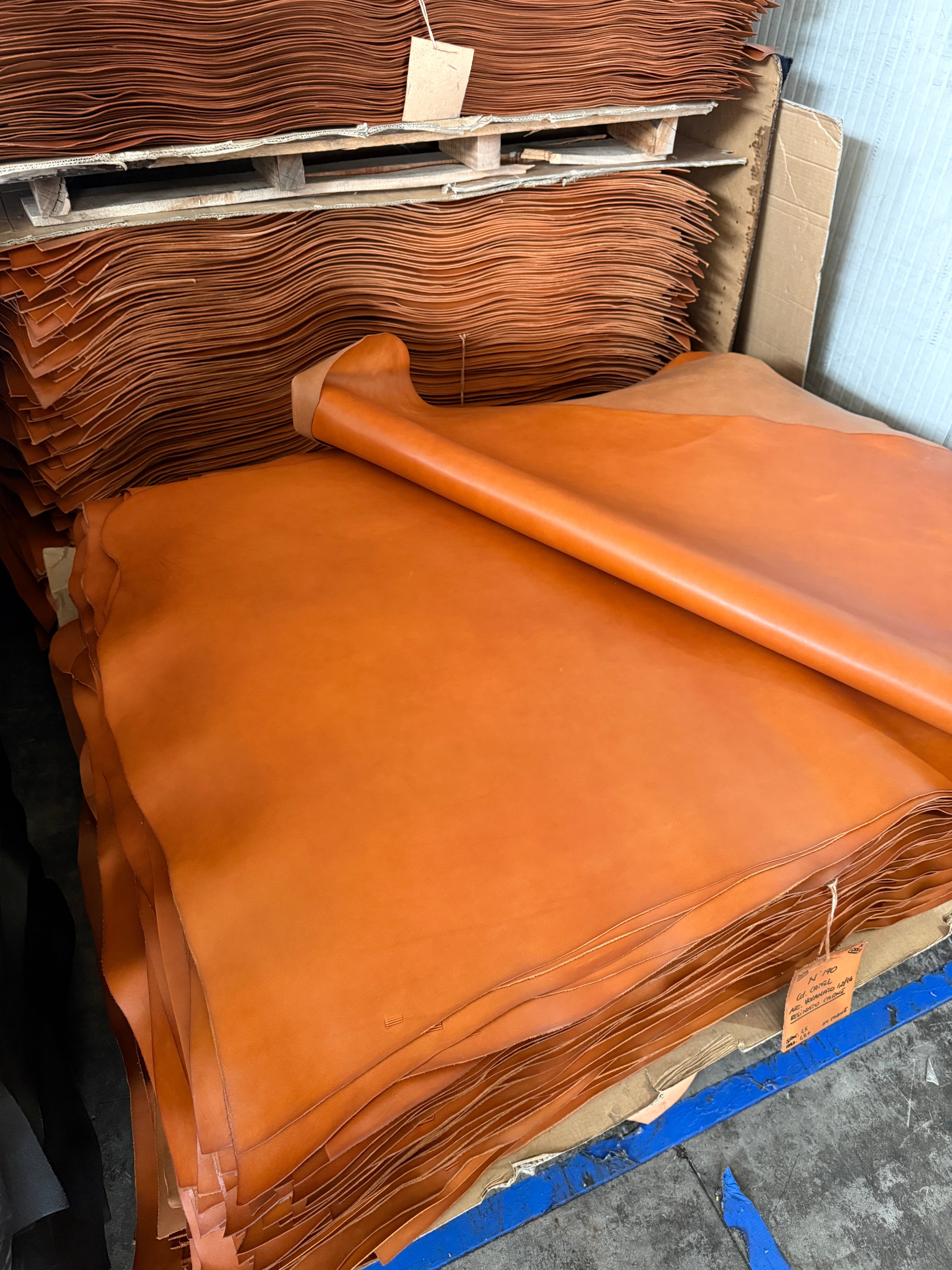
The first decision is always the dominant material and colour family. If your cabin is upholstered in a warm tan, saddle or cognac leather, luggage in similarly warm tones will generally feel natural. Dark chocolate, tobacco and certain richer burgundies can also sit beautifully here, especially if the interior includes walnut, open-pore woods or brushed metal.
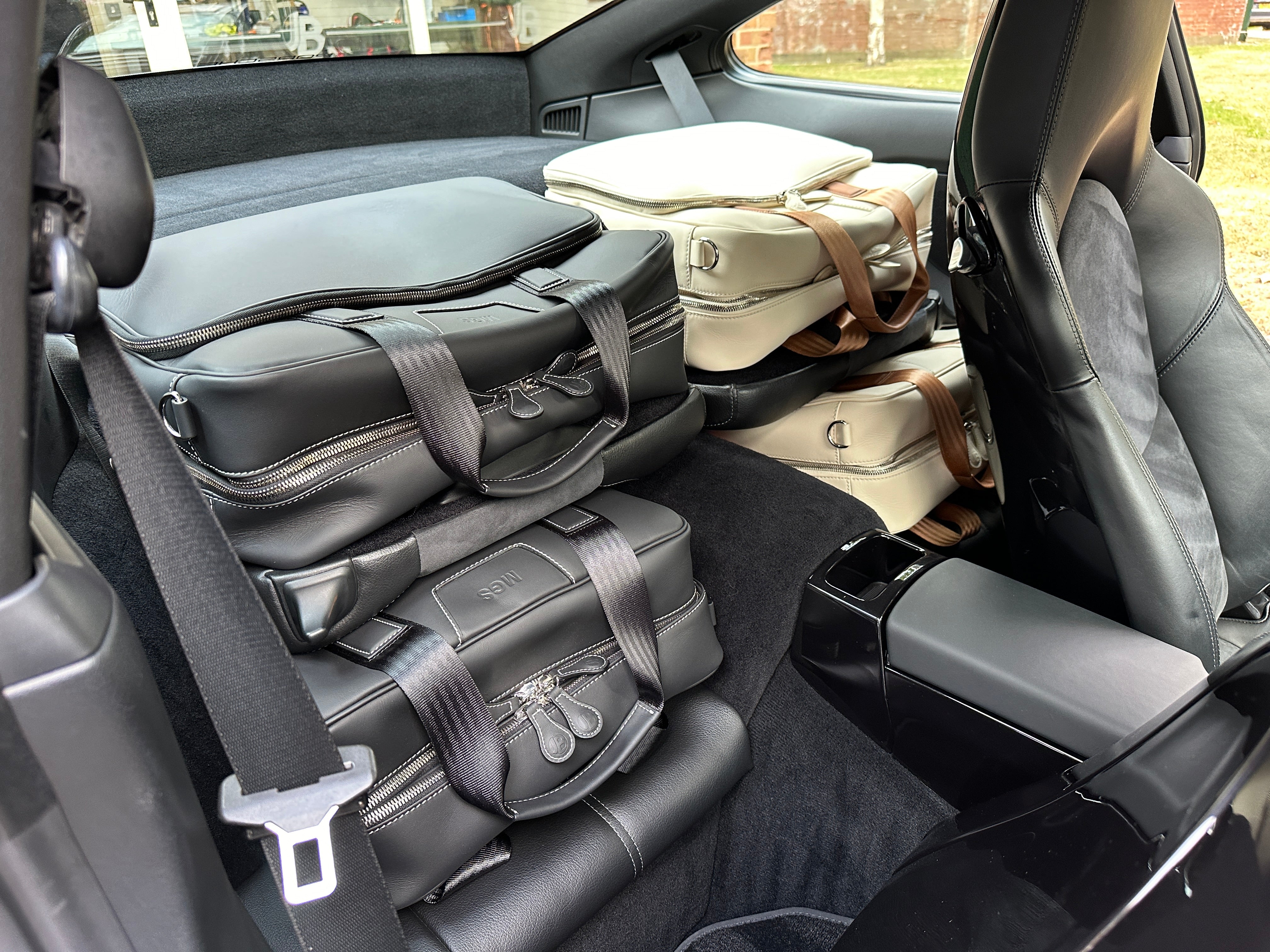
If the car has a darker cabin - black, charcoal, navy or deep oxblood - the luggage can either blend or provide controlled contrast. Black leather holdalls with tonal stitching create a discreet, architectural look in modern grand tourers and performance cars. By contrast, dark navy luggage with black handles or graphite trim can soften an all-black interior without breaking its discipline.
Texture matters as much as colour. A smooth, high-sheen leather may suit a contemporary cabin with piano black trim, crisp switchgear and sharp surfacing. A more natural grain, by comparison, tends to complement heritage-leaning interiors, classic sports cars and cabins with a more tactile, handcrafted character. If the seats have visible grain and hand-finished detailing, luggage that is too glossy or synthetic in feel will appear disconnected.
Start with the leather, not the logo
Badging is rarely the thing that makes luggage feel correct in a cabin. Material quality, edge paint, handle construction and hardware finish have a greater influence on whether a piece belongs in a luxury vehicle. The discerning eye notices restraint.
That is why plain, beautifully made leather goods usually sit more confidently in a Bentley, Aston Martin or Porsche than heavily branded alternatives. Quiet confidence tends to age better than overt declaration.
Match the undertone, not just the shade
This is where many people go wrong. Two browns may look similar at first glance, yet one leans red and the other yellow. One black may be cool and blue-toned, another soft and slightly warm. If the undertone is wrong, the luggage will never feel truly at home against the upholstery.
Natural daylight is the only reliable judge. A leather swatch viewed beside the car’s seat bolsters or centre console will tell you more in ten seconds than browsing dozens of product images ever will.
Think in layers: hide, stitching, lining and hardware
The strongest luggage sets are usually built around one principal reference and one or two supporting details. The principal reference may be the main seat leather. Supporting details might come from contrast stitching, seatbelts, brake calipers, piping, carpets or interior metalwork.
If your cabin features black leather with silver stitching, for example, a black holdall with subtle grey stitch detail and nickel hardware can feel perfectly aligned. If your car uses tan leather with dark green contrast elements, a travel bag in tan with racing green lining or piped edging can capture the spirit without becoming theatrical.
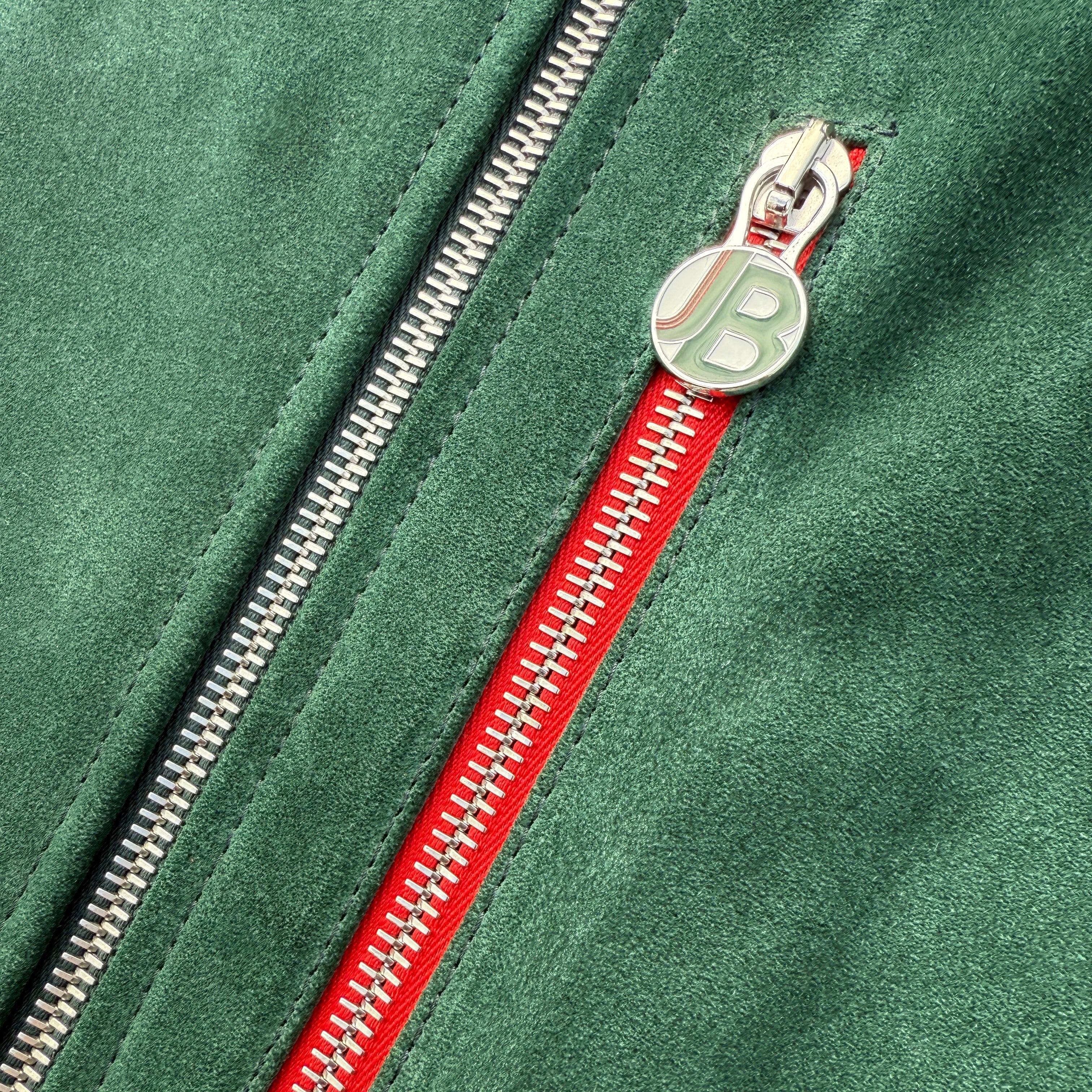
Hardware deserves particular attention. Bright chrome fittings can look too cold in an interior dominated by warm hides and aged woods. Satin nickel, antique brass or darker gunmetal may be more sympathetic depending on the cabin. Likewise, a polished zip can be exactly right in a modern supercar with machined aluminium details.
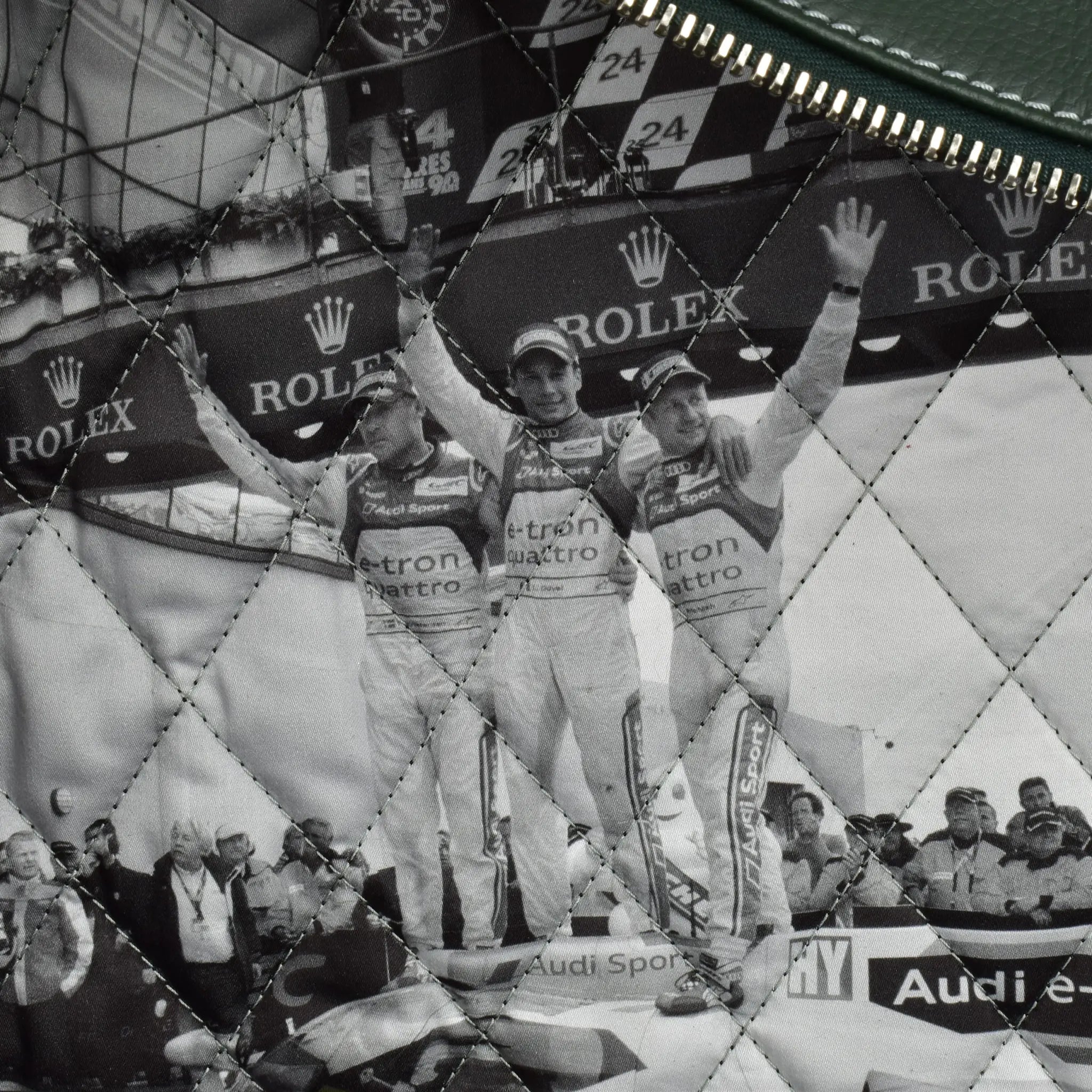
A bespoke approach allows for much finer calibration. Details such as the zip finish, the stitch colour, the lining tone and the shape of the handles can be chosen as carefully as one would specify a motor car. That level of control is what turns luggage from a travel necessity into a proper companion piece.
Proportion matters as much as palette
A bag may match beautifully in colour yet still feel wrong if the scale is off. Low-slung GTs, compact sports cars and 2+2 cabins tend to reward luggage with cleaner geometry and disciplined dimensions. Soft, oversized holdalls can look cumbersome in a cabin that is otherwise taut and tailored.
Larger luxury saloons and SUVs allow a little more generosity, but even here proportion counts. Structured pieces tend to hold their visual line better in a refined interior, and they stack more elegantly in the boot. This is especially true when travelling with more than one bag.
There is also a practical point. A luggage set designed with the car’s load space in mind will not only look right but fit properly, reducing wasted space and avoiding awkward pressure on corners, trim panels or parcel shelves. Beauty and utility are rarely opponents at this level. Usually, they arrive together.
Different cars call for different interpretations
A heritage sports car invites a different answer from a modern hyper-GT. In a classic Jaguar or Aston Martin, one might lean towards richer leathers, more natural grain, understated piping and a touch of old-world romance. In a McLaren or similarly technical machine, the language may shift to cleaner shapes, sharper panel lines, lighter construction and darker, more contemporary tones.
The same applies to motorsport-influenced interiors. If the car references racing through harness colours, seat embroidery or exposed carbon fibre, it can be compelling to introduce those cues lightly in the luggage. A flash of the right stripe, a bespoke lining, or a helmet bag trimmed to complement the cabin can be enough. Too much, and the result starts to resemble merchandise rather than personal commission.
This is where enthusiast knowledge matters. The most convincing pairings often come from understanding the car’s character, not just its paint code.
When contrast is the better choice
Matching does not always mean blending in. Some interiors benefit from a deliberate contrast, provided it is intelligent. Cream leather, for instance, can be elevated by luggage in dark olive, navy or espresso. A black interior with red details may feel more mature with luggage in deep burgundy rather than literal bright red.
Contrast works best when it speaks to the wider palette of the vehicle. Exterior paint, wheel finish and even the mood of the car should be part of the decision. A Riviera-blue sports car with pale leather might welcome a touch more spirit than a black-on-black limousine.
The key is balance. One contrasting note can look intentional. Several can look indecisive.
Bespoke luggage makes the relationship feel complete
For those who see their car as an extension of personal taste rather than mere transport, made-to-order luggage is difficult to surpass. It allows the hide, stitch, lining, piping, shape and finish to be selected with the same discernment one brings to a cabin specification. The result is not just coordinated travel gear, but an object crafted for life and designed in sympathy with the car itself.
That is particularly valuable when a vehicle carries emotional significance - a long-awaited commission, a cherished grand tourer, a car tied to family journeys or racing memories. In those cases, luggage becomes part of the ownership story. Jordan Bespoke approaches this with the same reverence for individuality that one finds in the finest coachbuilt and tailoring traditions.
A final word on restraint
The finest pairings rarely announce themselves. They register as harmony - the right leather tone, the right stitch, the right shape resting naturally within the cabin or boot. If you are deciding how to match luggage to car interiors, aim for that feeling rather than a perfect one-to-one copy. Taste usually lives in the details no one needs to point out.
Choose pieces that respect the car’s character, honour the materials around them and make every journey feel a touch more considered. That is where luggage stops being packed away and starts belonging.