

A beautifully made leather holdall should reveal its character long before it reaches the luggage rack. The handle should feel assured in the hand, the grain should carry a quiet depth, and the scent should suggest natural material rather than a synthetic finish. In the discussion of Italian leather vs English leather, these sensory details matter - but so do the less visible decisions behind them: hide selection, tannage, finishing, cutting and construction.
The useful distinction is not that one is universally superior. Italy and England represent different leather-making traditions, each capable of producing exceptional material. For a discerning owner choosing a weekend bag, helmet bag or bespoke motoring accessory, the right question is whether the leather suits the purpose, the desired patina and the life it is intended to lead.
Italian leather vs English leather: what the terms mean
Neither phrase is a protected guarantee of quality in itself. “Italian leather” can mean leather tanned and finished in Italy, leather made from hides sourced elsewhere but processed by an Italian tannery, or simply a product made in Italy. “English leather” is similarly broad. It may refer to leather tanned in England, a material associated with British saddlery traditions, or a leather style selected for a British-made product.
The provenance of the hide, the tannery’s expertise and the specification chosen by the maker carry more weight than the national label alone. Full-grain leather from a respected tannery, correctly matched to its intended use, will generally age more convincingly than a heavily corrected leather carrying an impressive-sounding origin.
That said, national traditions do influence the material’s character. Italian leather is often associated with expressive colour, suppleness and refined finishing. English leather has strong associations with equestrian equipment, footwear and country pursuits, where body, resilience and weathered character are prized. These are tendencies, not rules.
The Italian approach: colour, feel and visual depth
Italian tanneries, particularly those with long histories in vegetable tanning, are celebrated for treating leather as a material with personality. A good Italian leather may have a rich, slightly irregular grain, layers of colour within the surface and a hand that becomes more personal with wear. This makes it especially compelling for luggage designed to accompany grand touring, race weekends and frequent travel.
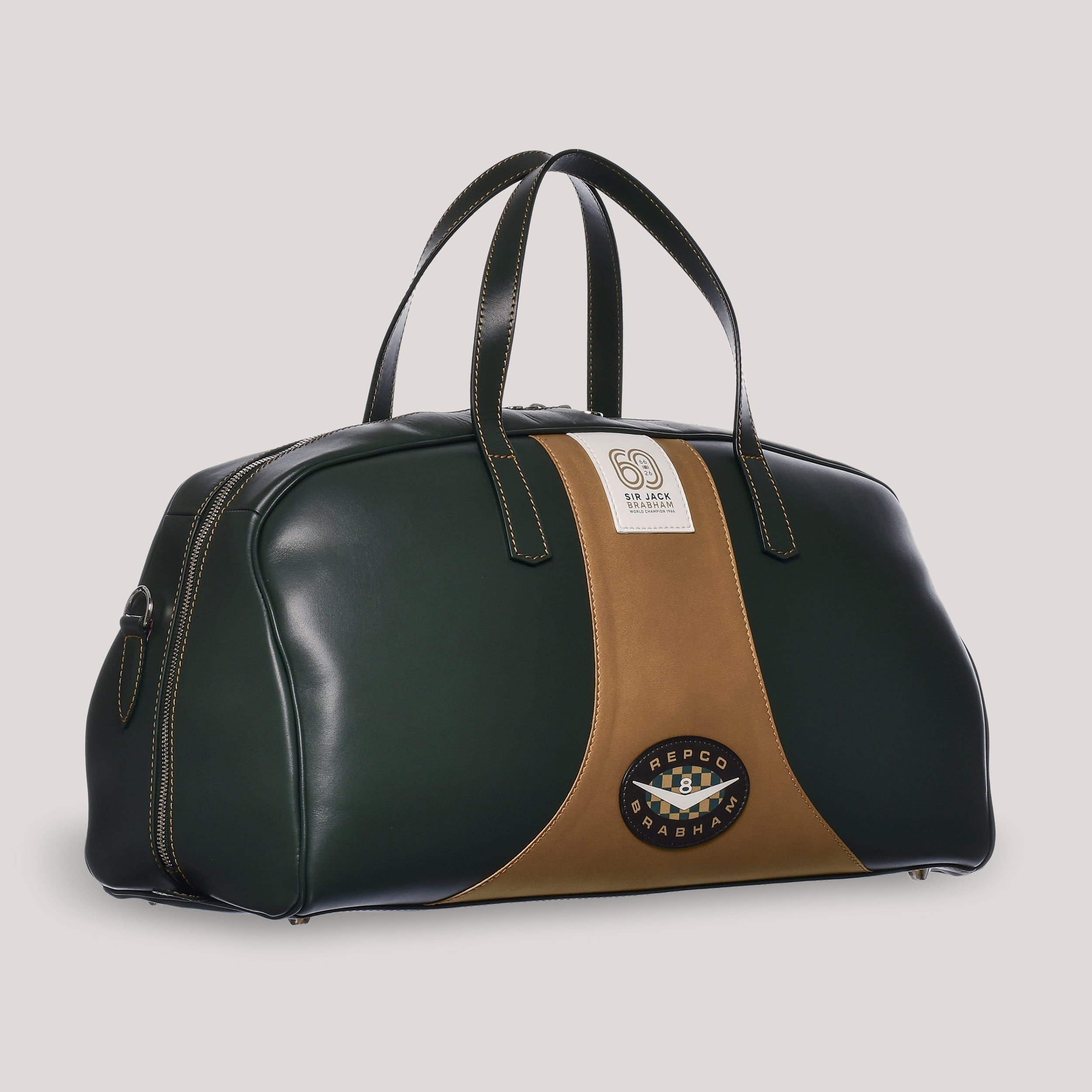
Vegetable-tanned leather is a notable part of this tradition. Tanned with plant-derived extracts, it tends to develop a distinctive patina from sunlight, handling and the natural oils in the owner’s hands. On a dark racing green holdall, a tobacco leather helmet bag or a richly coloured carryall, that evolution can be part of the appeal. It records use rather than disguising it.
Italian production also offers remarkable breadth. There are firm, structured leathers suited to briefcases and luggage bases; buttery calfskins suited to smaller accessories; and performance-minded materials with protective finishes for more demanding use. The best Italian makers understand how to combine elegance with practical engineering, whether that means a leather capable of holding its form or one selected to fold and move gracefully.
The trade-off is that a soft, open-pored leather asks for a little consideration. It may mark more readily than a heavily finished alternative, and lighter colours can reveal their journeys quickly. For many owners, that is precisely the point. A well-used weekend bag should not look anonymous after five years on the road.
The English tradition: substance and enduring restraint
English leather heritage is rooted in applications where failure was not an option: bridles, saddles, boots, luggage and field equipment. The visual language is often more restrained than flamboyant, favouring deep browns, blacks, oxbloods and traditional natural tones. Its appeal lies in substance rather than ornament.
Classic English bridle leather is perhaps the clearest example. It is usually vegetable tanned, hot-stuffed with oils and waxes, and finished to produce a dense, smooth surface. The result is leather with a firm feel, excellent edge definition and a degree of natural resistance to moisture. It is superb for straps, handles, belts and structured details that must bear repeated load without losing their composure.
This firmness can be less suitable for every part of a large travel bag. Used across an entire holdall, bridle leather may add weight and produce a more formal, rigid profile. Used selectively - at the handles, reinforcement panels and straps - it brings exactly the confidence one wants from an object designed to be carried for decades.
English-influenced leatherwork also tends to celebrate clean construction. A straightforward stitched edge, a well-burnished handle and a practical buckle can say more than excessive decoration. For an owner whose motoring taste leans towards an Aston Martin grand tourer, a classic Jaguar or a hand-built British sports car, this restraint has a particular resonance.
Tannage matters more than the passport
When comparing Italian leather vs English leather, tannage is often the more revealing measure. It determines much of the leather’s feel, ageing behaviour, durability and response to water.
Vegetable tanning takes time and rewards it. It commonly produces leather with a natural aroma, considerable depth and the capacity to patinate. It is an excellent choice for heirloom luggage, provided the owner accepts that its surface will acquire small signs of use. Those marks are not defects. They are evidence of a material that has remained honest.
Chrome tanning is faster and can create very soft, colour-consistent leathers with strong performance characteristics. It is widely used by excellent tanneries in both Italy and England. A high-quality chrome-tanned calfskin can be ideal for a garment carrier or soft-sided travel bag where weight, suppleness and colour precision are priorities.
Many luxury leathers use a combination of processes. The finest decision is rarely ideological. A bespoke commission may call for vegetable-tanned leather on the handles and trim, a softer leather for the body, and a protective lining where race kit or technical equipment is carried. The material should serve the object, not the other way around.
Grain, finish and the truth beneath the surface
Full-grain leather retains the outermost layer of the hide, including its natural grain. It is typically the most desirable choice for luxury goods because it offers strength, individuality and the best potential for graceful ageing. Small variations are expected, especially in naturally finished hides.
Top-grain leather has been lightly corrected or sanded to create a more even surface. This does not automatically make it inferior. For a clean, uniform aesthetic or a particular colour treatment, it can be an intelligent choice. The question is whether the correction has been light and purposeful, or whether it conceals poor underlying material.
Avoid judging only by softness or shine. A highly polished surface can be attractive at first glance yet reveal little about the leather beneath. Equally, a leather that feels firm in the showroom may relax into a magnificent finish through use. Ask how it has been tanned, how it will respond to rain and friction, and whether its finish can be maintained or repaired.
Choosing leather for the way you travel
A leather choice should follow the rhythm of its owner’s life. For a soft weekend holdall carried from London to the Continent, a supple Italian calfskin or vegetable-tanned hide offers a luxurious drape and a wonderfully personal patina. For a structured case, a bridle-inspired English leather may offer the integrity and crispness required to keep its shape.
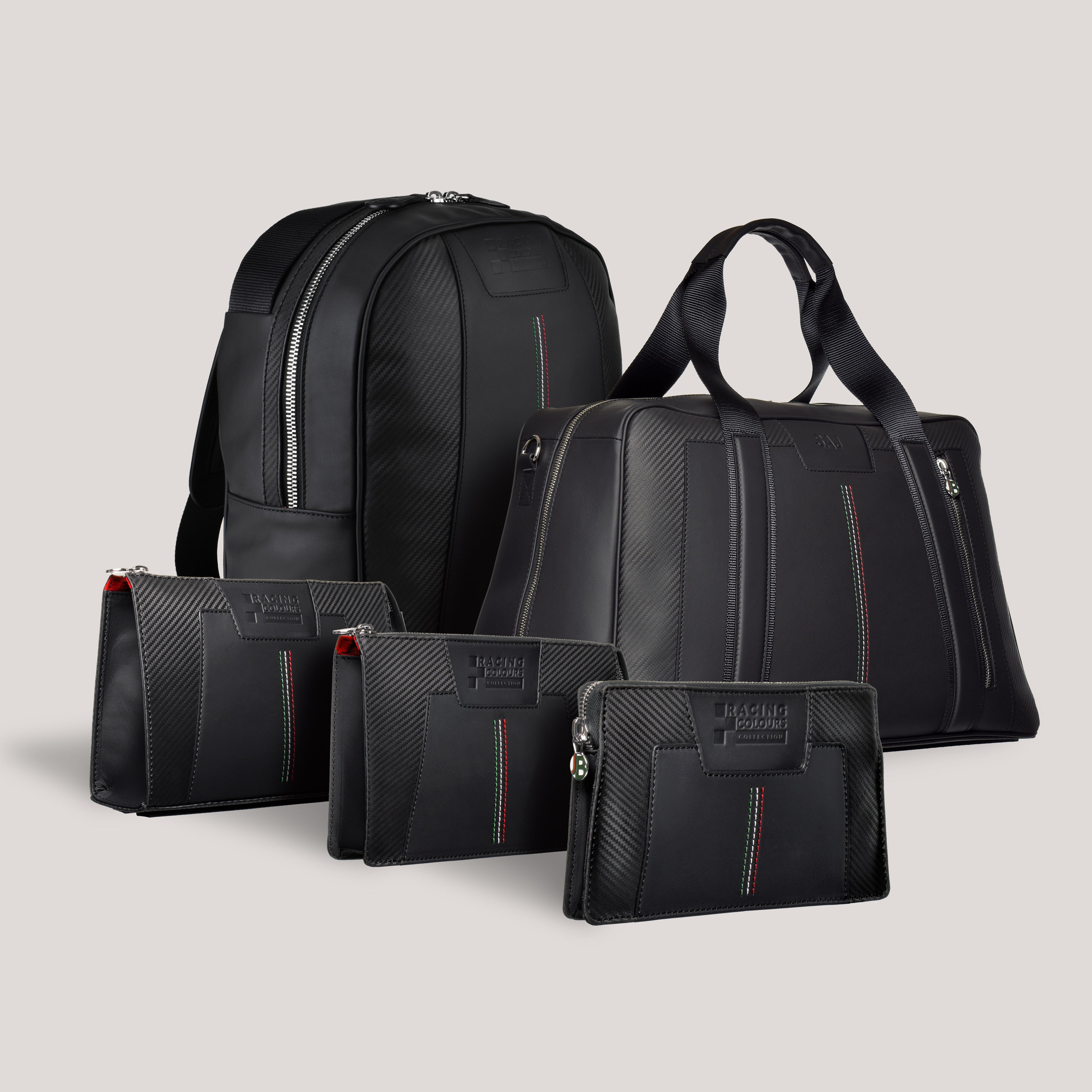
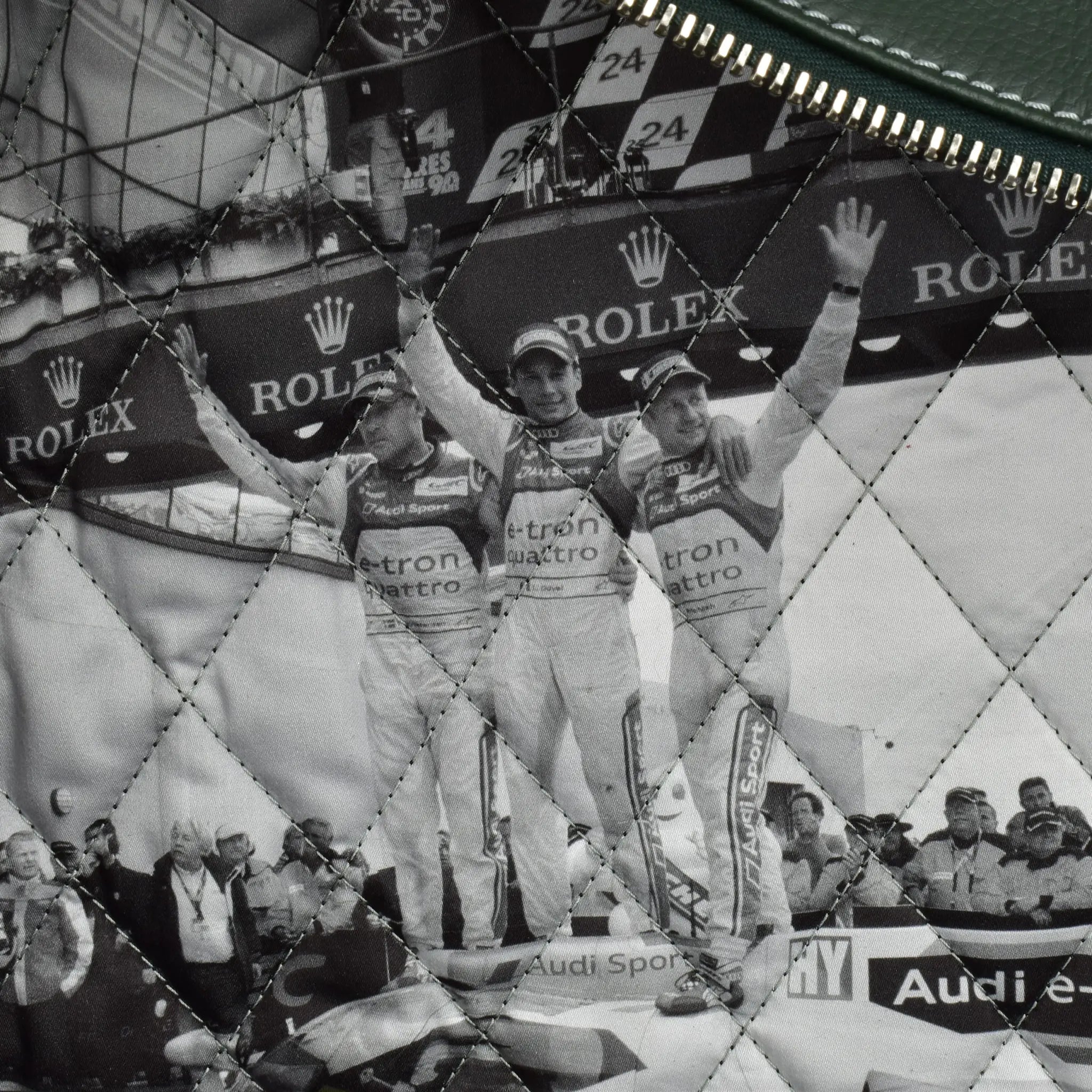
For motorsport, practicality deserves equal standing with romance. A helmet bag benefits from a leather that resists scuffing, while its interior needs protective padding and a considered lining. A race day kit bag should tolerate being set down in a pit garage, lifted from a boot and used without ceremony. Here, a carefully finished Italian leather can be as capable as an English alternative, provided it has been specified with real use in mind.
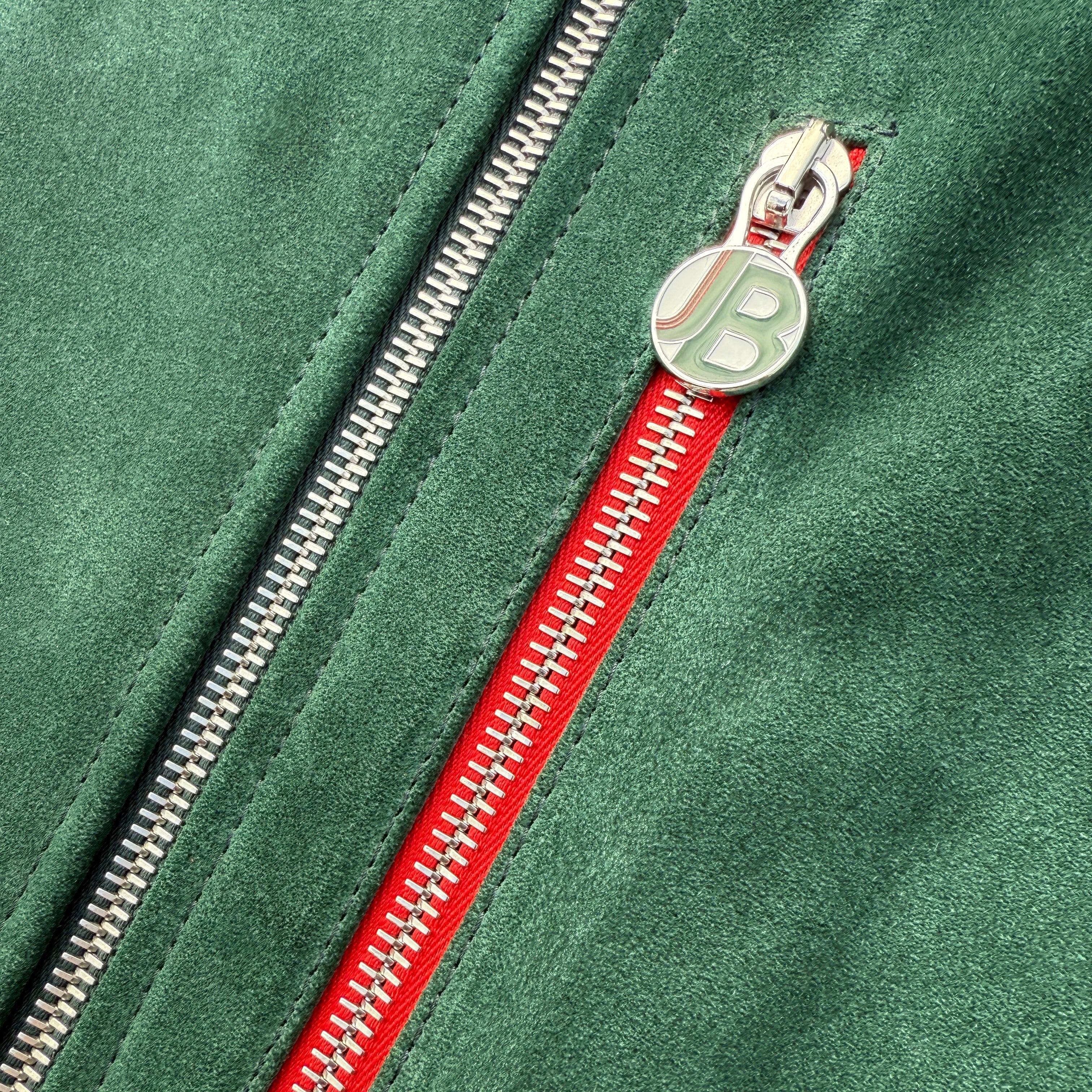
At Jordan Bespoke, British design sensibility and hand-made Italian production are not competing ideas. They are complementary disciplines: the restraint of tailored British proportion meeting the material knowledge and finishing finesse of Italian artisans. Personal details - a vehicle-matched lining, contrast stitching, racing stripe or discreet monogram - then give the piece a provenance that no off-the-shelf label can provide.
A leather worth living with
Choose Italian leather when you value colour, tactile richness and an evolving finish. Choose English leather when you are drawn to traditional substance, structured strength and equestrian-inspired restraint. Choose neither merely for the name.
The most satisfying leather is the one that becomes more convincing as it travels with you: developing a patina after long drives, carrying the marks of memorable circuits and still feeling entirely at home beside the car it was made to accompany.