

A grand tour should begin at the garage, not with a suitcase balanced on the drive and a boot that refuses to close. This supercar luggage fit guide is for drivers who understand that luggage is part of the journey’s design: it must sit properly within the car, protect what matters, and look wholly at home beside the machine.
A performance car’s luggage compartment is rarely generous in the conventional sense. Its value lies in its precision. The front boot of a mid-engined car, the shallow rear shelf of a GT, or the carefully divided compartment in a rear-engined model all impose their own rules. The right bag does not simply offer a useful number of litres. It respects the exact shape, aperture and character of the space.
Start with the car, not the bag
The most common mistake is buying luggage according to stated capacity. Litres are useful for comparing two conventional holdalls, but they say very little about whether a piece will pass through a narrow opening, clear a closing bonnet, or sit below an irregular bulkhead.
Measure the compartment at its narrowest points first. Record the width, depth and height, then measure the opening separately. A bag may fit inside the boot in theory yet be impossible to load through the aperture. Pay particular attention to hinges, struts, latches and trim contours. These are the details that turn an apparently practical rectangular space into something far more specific.
A simple cardboard template can be revealing, particularly where a compartment tapers sharply. Cut it to the proposed base dimensions and test it in the car. It will show where the luggage needs a softened corner, a stepped profile or a lower height. For a collector with several cars, retain a note of these measurements with each vehicle’s specification. It makes future travel planning and bespoke commissions considerably more straightforward.
The shape of a boot matters more than its volume
Supercar storage tends to favour low, wide forms over tall luggage. A traditional upright cabin case may be handsome in an airport lounge but waste most of a shallow front boot. Conversely, a long, slim holdall can be ideal in a grand tourer with a broad rear compartment, even if its capacity is modest on paper.
Soft-sided luggage has a clear advantage where the space includes curves or changes in height. Fine leather will settle gently against the compartment, while a thoughtfully constructed bag can retain enough structure to protect its contents. The distinction matters: excessively floppy luggage is difficult to pack and can look untidy, while a hard shell may press against delicate trim or leave unusable gaps around its edges.
The most successful pieces balance a shaped, reinforced base with pliant upper panels. This allows the bag to sit accurately while accommodating a folded knitwear layer or an extra shirt without fighting the car’s closing line.
A supercar luggage fit guide to measuring properly
Before choosing a set, take six measurements: the opening width and height, the internal width and depth, the lowest point of the lid or bonnet, and the position of any intrusion such as a latch housing. Measure in millimetres rather than rounding to centimetres. In a compact front boot, 15 millimetres can decide whether a zip clears cleanly or catches the closing panel.
Consider the loading route as carefully as the final position. Some compartments are deep but accessed from above at an awkward angle. A bag with rigid end panels may need more room to rotate into place than its finished footprint suggests. Handles also deserve attention. They should fold flat or sit within the bag’s profile, rather than becoming the unexpected point of contact.
Do not ignore what sits beneath the luggage. Many high-performance cars use lightweight carpets and finely finished liners that mark easily. Metal feet, exposed hardware and coarse canvas bases can be unnecessarily abrasive. A smooth leather or microfibre base, discreet protective feet and considered piping are small details with a meaningful effect over years of ownership.
For cars used regularly rather than displayed, leave a little tolerance. A bag designed to occupy every last millimetre may be satisfying once, but it becomes tiresome on a damp morning at a hotel when an extra layer or charging cable needs to come home with you. Precision should make travelling easier, not create another ritual to manage.
Pack for the journey you actually take
A two-night drive to the Continent calls for different luggage from a week at a villa, a track day, or a long weekend that includes a formal dinner. The instinct to take one large bag is understandable, yet two smaller, complementary pieces often work better in a supercar. They can be loaded around mechanical intrusions, divided between passengers and carried into a hotel without fuss.
For a short grand tour, a compact weekend holdall and a slim garment carrier are often the most elegant pairing. The holdall carries knitwear, shoes and casual clothing, while the garment piece preserves a jacket or evening attire. If the car’s compartment is particularly low, a garment carrier designed to fold precisely can provide far more practical value than a deeper but inflexible case.
Track day travel presents another equation. A helmet bag needs protective padding and a stable form, but it should not be overbuilt to the point of consuming all available space. Racewear, gloves, HANS device, footwear and personal items benefit from separate compartments. Keeping hard equipment away from leather shoes, visors and electronics prevents the familiar post-event scramble at the circuit paddock.
For longer journeys, place heavier items low and towards the centre of the vehicle where possible. This is good practice for protecting the luggage and helps prevent loose items shifting under braking or through fast directional changes. A supercar is not a static display case. Even on a relaxed road, luggage should feel composed.
Bespoke luggage is about more than a perfect outline
A fitted luggage set can be made to follow the exact footprint of a specific compartment, but its real value is the thought behind it. The best commissions account for how an owner uses the car, whether the luggage must suit both a coupé and a convertible, and whether it will be carried from road to rail or aircraft.
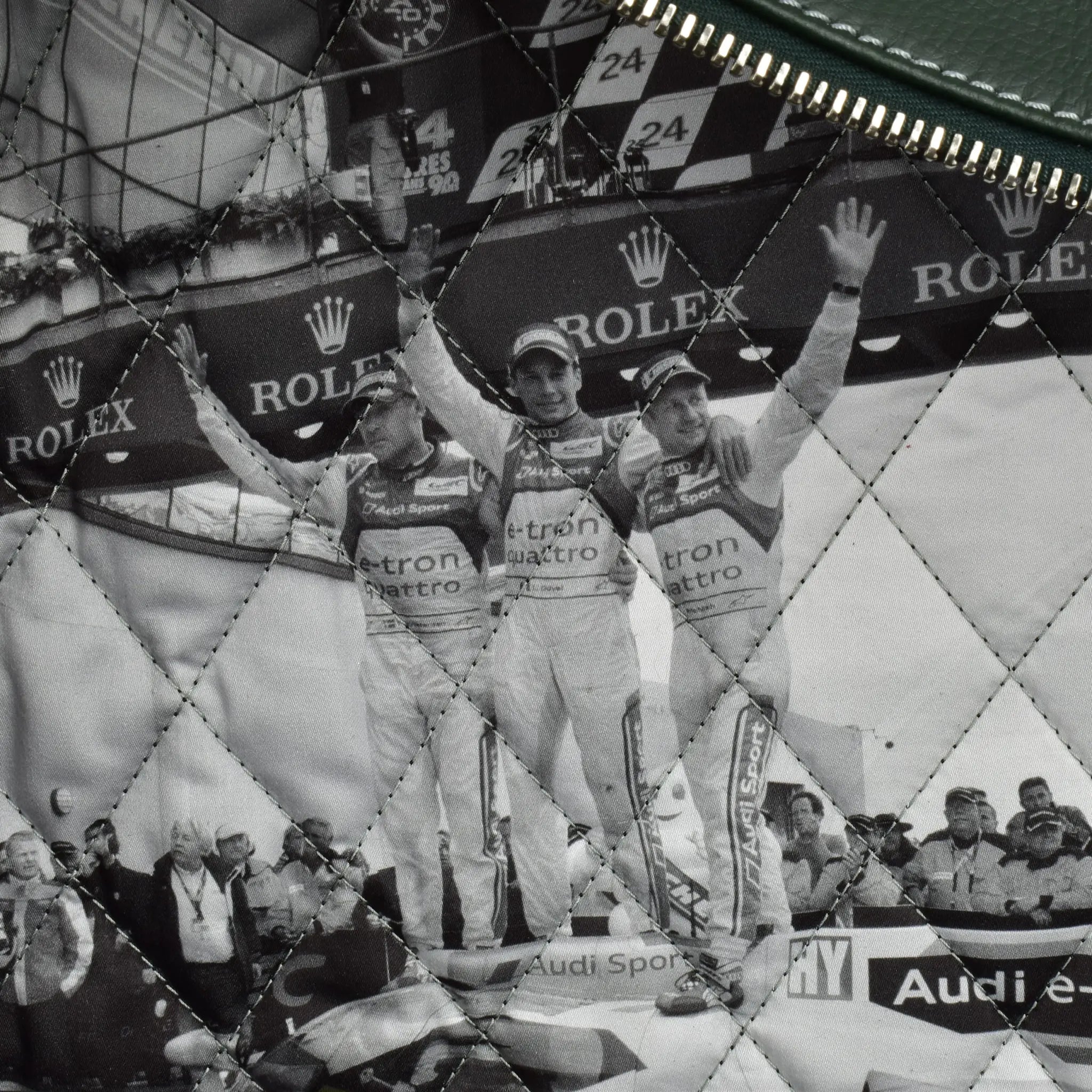
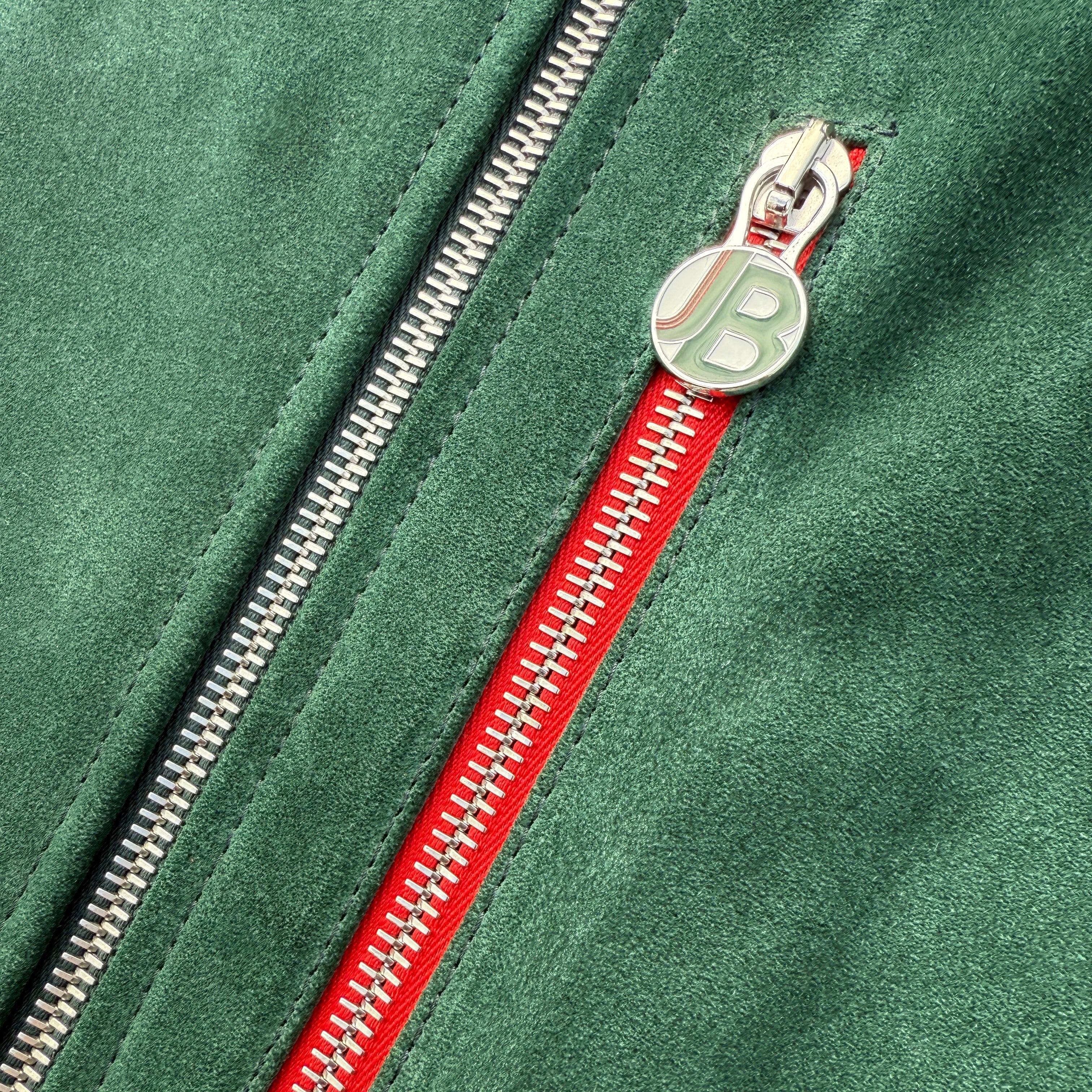
Material selection plays a major role. Tuscan leather brings depth, warmth and a character that develops with use, while lightweight technical fabrics can be the better choice for frequent track travel or weight-conscious applications. A contrast lining can echo upholstery, exterior paint or a personal racing number without becoming theatrical. Details such as hand-stitched handles, leather-bound zip pulls and YKK Excella zips give the luggage the same sense of occasion as the car itself.
There are trade-offs. A precisely fitted pair for one particular model will offer exceptional presentation and efficient use of space, but may be less adaptable if the car changes. A more versatile collection, based on a client’s preferred dimensions and travel habits, can move easily between several vehicles. Neither approach is inherently superior. The right answer depends on whether the luggage is intended as an extension of one special car or as a constant companion across a wider garage.
At Jordan Bespoke, this conversation begins with the vehicle and the owner rather than a standard bag shape. A commission may reference a cabin’s leather, contrast stitching or motorsport history, but it must first earn its place through proportion, function and finish.
Protect the car as carefully as the contents
Avoid forcing luggage into place. If a zip needs to be compressed against a panel or a handle must be folded at an unnatural angle, the fit is not right. Leather can withstand years of travel when properly made, yet any material will suffer if repeatedly trapped against hinges or sharp trim.
Keep a soft microfibre cloth or thin protective mat in the compartment for longer trips, particularly when loading bags on dusty routes or after a track event. Check that loose buckles, shoe bags and charging leads are contained before setting off. The aim is not to wrap the car in cotton wool. It is to preserve the calm, deliberate experience that drew you to it in the first place.
A well-considered luggage set changes the nature of departure. There is no compromise at the boot, no reluctant second car, and no suggestion that a proper journey requires leaving the best machine at home. Measure with care, commission with purpose, and let every bag feel as considered as the road ahead.