

A fine motor car is rarely chosen from a single specification. Its owner considers the character of the engine, the finish of the cabin, the stitching beneath their fingertips and the story it will carry over thousands of miles. Luggage deserves the same consideration. In the choice of bespoke versus off the shelf, the question is not simply whether one is better. It is whether the piece reflects the way you travel, drive and live.
A ready-to-own holdall can be an exceptionally handsome, practical companion. Bespoke, however, begins where a standard format ends: with your car, your habits and the details that make an object unmistakably yours.
Bespoke versus off the shelf: the real distinction
Off-the-shelf luggage is designed to satisfy a broadly shared brief. It offers a defined silhouette, a considered choice of colours and materials, and immediate availability. When it is well made, it can deliver great utility and visual presence without delay. For a last-minute race weekend, a regular business route or a gift, this directness has real appeal.
Bespoke luggage is commissioned around an individual brief. The dimensions may be refined to suit a particular boot, the leather selected to echo an interior, and the lining chosen for a private flourish known only to its owner. A helmet bag can be shaped around the demands of a particular discipline. A weekend holdall can be made to sit beautifully alongside a companion case, rather than compete with it.
The difference is comparable to buying a finely cut jacket and having one made. Both may be made from excellent cloth. Yet the latter accounts for proportion, posture and preference, resulting in something with a more personal relationship to its owner.
When ready-to-own is exactly right
There is no virtue in commissioning for its own sake. A thoughtfully designed ready-to-own piece is often the right choice for those who value a proven design and wish to begin using it at once. The proportions have already been resolved, the hardware has been tested, and the selected material combinations represent the maker’s considered point of view.
This makes particular sense when your requirements are straightforward. Perhaps you need a discreet leather grip for overnight travel, a smart document case for the working week, or a durable kit bag to move between circuit, hotel and home. In these cases, the appeal lies in confidence: one can choose a piece that is already balanced in form and function.
Ready-to-own collections can also carry a welcome sense of restraint. Not every object needs a monogram, contrast stitch or elaborate backstory. A beautifully executed bag in deep navy, racing green or tobacco leather has its own quiet authority. The discerning choice is sometimes to recognise that a design is complete as it stands.
What a bespoke commission makes possible
For the client with a more exacting vision, bespoke changes the nature of ownership. It makes room for the details that conventional production cannot accommodate economically or elegantly.
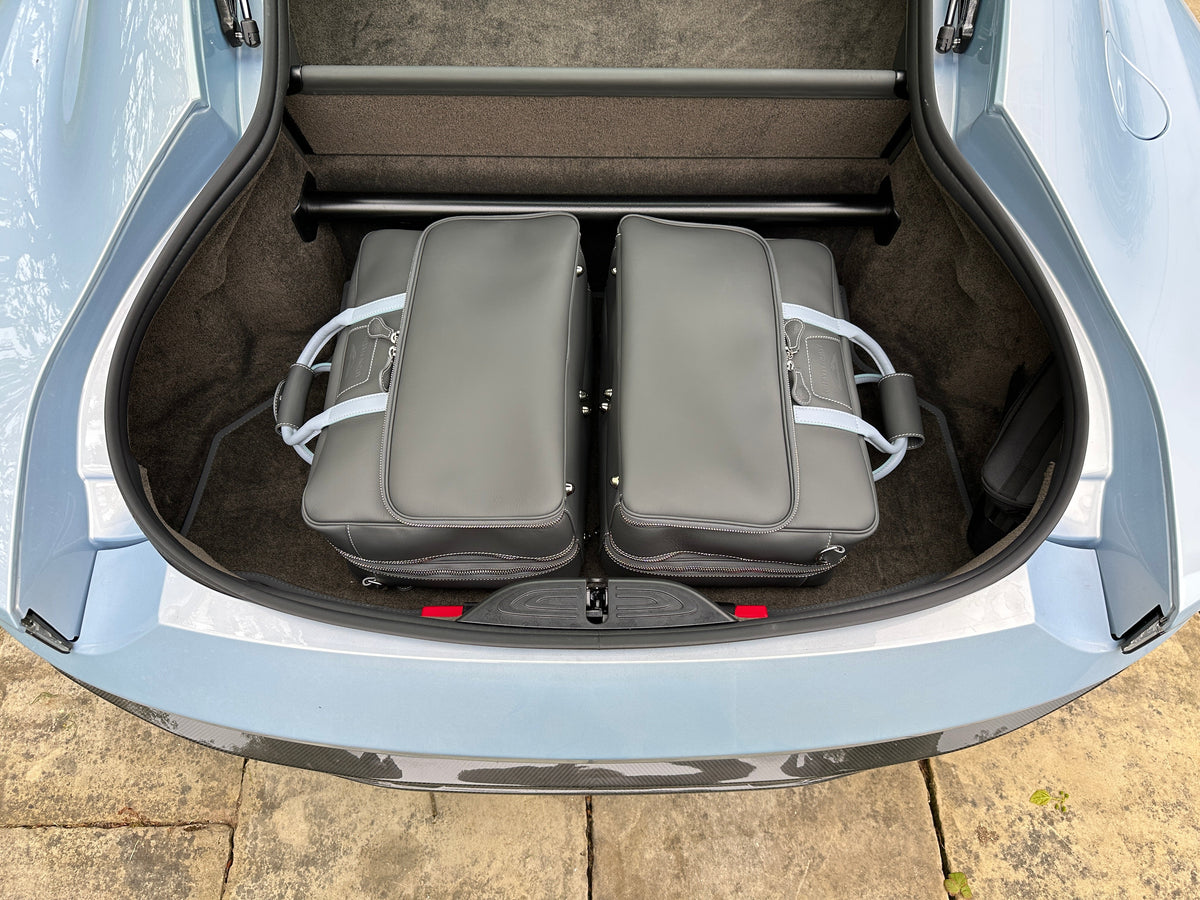
The starting point may be practical. Owners of grand tourers and sports cars often require luggage to work within unusually shaped spaces. A tailored set can make intelligent use of the available volume, avoiding the familiar compromise of forcing a generic bag into a carefully engineered boot. For longer continental journeys, that additional precision can make packing feel less like an afterthought.
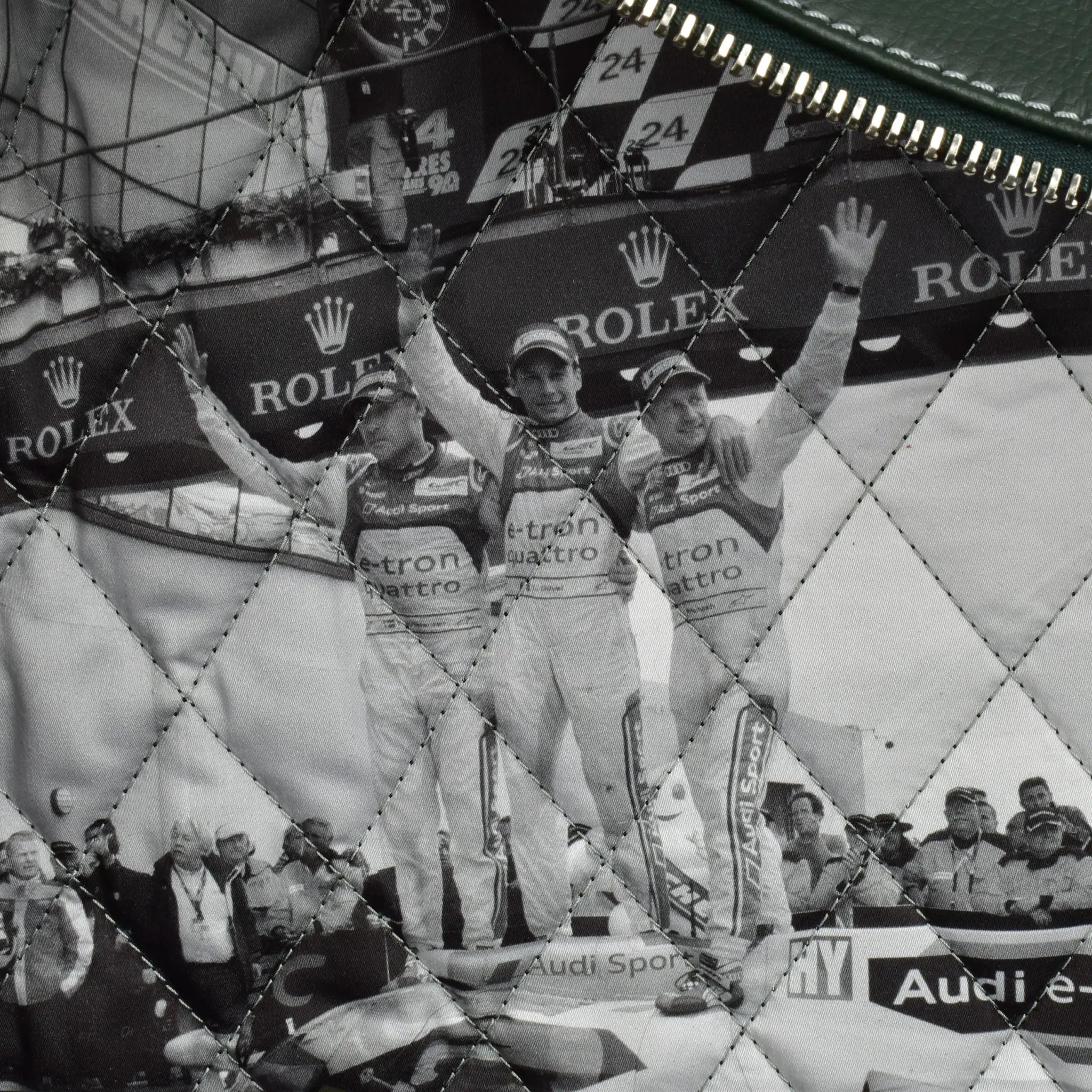
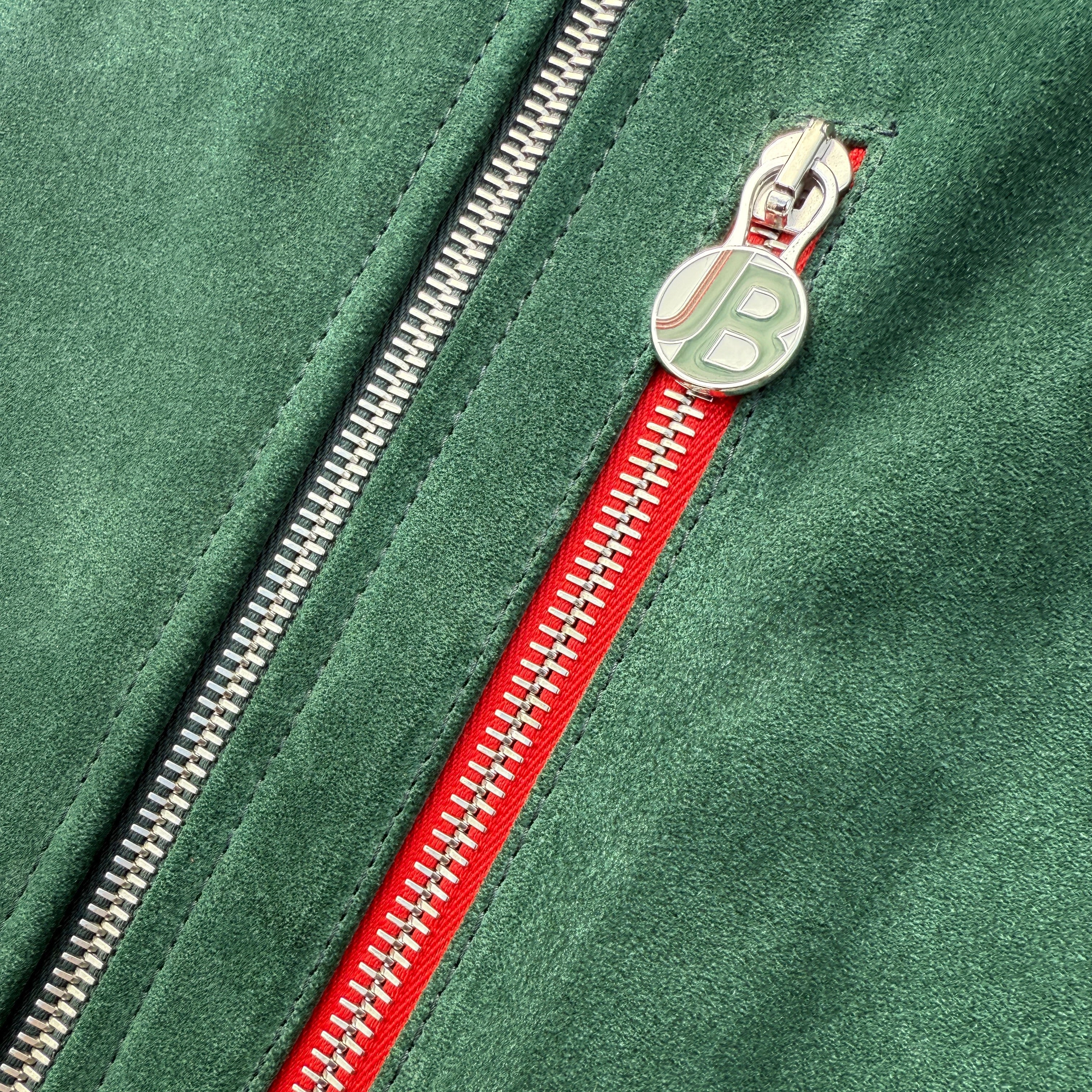
Then comes materiality. A commissioned piece may take its cue from the warm saddle leather of a classic interior, the technical weave of a modern performance car, or the colours of a cherished racing livery. Tuscan leather, Alcantara-style linings, contrasting edge paint and polished YKK Excella zips each contribute to the experience, but their value lies in how they are brought together.
Personal references should be handled with judgement. A subtle lining in team colours, a date embossed inside a pocket, or a thread colour drawn from a car’s dashboard can say far more than a loud exterior treatment. The finest bespoke work feels coherent rather than decorated. It has the confidence of a car specified by someone who understands that the smallest decisions often have the longest life.
Craftsmanship is more than personalisation
It is tempting to treat bespoke as a menu of options. That understates the craft. Genuine bespoke work is an act of problem-solving, informed by the hand of the maker and the intended use of the piece.
A quality holdall must carry its weight well, retain its shape and become more characterful with use. Handles need to feel right in the hand. Zip placement must make packing natural rather than awkward. Leather selection matters not only for colour and grain, but also for how it will wear, soften and patinate over time. These are decisions that cannot be reduced to an online configurator.
Handmade Italian production brings a particular fluency to leatherwork: accurate cutting, skilful edge finishing and an understanding of structure that allows a bag to feel substantial without becoming cumbersome. At Jordan Bespoke, that expertise is paired with a British automotive sensibility, where every detail must earn its place and the finished object should feel crafted for life.
The value question: price, permanence and purpose
Off-the-shelf luggage will generally carry a lower initial cost than a bespoke commission. It benefits from established patterns, repeatable material choices and a more efficient production process. That does not make it lesser; it makes it a different proposition.
Bespoke demands more time, conversation and specialist labour. The price reflects not just superior materials or hand finishing, but development: determining what is needed, resolving the construction and producing a piece with a narrower, personal purpose. If the bag is intended to accompany a significant car, mark a racing achievement or become a familiar part of every journey, that investment may feel entirely justified.
Value also depends on longevity. A beautifully made leather piece should not be judged only on its first appearance. It should be judged after a decade of hotel lobbies, trackside mornings and weekend departures. Full-grain leather develops a record of use. Minor marks become part of its story, especially when the construction is strong enough to deserve repair rather than replacement.
There are occasions, of course, when a bespoke commission is excessive. If the item will be used rarely, subjected to harsh treatment, or chosen under a tight deadline, a ready-to-own alternative may be the more intelligent purchase. Luxury is not defined by selecting the most elaborate option. It is defined by choosing with care.
How to decide what suits you
Begin with the journey, not the bag. Consider what you carry, how often you travel and where the piece will sit when not in use. If you are packing for two nights away in a coupé, dimensions may be central. If you move regularly between a paddock and a hotel, compartmentalisation and durability may take priority. If you are presenting a gift, immediate availability and a timeless design may matter most.
Next, consider the emotional role of the object. Is it a useful addition to a wardrobe, or a symbol of individuality connected to a significant vehicle, a racing career or a family tradition? The more personal the answer, the stronger the case for bespoke becomes.
Finally, allow enough time for the right decision. Bespoke should never feel hurried. The pleasure lies partly in the dialogue: considering leather, lining, hardware and proportion until the design feels inevitable. Ready-to-own, by contrast, is at its best when it offers the same assurance without the wait.
The right luggage does more than carry what you need. It brings a sense of occasion to the moment you load the car, leave the circuit or set out for a long-awaited weekend away. Choose the piece that belongs naturally to that moment, and it will reward every mile.