

A weekend holdall should feel as considered as the car waiting outside the house. Its proportions ought to sit naturally in a grand tourer’s boot, its leather should acquire character rather than simply wear out, and every detail should have a reason to be there. That is the enduring appeal of British design Italian craftsmanship: a meeting of disciplined purpose and deeply skilled making, expressed in objects crafted for life.
For the discerning driver, luggage is not an afterthought to a journey. It is part of the ritual. It accompanies early starts for Goodwood, a crossing to the Continent, a track day, or an unhurried weekend away. The best pieces carry more than clothing and equipment. They carry a point of view.
British design Italian craftsmanship: two disciplines, one standard
British design brings a particular clarity. It values proportion, restraint and utility without sacrificing presence. There is an inherited understanding that luxury need not announce itself loudly. A beautiful piece may be defined by the line of its handles, the balance of its panels, the considered placement of a pocket, or the way it works alongside a tailored coat and a favourite driving jacket.
Italian craftsmanship brings that design to life through the hand. In Italy’s finest workshops, leather is selected not merely for its appearance but for how it will respond to cutting, stitching, turning and years of use. A maker understands the temper of a hide, the tension required in a seam, and the difference a fraction of a millimetre can make to an edge finish.
Neither discipline is sufficient on its own. Design without technical understanding can become decorative. Craft without a clear design language can become elaborate but unfocused. Together, they create luggage with conviction: purposeful, tactile and unmistakably personal.
Why automotive luggage demands more than a handsome silhouette
Motorsport and automotive culture have always rewarded precision. A racing driver does not accept vague steering feedback. A collector does not choose a car solely for its badge. The same discernment applies to the equipment that travels with them.
A properly designed helmet bag, for example, must protect a helmet’s paintwork and visor while remaining easy to carry through a paddock. Its lining must be soft, its structure supportive and its opening generous enough to avoid awkward handling. A race day kit bag must accommodate boots, gloves, racewear and personal essentials, but it should not become shapeless once filled.
For a weekend holdall, the considerations are different but no less exacting. The bag must open wide enough to pack efficiently, retain an elegant form, and feel comfortable in the hand when loaded. It may need to fit a particular luggage compartment or complement a car’s cabin palette. This is where British design Italian craftsmanship proves its value: every aesthetic decision is tested against real use.
Materials with a purpose
Leather remains central to the experience, but not all leather tells the same story. Full-grain Tuscan leather offers depth, natural variation and a patina that becomes more individual with every journey. It rewards use. A subtle grain can be especially suited to frequently handled bags, while smoother leathers offer a cleaner, more formal expression and bring the richness of colour to the fore.
The choice depends on how the piece will live. A light-coloured, smooth leather weekend bag can look exceptional against a pale leather interior, but it will ask more of its owner than a darker, textured hide. That is not a flaw. It is a worthwhile trade-off for those who value its particular finish. For frequent race-day use, a more resilient leather or carefully selected technical material may be the better answer.
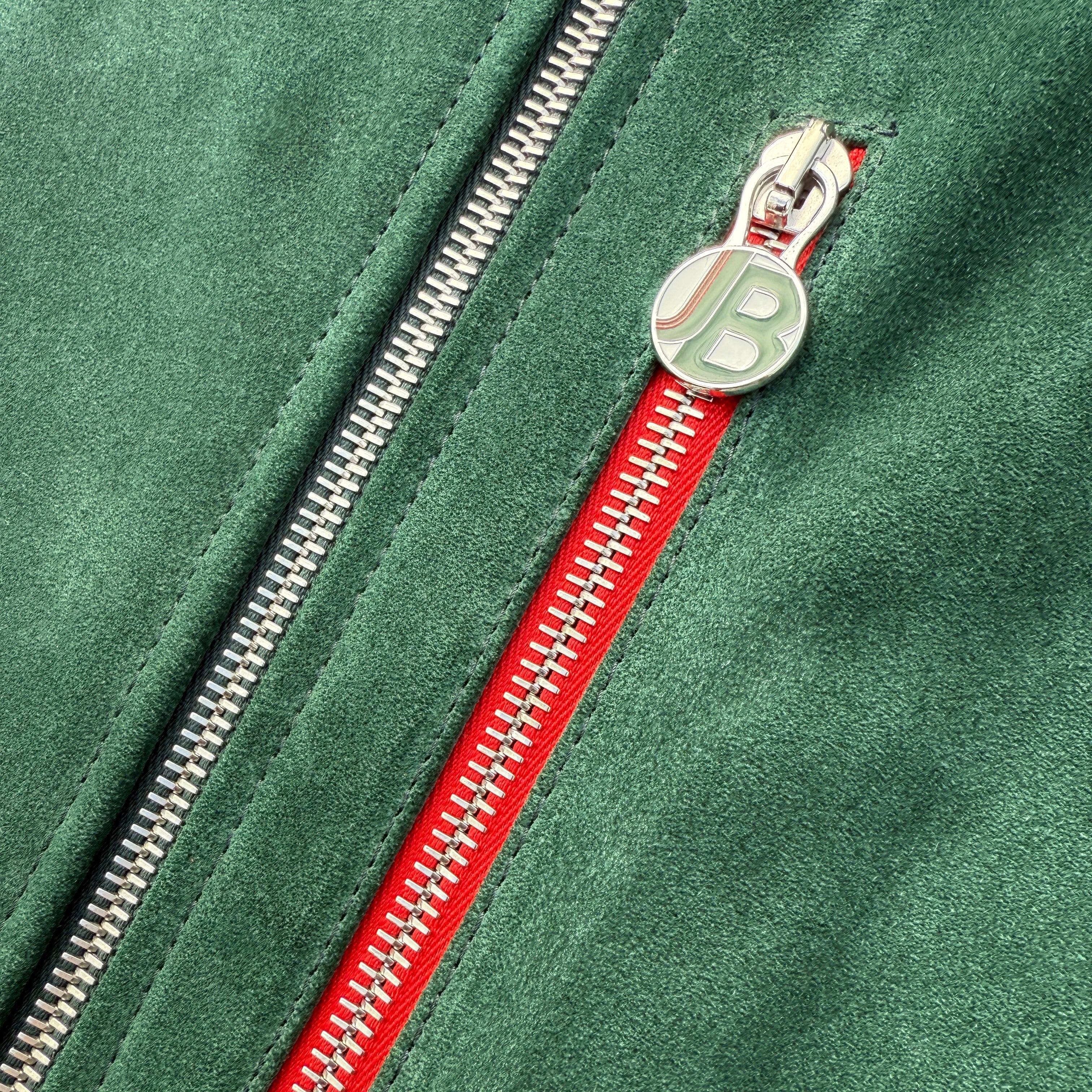
Hardware should be chosen with equal care. The reassuring glide of a YKK Excella zip, the weight of a solid metal fitting and the neat closure of a hand-finished leather tab all influence how a bag feels in daily use. These are small encounters, repeated over many years. They deserve attention.
Bespoke is a language of personal detail
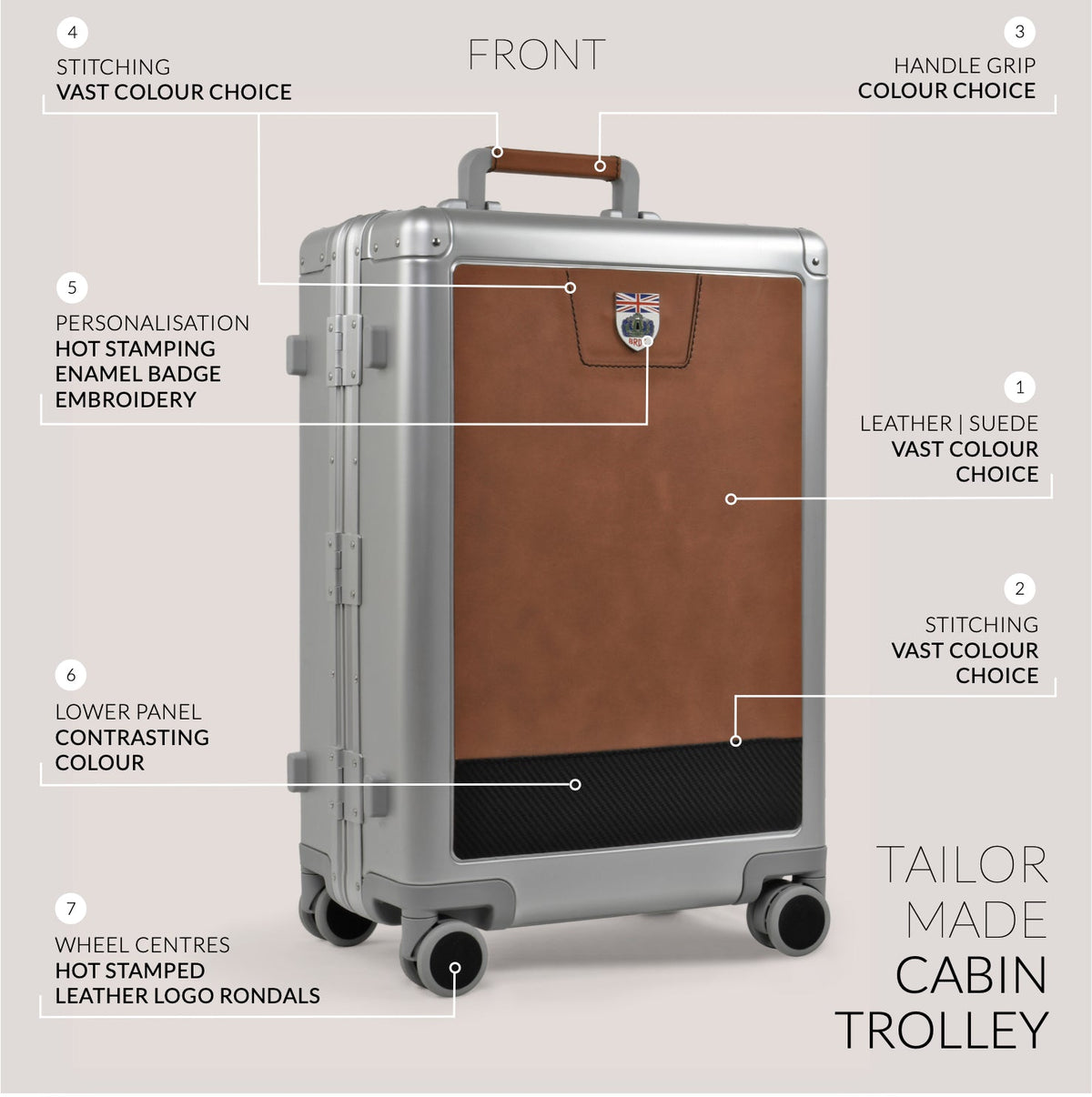
True bespoke work starts with a conversation, not a colour chart. The objective is not to add monograms to a standard item. It is to understand the owner, the vehicle, the intended journeys and the details that hold meaning.
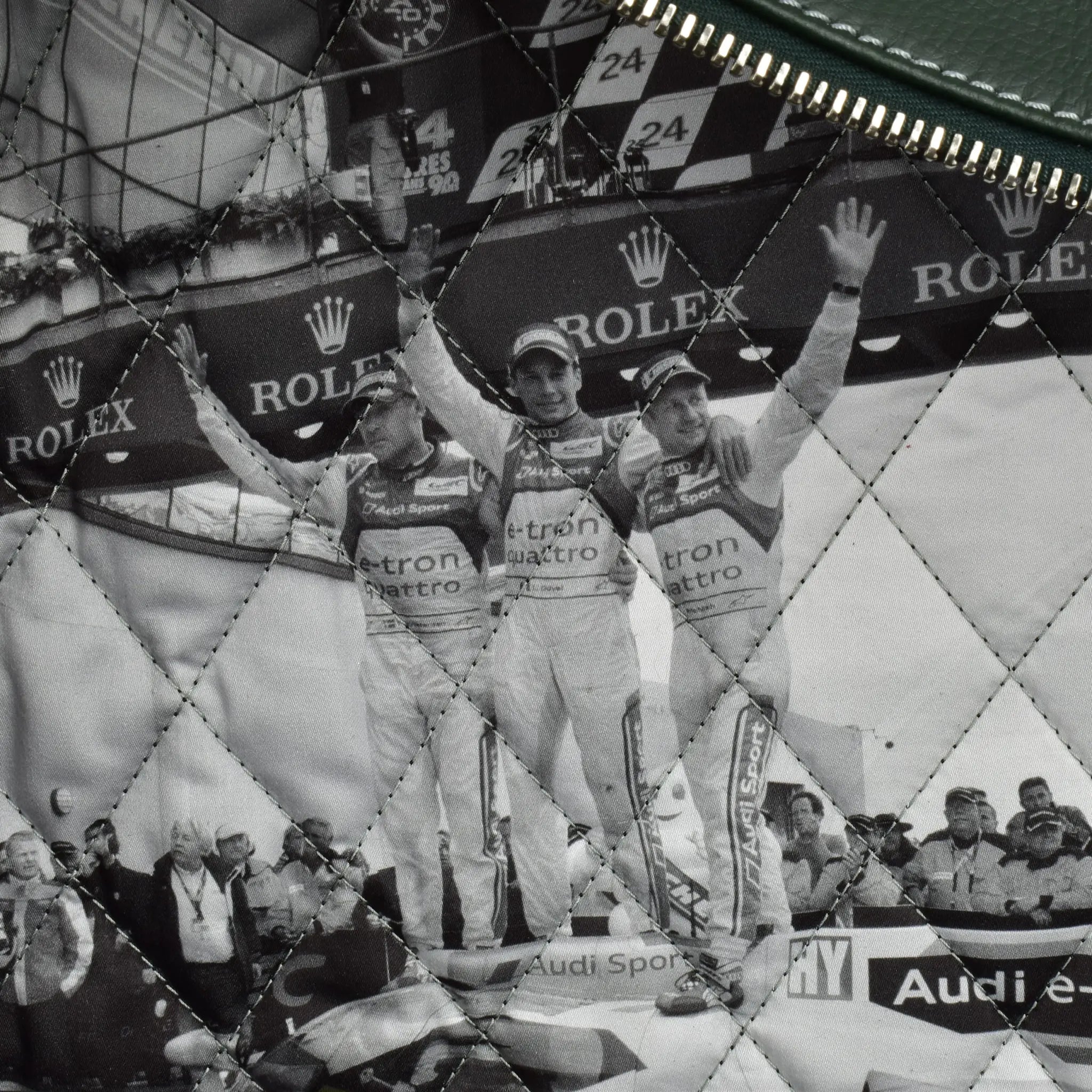
A lining may echo the tartan of a family racing team, the colour of a beloved car’s upholstery or the stripe of a race suit. Contrast stitching can reference a brake caliper finish. A discreet embossed initial, competition number or chassis-inspired motif can make the object feel entirely one’s own without reducing it to novelty.
There is a line to hold. The most successful commissions do not try to include every available option. They select a small number of references and execute them with confidence. A deep racing green leather, tobacco suede lining and cream stitch may say more than a crowded arrangement of badges, stripes and competing colours.
This is closely related to commissioning a Savile Row suit or specifying a motor car. The choices are personal, but they must work together. The result should appear inevitable, as though it could not have been made for anyone else.
Form follows the journey
The right configuration begins with practical questions. Is the bag intended for a two-night stay, cabin luggage, regular circuit travel or a place beside the passenger seat? Will it carry a helmet, a laptop, or garments that need to arrive crease-free? Is it designed for one vehicle or expected to move between several?
A garment carrier is the natural choice for formal events and long weekends where tailoring matters. A soft holdall is more adaptable for a sports car, especially where its pliability makes packing easier. A structured briefcase offers better protection for technology and documents, although it is less forgiving when space is restricted. There is no universal answer, only the piece most appropriate to the owner’s rhythm.
At Jordan Bespoke, that logic extends to the smallest elements: handle length, shoulder strap arrangement, interior divisions, zip pullers and lining selection. Such decisions rarely demand attention when they are right. They simply make the piece a pleasure to use.
The hand-finished difference
Luxury is often described in broad terms, yet the difference between an ordinary bag and an exceptional one is frequently visible at close range. Look at the consistency of the stitchwork along a curved panel. Notice whether the edges have been carefully painted, sanded and polished, rather than left thick or uneven. Feel whether the handles have substance without becoming cumbersome.
Handmade Italian production also permits judgement. Leather is not a uniform industrial sheet. Each hide has its own grain, markings and character. A skilled maker can place panels to make the most of the material, avoid unsuitable areas and preserve the visual balance of the finished piece. Machines can repeat a process. Experienced hands can respond to what is in front of them.
That human element means that genuinely crafted goods may retain minute signs of their making. They are not defects in the sense of poor quality. They are evidence that the item was made from natural material by people who understand it. The goal is exacting finish, not sterile sameness.
Designed to age with distinction
The finest automotive luggage should not be treated as a museum piece. It should travel, gather stories and develop a patina that reflects its owner’s life. A leather holdall that has accompanied drives through the Highlands, concours weekends and continental road trips becomes more compelling precisely because it has been used.
Care is straightforward but worthwhile. Store leather away from direct heat and prolonged sunlight, avoid overfilling the bag, and use a clean, soft cloth for routine attention. If a piece becomes wet, allow it to dry naturally rather than forcing it with a radiator or hairdryer. Occasional professional conditioning, selected for the specific leather, will help preserve suppleness without altering the finish.
The aim is not perfection preserved under glass. It is longevity with character. A well-made bag earns its marks honestly, much like the best steering wheel or well-worn driving shoes.
The next time you prepare for a journey, consider the objects that will travel with you as carefully as the route and the car. The right piece of luggage is not simply an accessory to carry. It is a symbol of individuality, shaped by British restraint, Italian skill and the journeys still waiting ahead.