

A fine motor car deserves more than an anonymous bag dropped in its boot. The choice of duffel bag versus grip is not merely a question of language or silhouette. It decides how you pack, how you travel, and what sits beside you on a Friday departure for the Cotswolds, the Continent or a race weekend.
Both have a rightful place in the world of well-made leather luggage. Both can carry a change of clothes, driving shoes and the small rituals that make a short escape feel properly considered. Yet their characters are distinct. One is relaxed and capacious; the other is structured, composed and quietly formal.
Duffel Bag Versus Grip: The Essential Difference
A duffel bag is defined by softness and volume. Traditionally cylindrical or gently tubular, it is usually built around one generous main compartment, with a zip running across its length. The name has naval and military associations, but the modern leather duffel has become a refined companion for weekends away, gym sessions and informal overnights.
A grip, sometimes called a Gladstone bag or doctor’s bag depending on its construction, is more architectural. It has a firmer frame, a flatter base and a wide, structured opening. Its compact proportions are deceptive: a good grip opens fully, allowing its contents to be seen and arranged rather than excavated.
The distinction matters because luxury is not only about the leather itself. It is about the experience of using an object. A duffel accommodates spontaneity. A grip rewards order. Neither is inherently superior, but one will feel more natural depending on the journey and the person carrying it.
Choose a Duffel for Flexible, Informal Travel
The duffel is the more forgiving option. Its soft-sided construction makes it particularly useful when packing varies from trip to trip. A cashmere knit, spare driving jacket, trainers, wash bag and a layer for unpredictable British weather can sit together without the bag looking overfilled.
This adaptability suits the owner who travels by car and prefers a single, elegant carryall rather than a hard-sided case. A leather duffel also works well for a long weekend where the itinerary is deliberately loose: perhaps a country-house stay, a coastal drive, a visit to the paddock, then dinner somewhere worth dressing for.
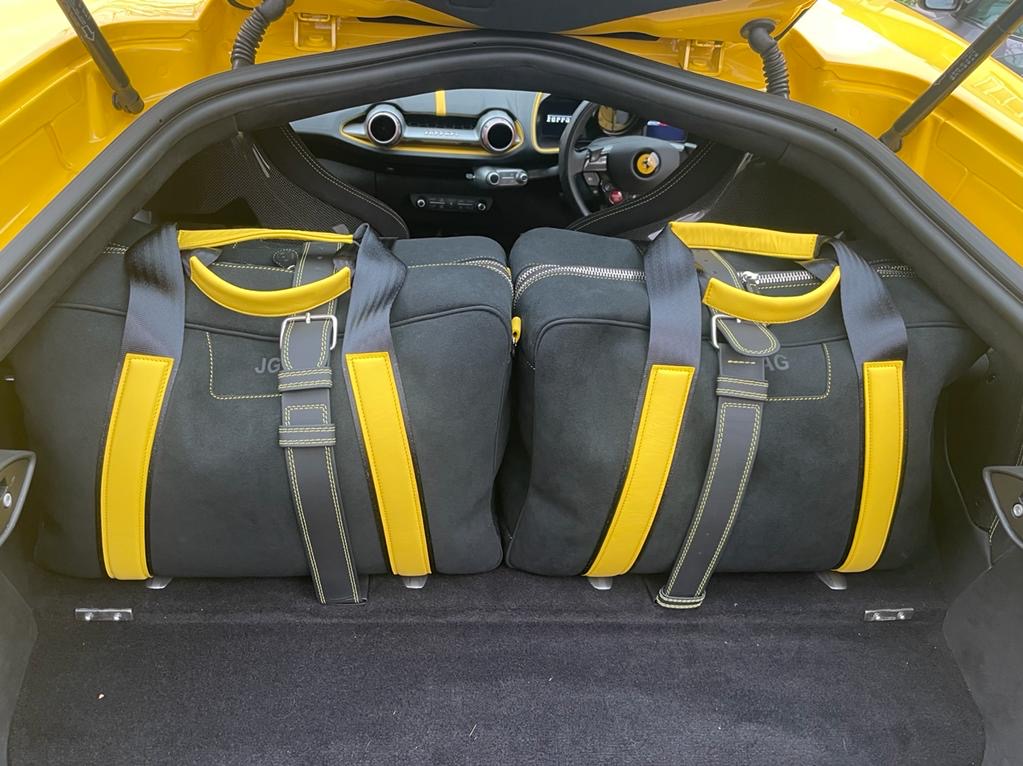
Its horizontal shape can be especially practical in the boot of a grand tourer or SUV. The bag can lie neatly alongside other luggage, while its soft construction gives a little where a more rigid piece will not. For collectors who travel in different cars, this flexibility is valuable.
There is a trade-off. A large duffel encourages overpacking, and a poorly designed example can become an undifferentiated space. Smaller essentials disappear beneath heavier garments; polished shoes may need their own bags; a laptop should be protected in a dedicated sleeve. The best versions address this through considered internal pockets, a reinforced base, substantial handles and a shoulder strap that is genuinely comfortable rather than decorative.
What to look for in a leather duffel
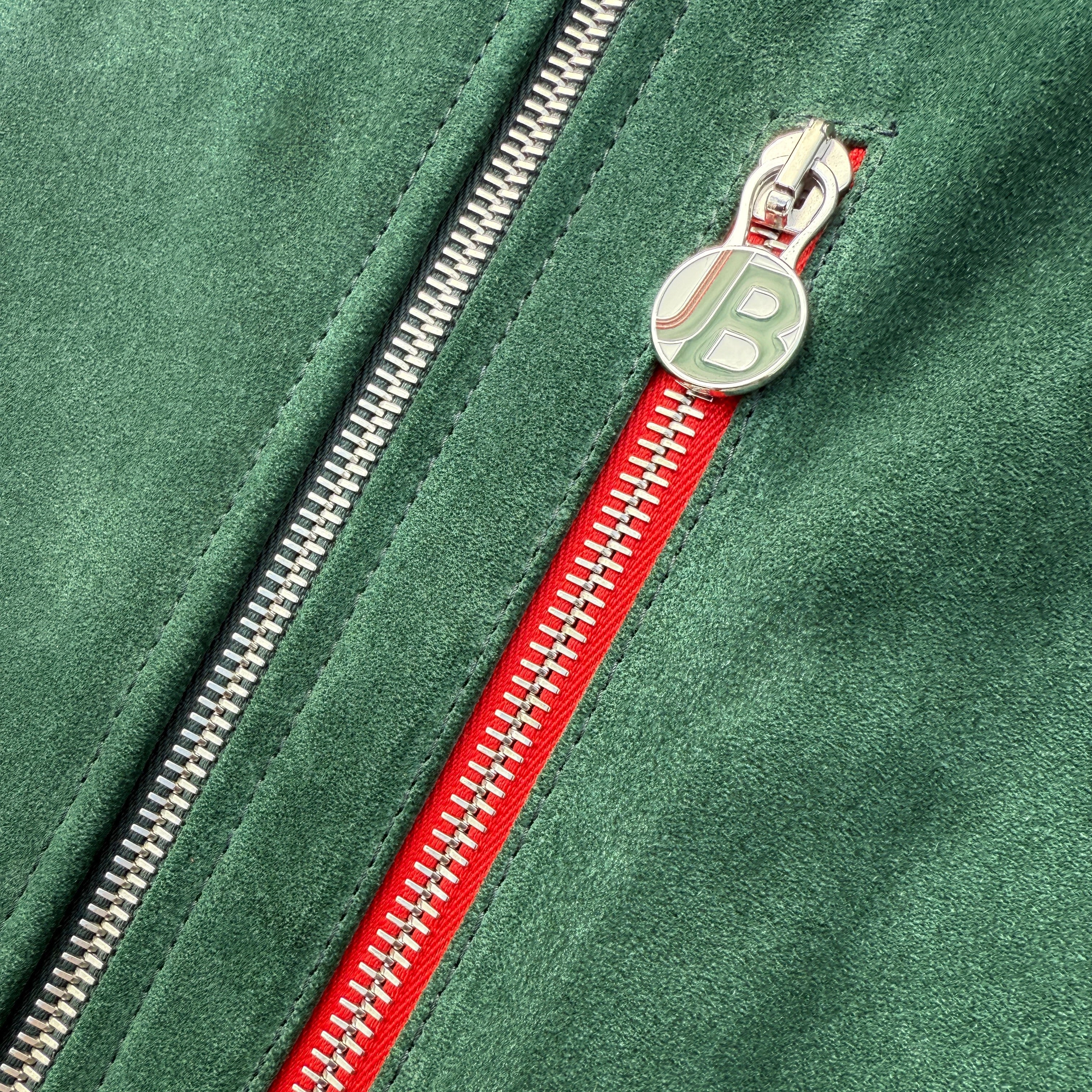
At this level, the material must mature rather than merely survive. Full-grain leather develops a patina that records journeys with grace, while a carefully selected suede lining gives delicate items a more considered home. Hardware matters equally. Smooth-running YKK Excella zips, solid metal feet and handles stitched and reinforced by hand are signs that the bag has been built for years of use.
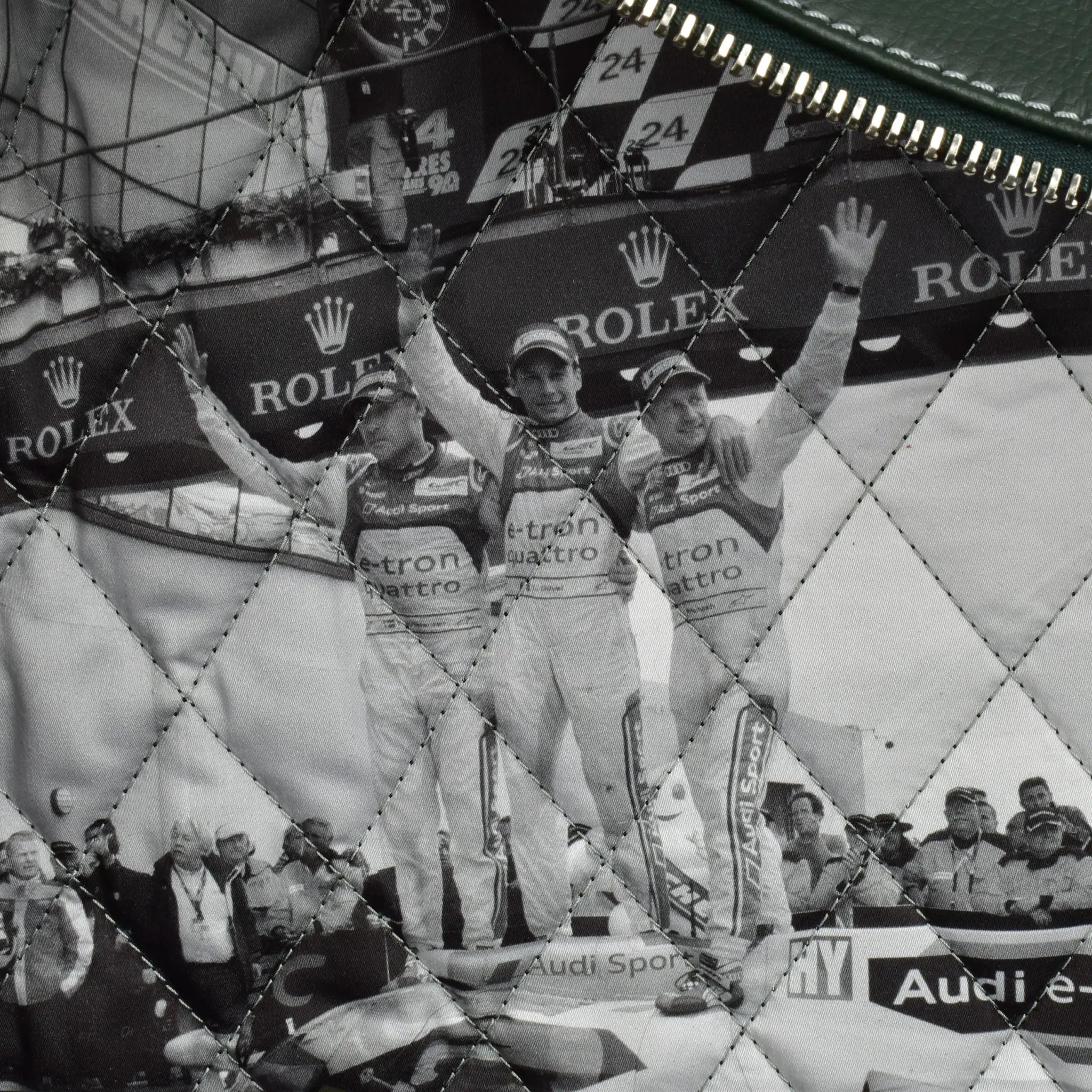
For a motorsport-influenced piece, details can carry private significance without becoming theatrical. Contrast stitching inspired by a cherished car’s interior, a lining chosen to echo a racing livery, or leather matched to a vehicle’s cabin can turn a useful duffel into a symbol of individuality.
Choose a Grip for Poise and Organisation
A grip has a more deliberate presence. The structured mouth opens wide, often with a hinged frame or a firm zip arrangement, making it easy to pack shirts flat, place shoes at either end and keep small items visible. It brings a sense of ceremony to a two-night journey, which is precisely its appeal.
For business travel, an overnight stay in London, or a race meeting where one wishes to arrive composed, the grip offers a sharper answer than a soft holdall. It sits upright at a hotel reception or in a hospitality suite. It is easier to place on a bench without its contents collapsing into one another. The clean profile also works naturally with tailoring, whether that means a well-cut blazer or a driving jacket of exceptional quality.
A grip is often better for the disciplined packer who knows exactly what the weekend requires. It excels at carrying a carefully selected wardrobe, wash bag, documents and accessories for one or two nights. Its frame protects the contents and helps retain the bag’s handsome form over time.
The compromise is capacity. While some grips are surprisingly spacious, they are less tolerant of bulky layers or last-minute additions. A stiff frame may also be less forgiving in a tightly packed boot. If you routinely carry a helmet, race suit, thick knitwear or several pairs of shoes, a purpose-built race day kit bag or a larger duffel may be the wiser choice.
The appeal of a properly proportioned grip
Proportion separates an elegant grip from a costume piece. It should be substantial enough to function as travel luggage but restrained enough to carry comfortably by hand. The handles ought to fall naturally into the palm, the base should be protected, and the opening should feel assured rather than awkward.
In leather, a grip has an enduring quality that few other bags can match. It recalls the golden age of railway travel and traditional motoring without becoming nostalgic for its own sake. With contemporary hardware and an exacting Italian hand, it can feel entirely at home beside a modern performance car.
Consider the Way You Actually Travel
The most useful test is not which bag looks better in isolation. It is what happens between leaving home and reaching your destination. A traveller who moves from garage to car, car to hotel and hotel to dinner may appreciate the grip’s organisation and polished stance. Someone loading up for a varied weekend, perhaps with a passenger and a few diversions planned along the route, may value the duffel’s easy capacity.
Think, too, about how the bag will be carried. A duffel often lends itself to the shoulder when navigating station platforms or airport terminals. A grip is more traditionally hand-carried and makes its strongest impression that way, although a discreet detachable strap adds welcome practicality.
There is also the matter of clothing. Soft, casual layers and sportswear feel at ease in a duffel. Tailored pieces benefit from the grip’s flatter packing space, though neither is a substitute for a garment carrier when a suit or dinner jacket must arrive pristine. The discerning traveller may ultimately own both, selecting each as one would select a car: according to purpose, mood and occasion.
Craftsmanship Changes the Decision
The line between duffel and grip becomes more compelling when the piece is made to an exact brief. Leather choice changes the character immediately. A supple, richly grained hide gives a duffel relaxed confidence; firmer vegetable-tanned leather lends a grip definition and presence. Lining, edge paint, stitching and metalwork then refine the personality further.
This is where bespoke luggage earns its place. Rather than accepting a generic shade of brown or a standard arrangement of pockets, the owner can specify a palette that complements a cherished motor car, choose a lining with personal relevance, or commission dimensions suited to a particular boot. Jordan Bespoke approaches luggage in that spirit: as a crafted companion with a connection to the owner’s life beyond the journey itself.
Bespoke consideration should never compromise function. The most memorable details are often the ones that make travel easier: a compartment placed for a watch roll, a key clip that prevents a frantic search, a discreet exterior pocket for travel documents, or a reinforced base suited to regular use. Beauty is most convincing when it has a job to do.
Let the Journey Set the Tone
Choose the duffel when freedom, capacity and an unforced weekend mood are the priorities. Choose the grip when order, structure and a more formal travelling presence feel right. Either can become a lifelong piece when its leather, construction and details are selected with care.
The better question is not which style wins, but which one belongs beside the next journey you are already looking forward to making.