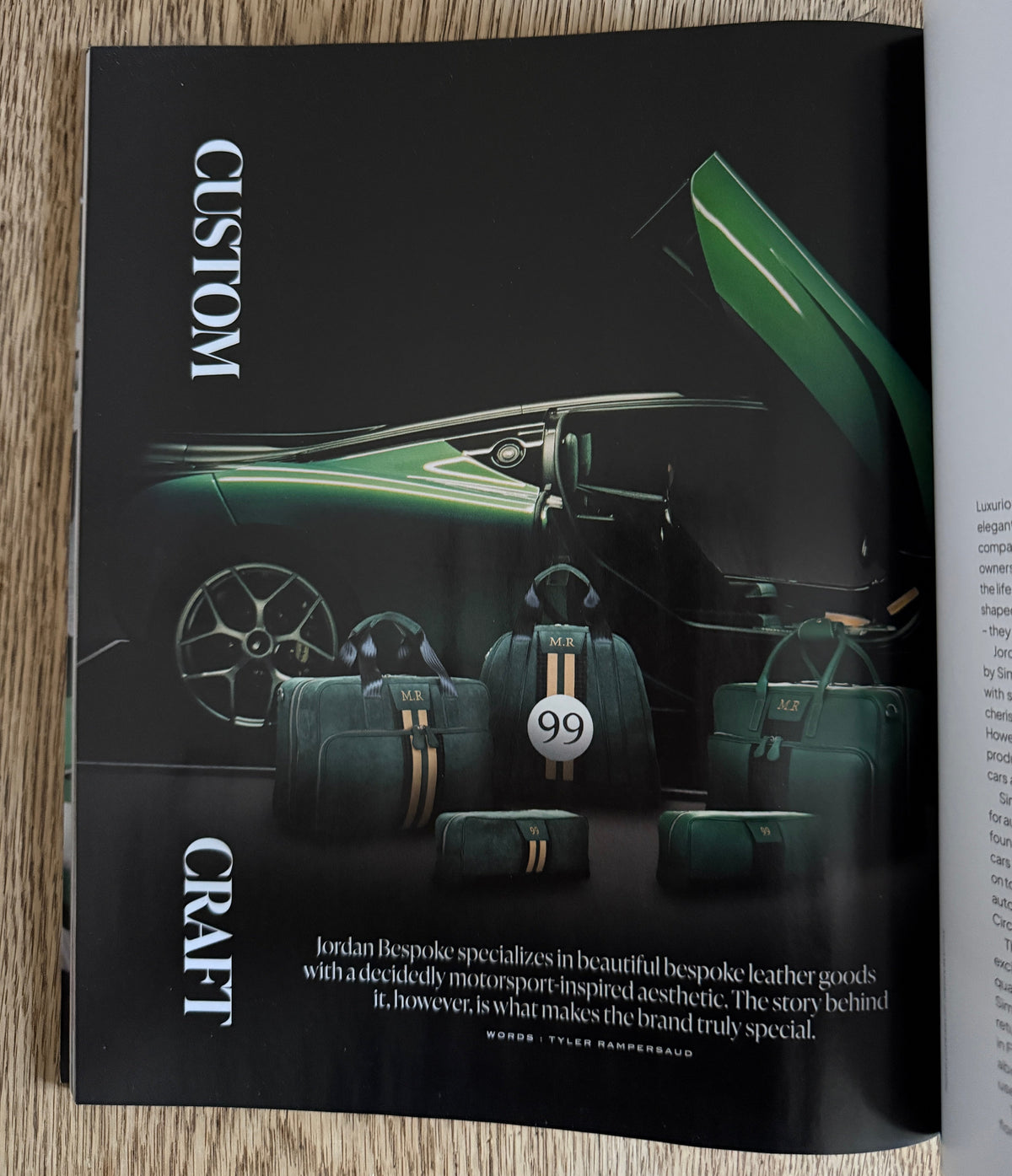


 A race weekend has its own rhythm: an early paddock arrival, a helmet carried with care, gloves and racewear required at precisely the right moment, and the inevitable journey home after a long day at the circuit. Knowing how to commission racing luggage begins with respecting that reality. The finest pieces are not simply handsome bags with a motorsport motif; they are considered companions, made around the equipment, vehicle and personal history of the driver who carries them.
For the discerning individual, a bespoke race-day bag should feel as naturally resolved as a well-specified motor car. Its proportions should suit its contents, its materials should reward use, and its details should carry meaning without becoming theatrical. That level of coherence comes from a clear brief and an open conversation with the maker.
Start with the life the luggage must lead
Before choosing leather or embroidery, define the bag's purpose. Racing luggage is a broad category, and a helmet bag has very different demands from a weekend holdall used for a continental historic racing event. Consider how you travel to the circuit, what you need at arm's reach, and whether the bag will spend most of its time in a car, a garage, a pit lane or an airport lounge.
A driver taking part in track days may need a compact helmet bag with room for a visor, HANS device, gloves and documents. A competitor undertaking multi-day events may require a larger kit bag for racewear, footwear, hydration, technical layers and personal effects. For owners travelling with a partner, a pair of matching holdalls or a holdall and garment carrier can make more sense than one oversized piece.
Be candid about the less glamorous details. Will boots go into the bag after a wet session? Does the helmet need a protected compartment? Must the bag fit in the front luggage area of a particular Porsche, Ferrari or Aston Martin? Those answers shape the commission more profoundly than any decorative decision.
How to commission racing luggage around your equipment
The most successful commissions begin with measurements. Provide the dimensions of your helmet, HANS device, race boots, laptop or camera equipment, as well as the usable space in your vehicle. A maker can then establish the right length, depth and opening style rather than adapting a standard pattern after the fact.
A helmet bag, for example, benefits from a wide, controlled opening that allows the helmet to be lifted out rather than dragged across a zip. A softly padded interior and structured base protect the shell while keeping the bag composed when set down in the garage. An external pocket may be ideal for a visor pouch or paperwork, but it should not compromise the clean profile or risk marking the helmet.
For a larger race-day holdall, internal organisation should follow your own routine. Separate spaces for footwear, racewear and personal items prevent unnecessary searching at the circuit. Yet excessive compartmentalisation can make a bag rigid and awkward to pack. The right balance depends on whether you prefer each item to have a prescribed place or favour one generous main compartment with a few precisely placed pockets.
If the luggage is intended to work with a specific car, share photographs and measurements of the luggage compartment. Curved rear decks, shallow front boots and limited access apertures all affect the ideal silhouette. A piece designed to sit beautifully in the car is a quiet but meaningful expression of ownership.
Choose materials for character and use
Leather remains the defining material for racing luggage with genuine longevity. Full-grain Tuscan leather develops a rich patina through travel, handling and years of use, making it especially compelling for a client who wants the bag to become more personal over time. It also has sufficient body for structured holdalls and helmet bags when paired with the correct internal construction.
That said, leather is not the only answer. Technical textiles, lightweight performance fabrics and aerospace-grade materials can be appropriate for frequent competition use, particularly where low weight, easy cleaning or moisture resistance matters. The strongest commissions often combine materials rather than treating them as rivals: leather handles and trims can bring tactility and refinement to a hard-wearing technical body.
Colour deserves the same care. A deep racing green, oxblood, tobacco or navy leather can age gracefully and complement a broad range of interiors. A brighter accent may reference a competition livery, a caliper colour or a historic racing stripe. Use vivid tones selectively. A restrained exterior with a more expressive lining often gives the piece greater longevity than an overtly themed design.
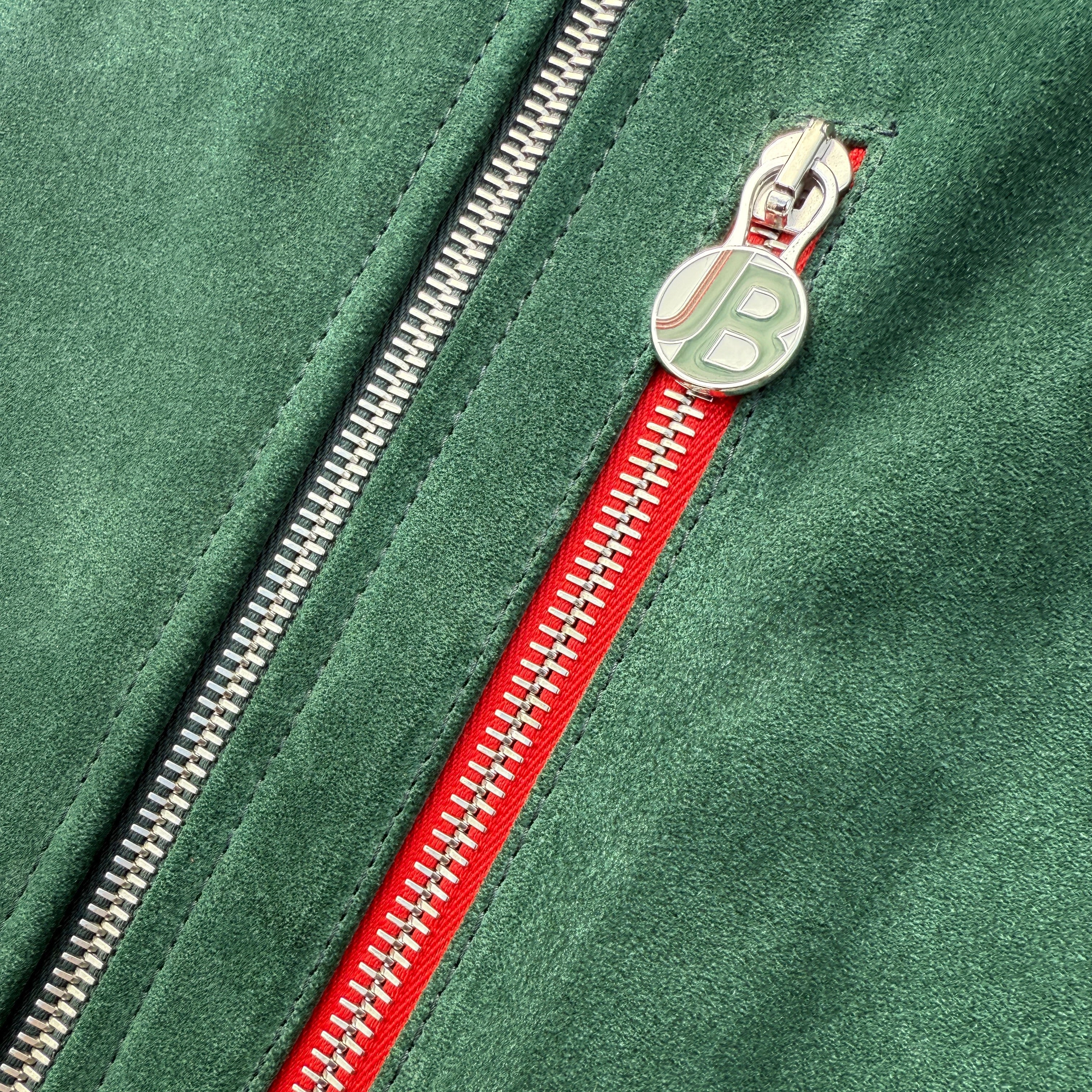
Ask about the elements that endure repeated handling: hand-finished edges, reinforced stress points, protective feet and high-quality metalwork. YKK Excella zips are valued for their smooth action and substantial feel, while leather pullers can be shaped and finished to echo the rest of the bag. These are small decisions, but they determine how the luggage feels at six o'clock on a cold morning in the paddock.
Make the personal references precise
Motorsport-inspired luggage should tell a story, not display every chapter at once. The most resonant references are usually specific to the owner: a race number carried for years, the paint tone of a cherished motor car, a family crest, circuit coordinates, or an understated contrast stitch inspired by a favourite interior.
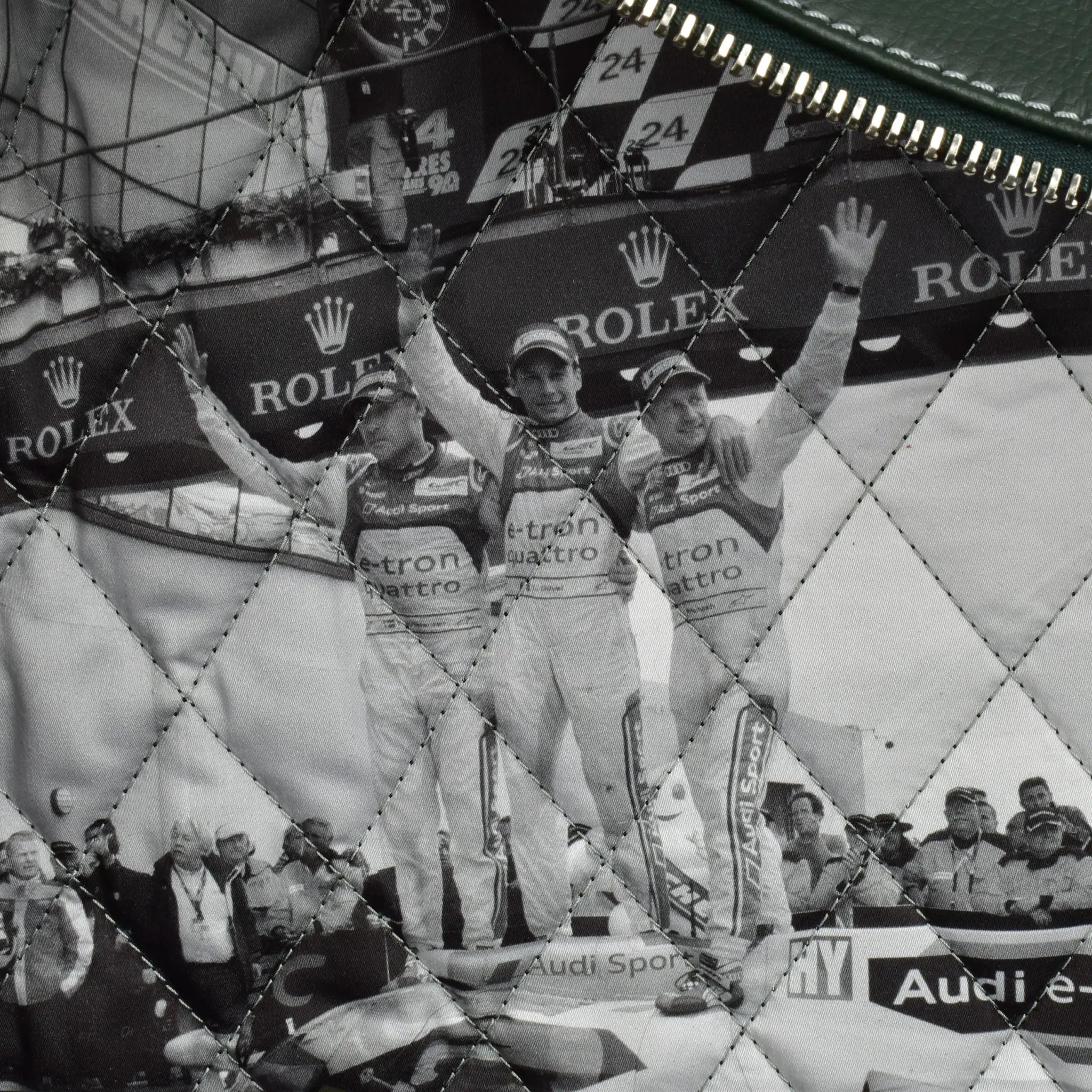
A bespoke lining is often the most intimate place for this expression. It may take its colour from the car's cabin, feature a discreet repeating motif, or carry a commissioned print connected to a race programme or personal archive. Initials, monograms and date stamps can be included, but placement matters. A blind emboss on a luggage tag or an interior leather patch generally feels more enduring than large external branding.
There is a difference between tribute and imitation. Referencing the spirit of a racing era through colour, material and proportion can be elegant. Copying a familiar livery too literally may date the bag or distract from its craftsmanship. A specialist maker should be willing to advise when a detail will elevate the design and when restraint is the more luxurious choice.
Agree the construction before approving the design
A considered commission has a practical sequence. After an initial brief, the maker should clarify function, measurements, material direction and personal details before producing design proposals. This is the stage to question pocket placement, strap length, zip orientation and the bag's behaviour when full. Do not approve a design solely because it looks handsome in a rendering.
Once the principal design is agreed, request confirmation of the leather, lining, hardware finish and any personalised elements. Natural leather is individual by nature, so grain variation and subtle tonal movement should be expected rather than treated as defects. This is part of the character of a hand-made piece.
It is equally sensible to discuss lead time early. Italian artisanal production, specialist materials and bespoke linings all require patience, particularly when a commission is intended for a particular event or driving tour. If there is a fixed date, state it at the outset, while allowing the maker room to protect the quality of the work.
At Jordan Bespoke, the process is approached much like specifying a fine motor car: each decision has a visual consequence, but also a purpose. The aim is never customisation for its own sake. It is luggage crafted for life around the way its owner drives, travels and competes.
Think beyond the first race weekend
Commissioned racing luggage earns its place through repetition. Choose a form that will remain useful if your racing schedule changes, and finishes that suit both the circuit and the road. A helmet bag that also serves for a driving tour, or a holdall refined enough for a hotel arrival, offers more value than a novelty piece reserved for one occasion.
Care will preserve the material, but use will give it soul. Allow leather to dry naturally if caught in rain, keep it away from prolonged direct heat, and empty the bag after a damp event rather than leaving kit enclosed. Dust bags and careful storage are worthwhile, yet the finest luggage should not be hidden away. It should accompany the miles, the early starts and the memorable finishes that made the commission worth making.
The right brief does not begin with a logo or a colour chart. Begin with the next journey you want the bag to make, then commission every detail to serve it with quiet confidence.