

 A proper supercar tour begins before the engine is fired. There is the route, naturally: a favourite mountain pass, an early crossing, a hotel with secure parking and perhaps a circuit or concours appointment woven into the itinerary. Then comes the less romantic but equally decisive question: what will actually fit in the car?
The best bags for supercar tours are not simply the most expensive pieces in the wardrobe. They must respect the unusual architecture of a performance car, protect what matters, and arrive with the same sense of occasion as the machine waiting outside. A poorly chosen wheeled case can consume an entire front boot. An overstuffed holdall can obscure a rear-view mirror or leave an unwelcome mark on carefully trimmed leather. The right luggage makes travelling in a low-slung, beautifully engineered car feel considered rather than compromised.
Choosing the best bags for supercar tours
Supercar luggage is a matter of proportion. Front boots tend to be shallow, rear compartments can be warm, and the available space may be irregular rather than square. Even cars with respectable capacity, such as certain grand touring models, reward luggage that has been designed to work with the vehicle rather than against it.
Start with dimensions, but do not stop there. Measure the narrowest point of the aperture, the height beneath any parcel shelf, and the depth at the furthest point of the compartment. A bag’s stated litre capacity is only a loose guide. Its silhouette is what determines whether it slides in cleanly. Soft-sided bags with a disciplined, low-profile construction are often more useful than rigid suitcases because they can accommodate the subtle curves of a boot without looking collapsed or untidy.
For a two- or three-night driving tour, a medium holdall is usually the essential piece. It should carry a change of clothes, knitwear, shoes and toiletries without becoming cumbersome in a hotel lobby. A matching garment carrier becomes valuable when the itinerary includes a dinner, private event or presentation where a jacket must arrive in appropriate condition. Add a compact tech case for charging leads, sunglasses, travel documents and keys, and the touring kit is complete without filling every available cavity.
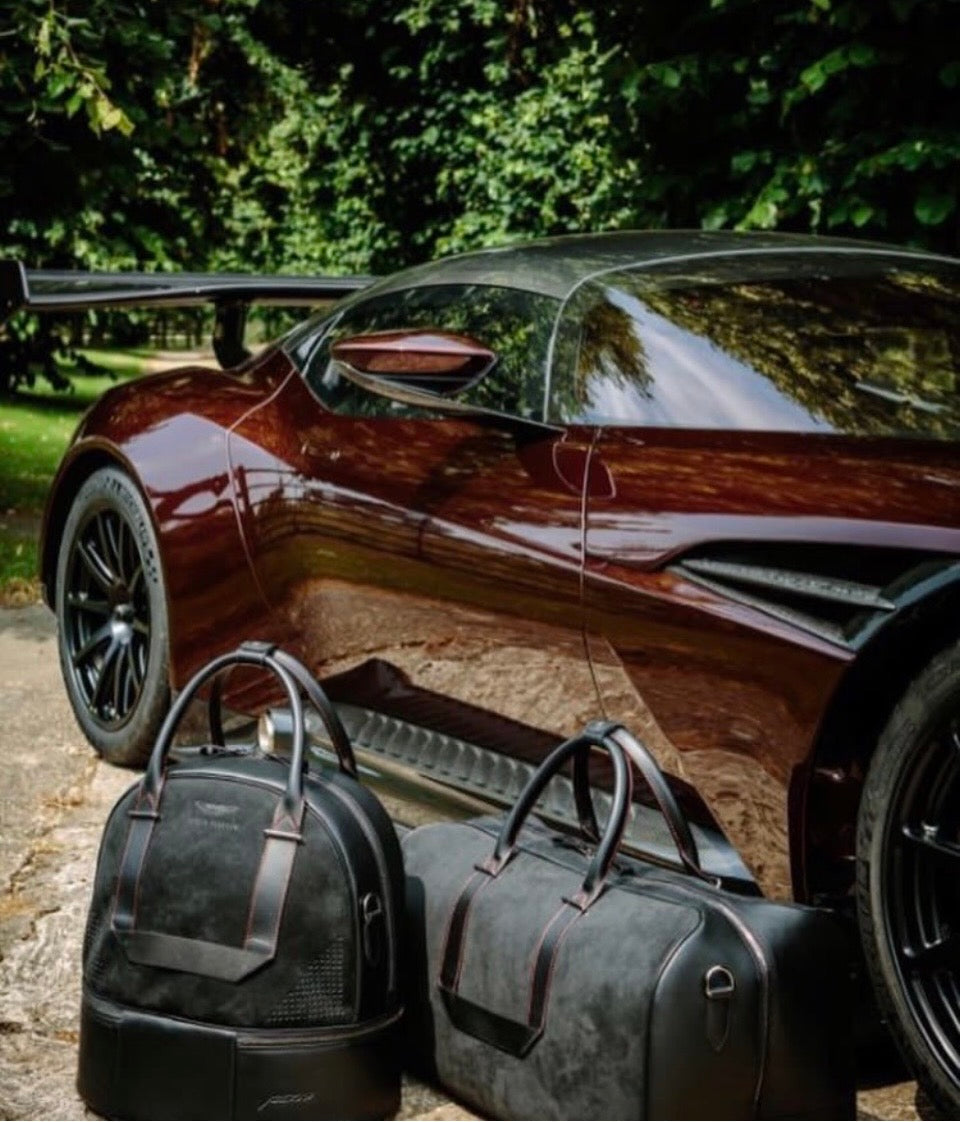
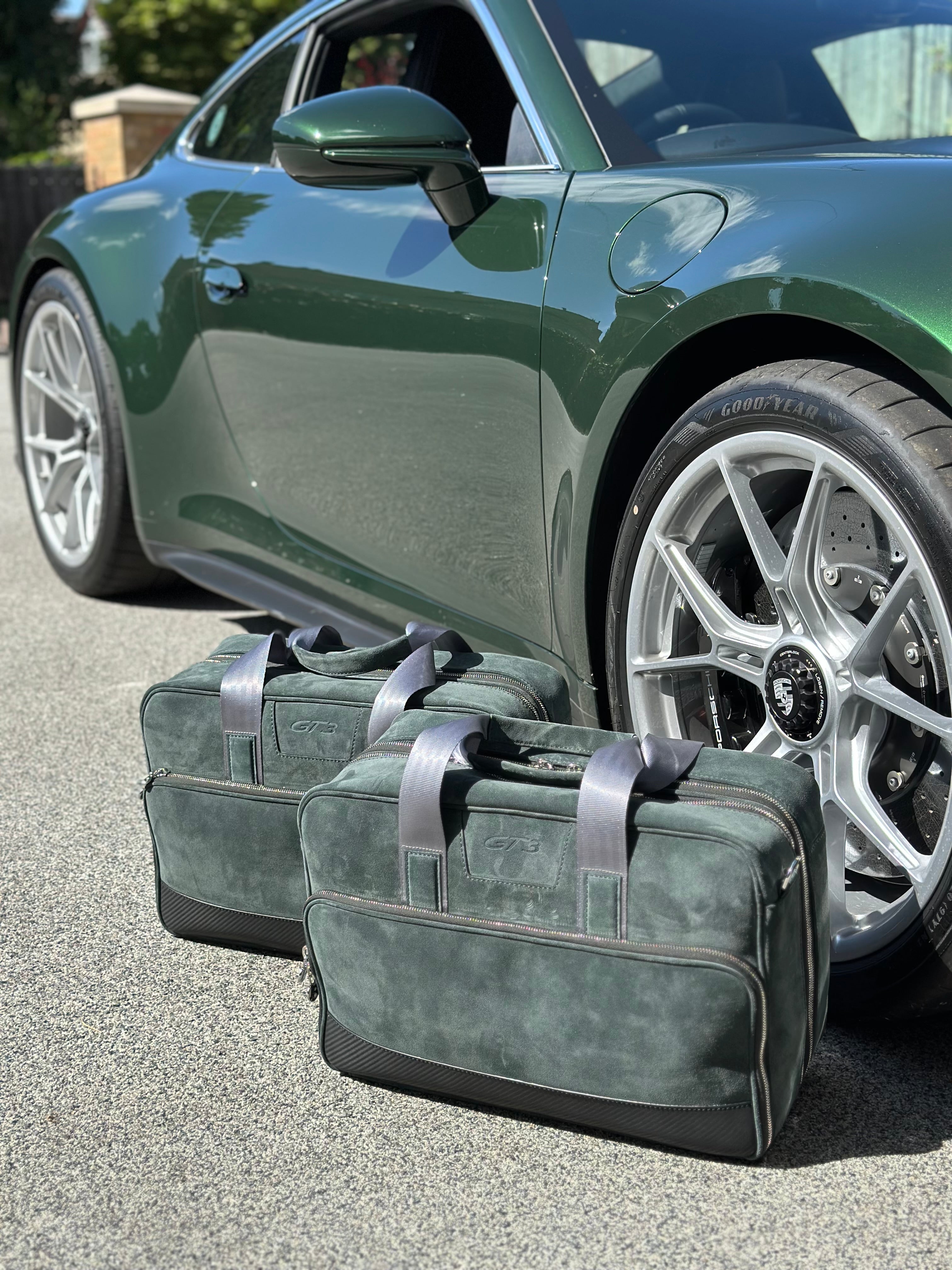
The ideal combination depends on the car and the purpose of the journey. A Porsche 911 used for a spirited continental run may accommodate two slim holdalls and a pair of small accessory cases. A mid-engined Ferrari or McLaren may call for more exacting packing and one carefully sized holdall. An Aston Martin or Bentley grand tourer offers greater freedom, but that is no reason to revert to anonymous hard-shell luggage. The luggage should still honour the experience.
Fit is only the first consideration
A bag that fits the boot but fails after a season is not a luxury purchase. Touring luggage is handled frequently: lifted over sills, set down on forecourts, carried through hotel entrances and opened in car parks at first light. It needs a structure that holds its shape, but not one so rigid that it becomes difficult to pack in a confined space.
Leather remains the natural choice for discerning drivers because it matures with the journey. A fine full-grain hide develops character from use, gaining a record of road trips rather than merely showing wear. For touring, however, leather must be selected and finished with intelligence. It should be substantial enough to retain form, yet supple enough to work around the contours of the car. A considered lining matters too, especially where watches, eyewear or camera equipment may travel alongside clothing.
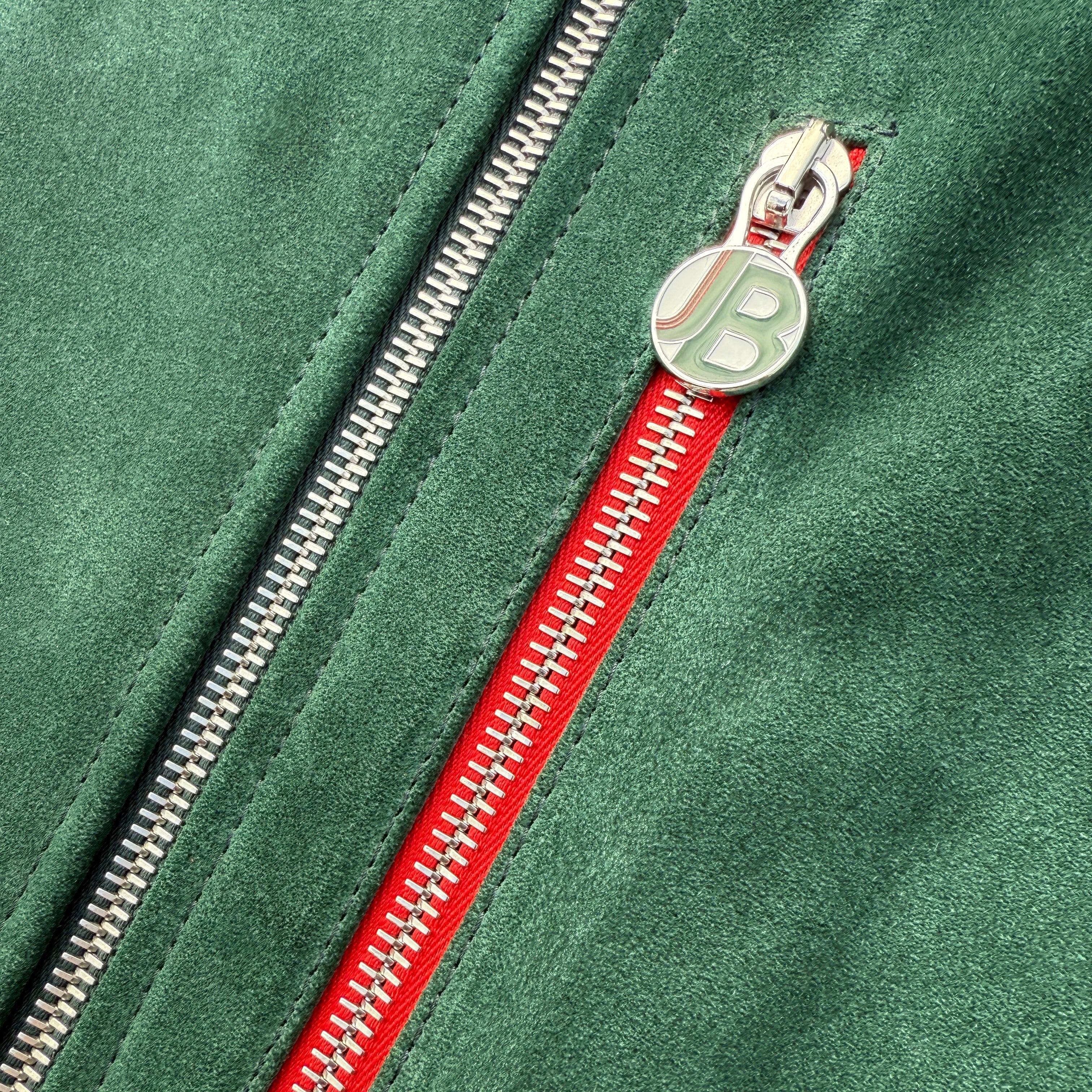
Hardware is equally revealing. Smooth-running YKK Excella zips, solid metal feet and properly engineered handles are details often overlooked until the moment they are needed. A zip that catches at a ferry terminal or a handle that strains under a weekend’s luggage quickly breaks the spell. The best bags feel reassuringly quiet in use: no rattling fittings, no sharp edges and no unnecessary ornament competing with the car itself.
Colour and finish deserve more thought than simple coordination. Matching a cabin exactly can be striking, particularly for a commissioned set, but contrast can be just as sophisticated. Deep navy beside tan leather, charcoal against a pale interior, or racing green with a restrained natural lining can create a connection without becoming theatrical. The most successful choices draw on a vehicle’s paint, stitching, seat centres, brake calipers or motorsport history in a subtle way.
The case for bespoke luggage
There is a meaningful difference between luggage that looks automotive and luggage that belongs to a particular motor car. Bespoke pieces can be configured around exact boot dimensions, preferred packing habits and the visual language of an owner’s vehicle. This is where a luggage set becomes a symbol of individuality rather than an accessory bought from a shelf.
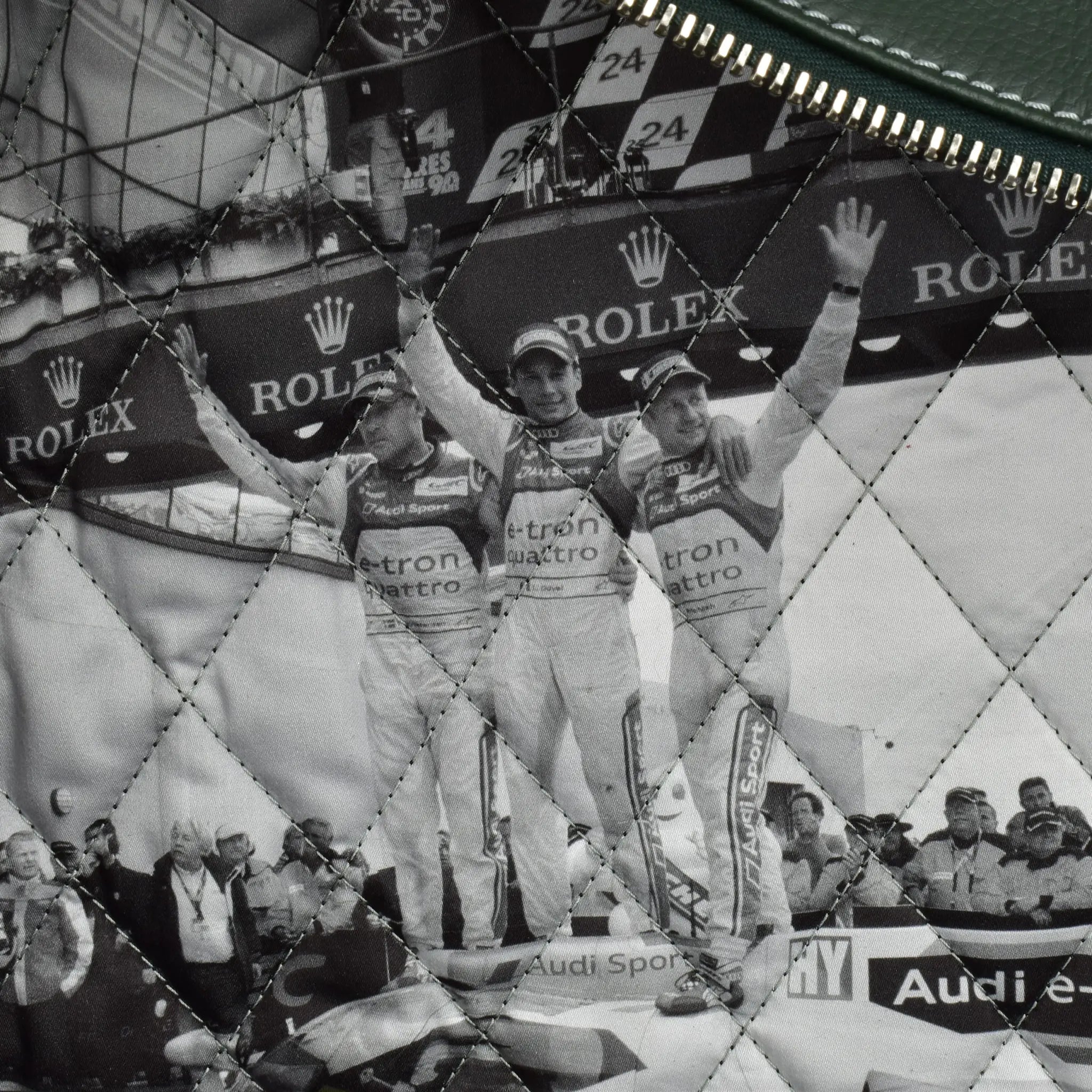
A commissioned holdall might take its colour from the car’s hide, use contrast stitching inspired by the cabin, and carry an embroidered registration, chassis reference or discreet personal monogram. The interior can be finished in a chosen lining, while details such as handle wraps, zip pulls and piping can echo a racing stripe or a treasured marque heritage. The point is not to make every detail loud. It is to create the quiet recognition that comes from something made specifically for its owner.
Jordan Bespoke approaches this relationship with the same sensibility that makes a well-specified car so compelling: British design, Italian handcraft and a respect for the personal decisions that make one example unlike any other. For the owner who has spent time choosing paint, trim and carbon fibre finishes, generic luggage is rarely the final expression of the car.
Pack for the road, not the destination alone
Touring by supercar asks more of luggage than flying does. Items need to be accessible at different points in the day, often without emptying the entire boot at the roadside. A good holdall should therefore have a purposeful internal layout rather than an excess of small pockets. One main compartment for clothing, a secure zipped section for valuables and perhaps a dedicated place for shoes or wash kit is generally sufficient.
Keep the essentials close to hand in a smaller case: sunglasses, prescription glasses, driving gloves, charging cable, power bank, documents, medication and a microfibre cloth for the windscreen or paintwork. This avoids the familiar scene of unloading half the car to locate a passport at a hotel desk. A compact wash bag is also more practical than carrying loose bottles, particularly if the journey includes several overnight stops.
Weight distribution matters. Put heavier items low and towards the centre of the available compartment, particularly in cars where the boot sits ahead of the front axle. Avoid hard objects pressing directly against the interior trim. If luggage will share space with a helmet, camera or driving shoes, dedicated protective bags prevent contact marks and make loading more orderly.
For a circuit-focused trip, the requirements change again. A helmet bag with padded protection is essential, while a race day kit bag should accommodate racewear, footwear, gloves, HANS device and hydration without forcing equipment into an ill-suited weekend holdall. Here, technical resilience and clear organisation take precedence, though there is no reason the result should look utilitarian.
What to leave behind
The temptation for any grand tour is to pack for every possibility. In a supercar, restraint is part of the craft. Hard cases with protruding wheels and handles waste valuable space and can be awkward around painted bodywork. Oversized logos rarely age well, particularly beside a car defined by design rather than branding. Equally, avoid bags that are too delicate for real travel. A piece can be beautifully made and still be intended to earn its patina.
Choose fewer, better pieces. One exceptional holdall, a refined garment carrier and a compact case for valuables will serve more occasions than a mismatched collection of travel accessories. They will also make every stop feel more composed, whether it is a five-star hotel in the Alps, a quiet inn in the Cotswolds or a paddock before a track session.
A supercar tour is a rare chance to enjoy the car as it was meant to be used: over distance, through changing landscapes and in the company of people who understand why the journey matters. Select luggage with the same care you gave the car, and each arrival will feel like part of the occasion rather than the end of it.