

A briefcase is often the first object placed on a boardroom table and the last one lifted from the passenger footwell before a weekend away. Anyone considering how to order a custom leather briefcase is therefore choosing more than a place for a laptop and papers. They are commissioning a daily companion that should sit naturally within their working life, wardrobe and, for many enthusiasts, the character of the motor car they drive.
The strongest commissions begin with intention rather than a list of decorative options. A beautiful hide, a monogram or a coloured lining will not rescue a briefcase with the wrong proportions, an awkward handle drop or a compartment layout that does not suit the way you move through the day. Begin with how the case will be used, then allow the material and personal details to follow.
Start with the life the briefcase will lead
Consider the rhythm of a normal week. Perhaps the case travels between London meetings, a train carriage and the rear seat of a grand tourer. Perhaps it accompanies international flights, carries a tablet and presentation materials, or needs to remain composed beside a race-day kit bag in the paddock. These are different briefs, and they call for different solutions.
Be specific about what must travel inside. Measure your laptop rather than relying on its stated screen size, and include its sleeve if you use one. Add the notebook, charger, sunglasses case, passport, cables and any documents you routinely carry. A slim folio-style briefcase is elegant for a computer and papers, but it will feel overfilled if it is asked to carry the contents of a small office.
It is equally useful to decide what the briefcase should not become. A compact single-gusset case retains a crisp profile and slips comfortably beneath an airline seat. A deeper double-gusset design offers greater capacity and organisation, but has more visual presence. Neither is inherently superior. The discerning choice is the one that looks considered when it is full, not merely handsome when empty.
How to order a custom leather briefcase with the right proportions
Proportion is where bespoke design earns its place. The width should accommodate your largest essential without leaving so much unused space that the case loses structure. Height affects both the silhouette and accessibility of documents. Depth governs whether the briefcase appears sleek and formal or has the practical confidence of a mobile office.
Discuss how you carry it. If you favour the hand carry of a traditional briefcase, handle placement and handle drop deserve careful attention. The handles should feel balanced under load and stand neatly when the case is set down. If a shoulder strap is required, ask for one that is properly engineered, with secure attachment points and a shoulder pad proportioned to the case rather than treated as an afterthought.
For drivers, it is worth considering the cabin. A case intended for a low-slung sports car may benefit from a more compact depth and a structured form that stays upright in a footwell or on a seat. A larger executive saloon or SUV allows more latitude. This is the same principle as configuring a car: the most satisfying specification responds to the owner, not simply to the options list.
Choose leather for character as well as appearance
Leather should be selected with a clear understanding of how it will age. Smooth full-grain calf leather has a refined, formal surface and can develop a handsome patina with use. It suits a clean, architectural briefcase, especially in black, deep navy, tobacco or dark brown. It may show scratches more readily than heavily grained leather, which is not a fault but a question of preference.
Grained or pebbled leather has a more relaxed resilience. Its textured surface is forgiving of frequent travel and daily handling, making it a compelling choice for a case that will move from office to airport and beyond. Suede-lined interiors introduce a quieter sense of luxury, though a lighter lining should be chosen with care if pens, loose keys or workshop items are likely to find their way inside.
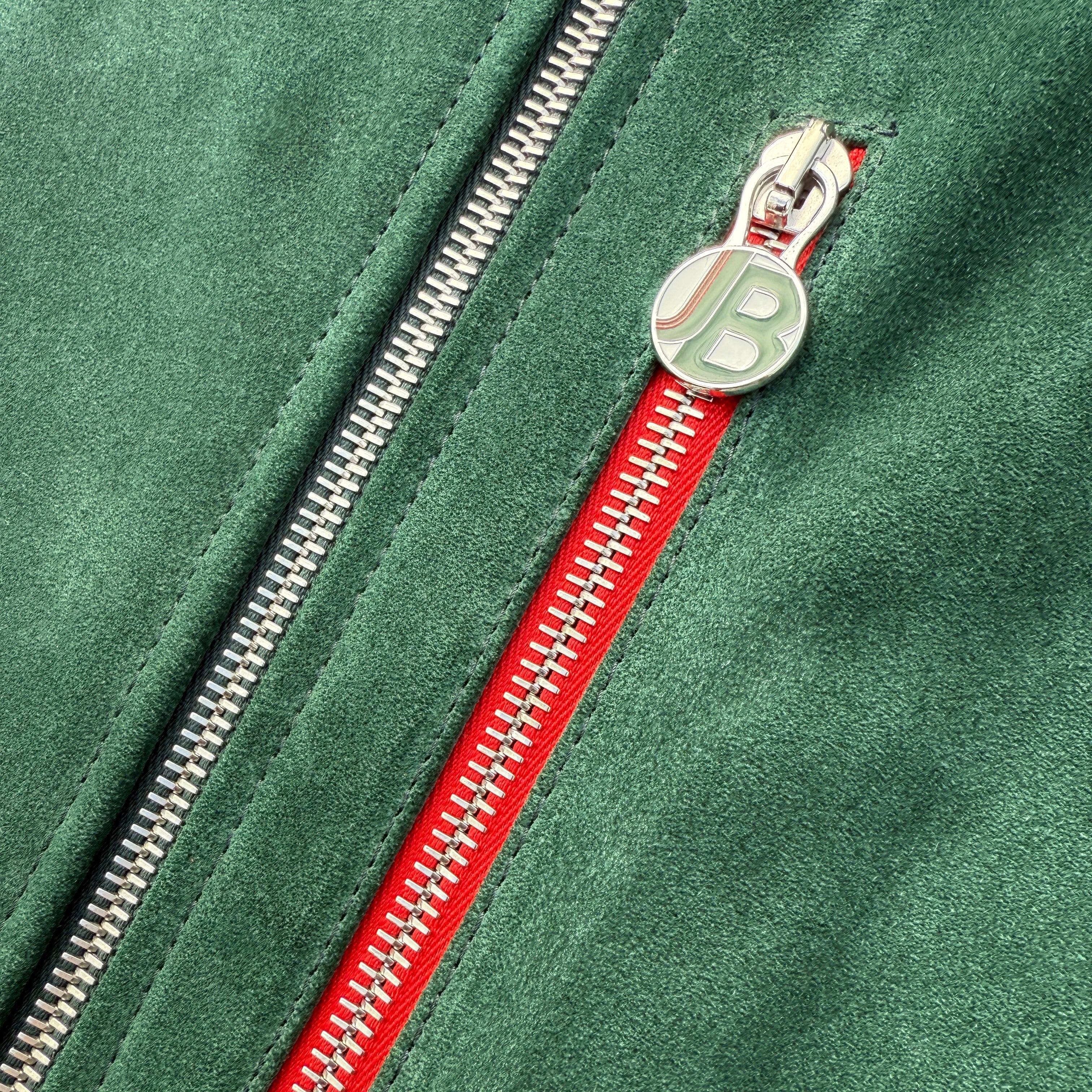
Colour is not merely decorative. A dark exterior is traditionally versatile, while a rich racing green, oxblood or warm tan can establish a stronger personal signature. The most successful combinations tend to use contrast with restraint: perhaps a British racing green lining within a dark brown case, or a discreet flash of a motorsport-inspired hue at the zip gusset. Let one or two details carry the story rather than asking every surface to speak at once.
Specify the construction and fittings
The details you do not notice at first are usually those that determine whether a briefcase remains a pleasure to use after years of service. Ask about the structure of the body, the reinforcement within the base, the treatment of the edges and the way the handles are anchored. A well-made case should hold its line without feeling stiff or heavy.
Hardware merits the same consideration as leather. Choose a finish that works with your watch, belt buckle and usual wardrobe, but do not become constrained by matching everything exactly. Polished nickel offers a cool, classic clarity; antique brass brings warmth and a more traditional character; darker finishes can lend a contemporary, technical edge. Quality zips, including YKK Excella where appropriate, should operate with a deliberate smoothness and be set into the case cleanly.
Think carefully before adding external pockets. They are useful for boarding passes or a mobile phone, but can interrupt an otherwise disciplined silhouette. Internal organisation is often the more elegant answer: a padded laptop compartment, slim document sleeve, zip pocket for valuables and thoughtfully sized spaces for cables and pens. The aim is easy access without visual clutter.
Personalise with a point of view
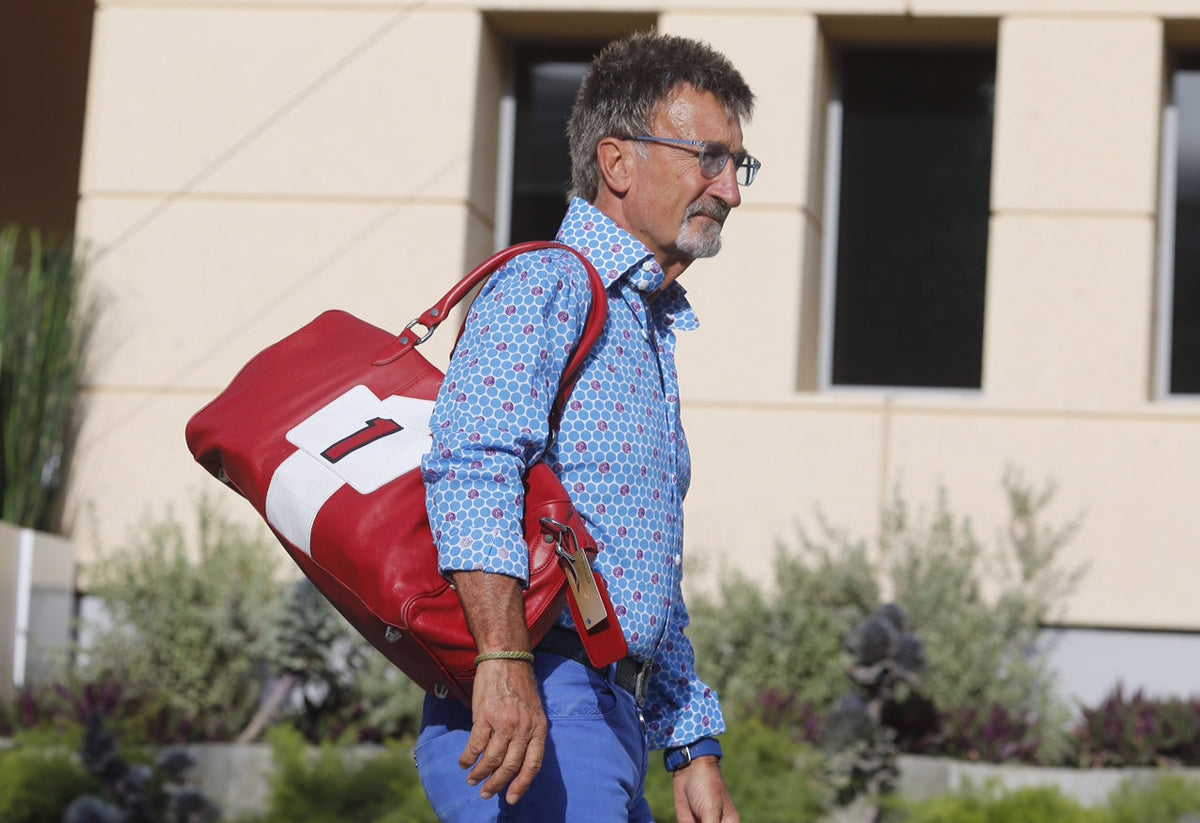
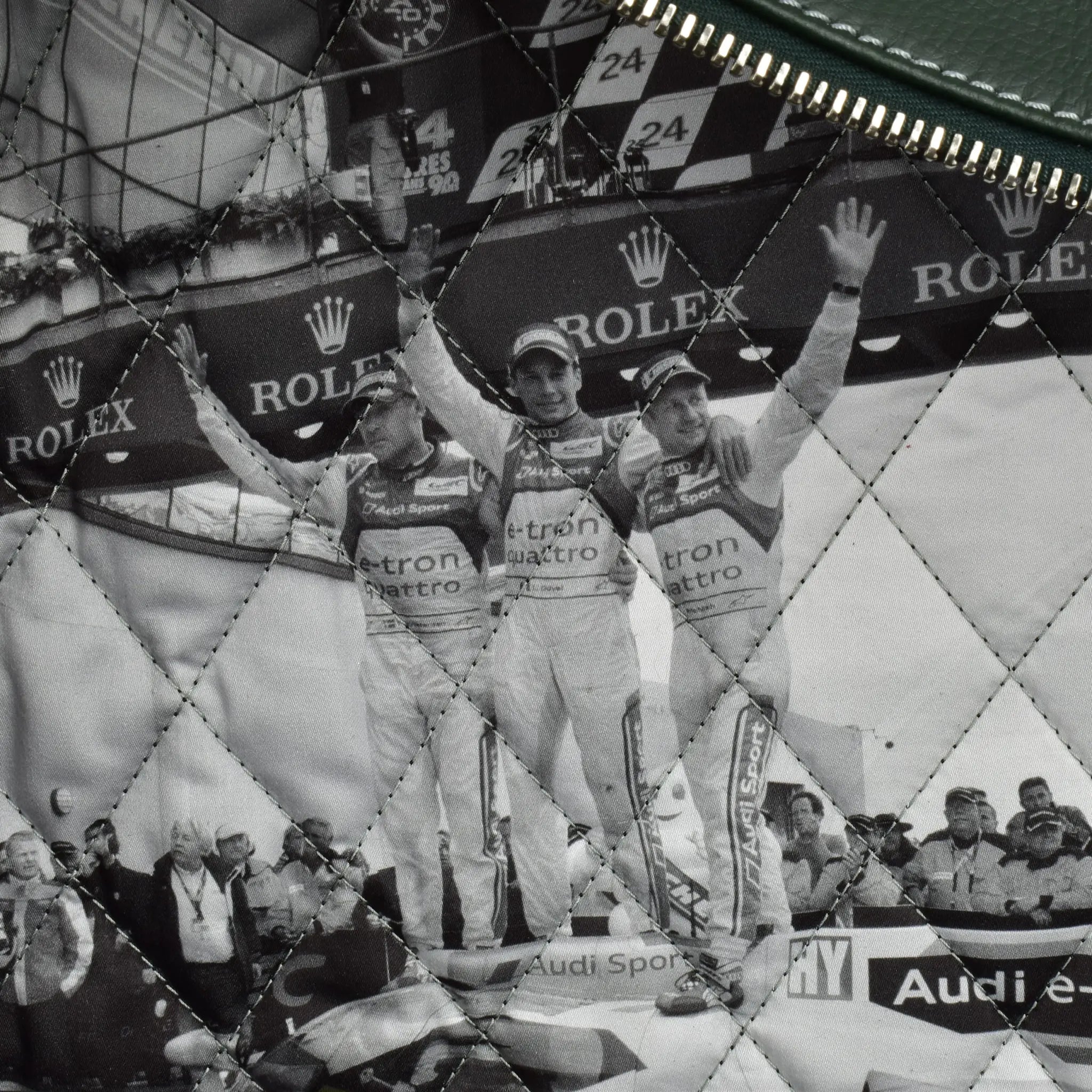
Bespoke should feel personal, not promotional. Initials blind embossed in an unobtrusive position can be more enduring than oversized lettering. A date, chassis reference, racing number or a line of coordinates may hold private meaning when placed inside the case. Contrast stitching can be striking, but it is most effective when it relates to something real: a favourite car interior, a team colour or the piping on a driving jacket.
For clients with a meaningful automotive connection, certain details can be interpreted with subtlety. A lining inspired by a treasured vehicle, leather selected to complement its cabin, or a restrained roundel on an interior panel can turn the case into a symbol of individuality. The reference should feel like an insider's nod, never a novelty graphic.
At Jordan Bespoke, this approach reflects the best of car configuration and Savile Row tailoring: the commission develops around the owner, with every choice considered in relation to the complete object.
Review the design before it goes into production
A proper bespoke process allows time to review the proposal. Study dimensions, leather swatches, hardware finish, lining and the placement of each personal detail together. A component that looks excellent in isolation may feel too busy once combined with contrast stitching, coloured edging and monogramming.
Use this stage to challenge your own choices. Will the bright lining still please you in five years? Does the shoulder strap need to be detachable? Is the external pocket genuinely useful, or simply familiar? A specialist maker should welcome these questions and explain the trade-offs plainly. Bespoke is not the pursuit of maximum specification. It is the discipline of making only the choices that improve the finished piece.
Also establish the practicalities before work begins: the expected lead time, the approval point for materials, and how the briefcase will be delivered or collected. Hand-made Italian production rewards patience. The time is part of the value, particularly where pattern work, leather selection and hand-finishing are involved.
Commission for years, not for a season
The finest leather briefcases become more individual through use. A softening handle, a darkening patina and the occasional small mark record a life well travelled. That does not mean neglect is desirable. Keep the case away from prolonged heat and direct sunlight, avoid overloading it, and use a soft cloth for routine care. If it becomes wet, allow it to dry naturally, away from radiators.
A custom briefcase should never feel precious in the timid sense. It should feel worthy of use: composed in a client meeting, practical on a platform and perfectly at home beside the car it quietly complements. Choose the design that will make you want to reach for it every morning, because that is when a commission begins to acquire its own history.