

A well-considered monogram does more than identify its owner. On a hand-crafted holdall, helmet bag or leather briefcase, it becomes a signature: a discreet mark of provenance that connects the piece to its owner’s journeys, vehicle and personal history. This guide to bespoke bag monograms considers the decisions that give personalisation lasting presence, rather than momentary novelty.
For the discerning individual, the appeal lies in restraint. The finest monograms are not applied as an afterthought. They are considered alongside the leather, lining, hardware and intended use of the bag, much as one would specify the details of a motor car or commission a tailored jacket.
Begin with the right personal mark
The term monogram is often used broadly, but the distinction matters when commissioning a bespoke piece. Initials are simply letters, usually two or three, presented in sequence. A traditional monogram combines those letters into a single, interlocking device. A name, race number or family crest may also be appropriate, though each creates a different character.
Initials offer the most versatile route. They suit a weekend holdall that will travel from a London hotel to a continental road trip, and they retain a quiet formality on a boardroom briefcase. Two letters tend to feel particularly balanced, while three can create a stronger sense of heritage when the central surname initial is given greater prominence.
A traditional monogram is more decorative and inherently personal. It can be a compelling choice for a piece intended to remain in the family or to mark a significant commission. Its complexity, however, calls for sufficient scale and a clean area of leather. On a compact tech case, simple initials will often carry more authority.
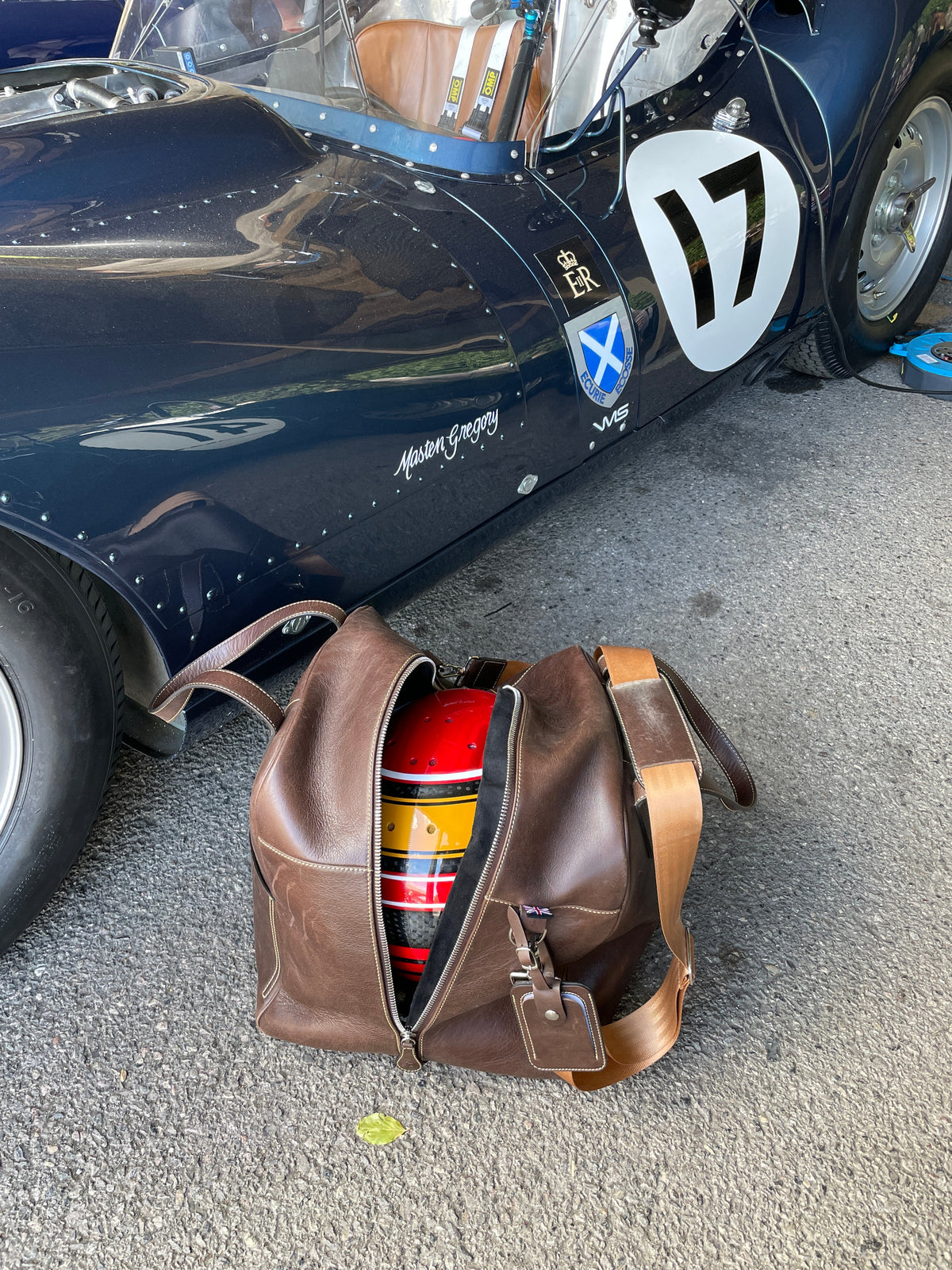
For drivers and collectors, a race number can be equally meaningful. It might reference a first track day, a beloved competition car or a family connection to motorsport. Used sparingly, it gives a bag an authentic sporting note without making it feel like team merchandise.
Scale and placement define the result
A monogram should reward a closer look. If it is the first thing seen from across a room, it risks overpowering the silhouette and craftsmanship of the bag itself. This is especially true of richly grained leather, contrasting panels and luggage with purposeful automotive detailing.
The front of a holdall is the classic position, usually centred or placed low on the panel. A lower placement can feel more contemporary and allows the shape of the bag to remain the focus. Centred initials have a more traditional, club-like confidence, particularly on a structured grip or garment carrier.
For a more private expression, consider the reverse side, an end panel, the luggage tag or an interior leather pocket. These placements suit clients who value recognition without display. An embossed name or initials inside a bag can feel rather like a commissioned plaque beneath the bonnet of a significant motor car: known to the owner, meaningful because it need not be announced.
Scale must respond to the bag’s proportions. A large duffel can accommodate a bolder device, but a small monogram often looks more considered. Conversely, tiny lettering on a generously sized weekend bag can appear hesitant. The aim is visual equilibrium. The personal mark should look as though it belonged to the original design, not as though it was added after the leather left the workbench.
Consider how the bag will be seen
A race day kit bag is often set down in a paddock or carried through a garage, where a clear set of initials may be practical as well as handsome. A cabin holdall used for regular air travel may benefit from a subtler mark that remains elegant beside an airline tag. A briefcase, meanwhile, rewards the restraint of blind embossing or tonal stitching.
There is no universal correct placement. It depends on whether the commission is intended as a daily companion, a travel piece, a gift or a collectable object tied to a particular car.
Choose a finish that belongs to the leather
The method of personalisation changes the mood of the monogram considerably. Blind embossing, where letters are pressed into the leather without added colour, is the most discreet choice. It allows the light to reveal the mark gradually and works beautifully on full-grain hides in black, navy, racing green, oxblood and tobacco.
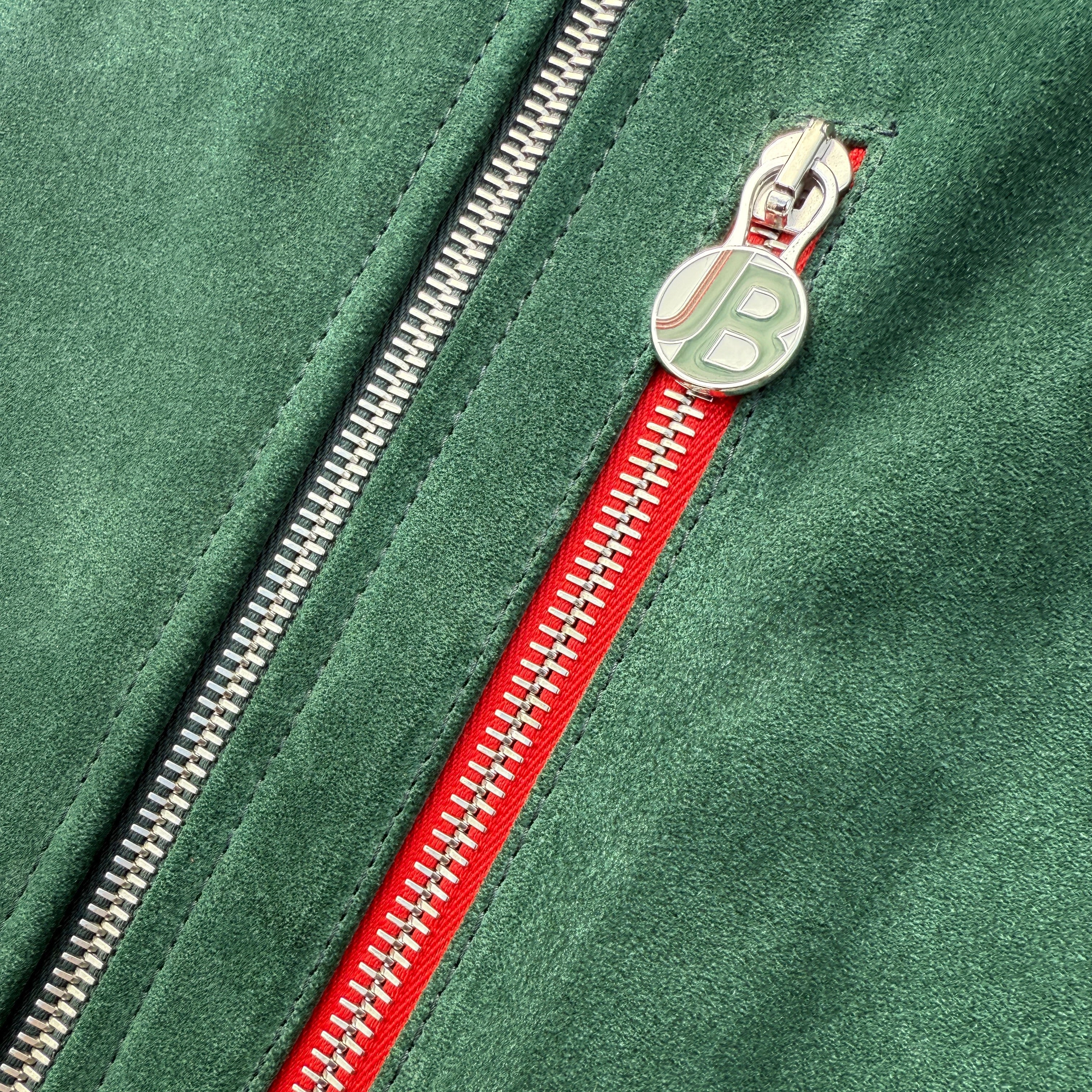
Foil embossing creates more contrast. Gold has a traditional, ceremonial quality; silver feels crisp against cooler leathers and polished hardware; subtle metallic tones can echo the detailing of a vehicle. Yet foil is best used with judgement. On a richly specified bag with contrast stitching, bright zip pullers and a vivid lining, a quieter monogram may provide the better balance.
Debossing with a painted or coloured infill is more graphic and can be particularly effective when it matches an interior lining, a vehicle’s coachline or a cherished racing livery. It asks for confidence, as colour makes the personalisation more prominent and more specific. This is an excellent route for a client commissioning a bag around one car, but perhaps less flexible for a piece intended to accompany every journey.
Raised appliqué leather lettering offers texture and visual drama. It has a purposeful, motorsport-informed feel, especially on kit bags and helmet carriers, but it is not suited to every design. Fine dress luggage usually benefits from a flatter, more understated treatment.
Let typography carry the right character
Typography is where many monograms lose their poise. An ornate script may be beautiful on an invitation, but it can feel out of place on a bag inspired by precision engineering. Equally, an overly aggressive block type can date quickly.
Classic serif lettering brings formality and heritage. It complements a traditional holdall in supple Tuscan leather, particularly when paired with warm metal hardware. A clean sans serif is more modern and technical, ideal for bags influenced by contemporary performance cars or the functional clarity of racing equipment.
The best lettering has enough weight to impress cleanly into leather and enough spacing to remain legible over time. Fine, intricate strokes may look appealing in a digital proof but can lose definition on deeply textured hides. Ask to see the chosen letters at their intended size, not simply as enlarged artwork. The character of a monogram is decided by proportion as much as by typeface.
Build a palette with purpose
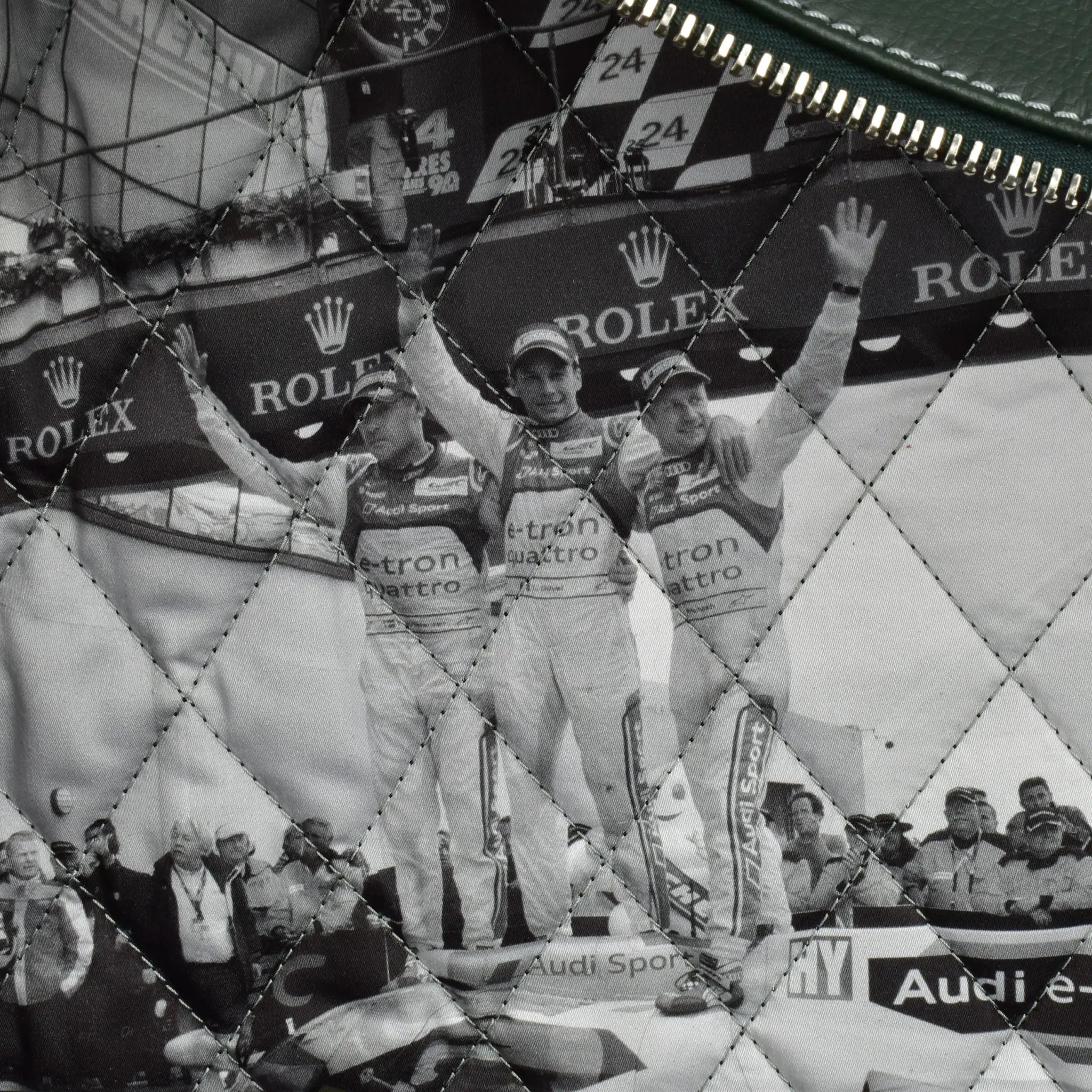
A bespoke bag can take cues from a vehicle without becoming a literal replica. A deep green exterior with a tan lining may recall a grand touring interior. Black leather with a red edge paint or lining can reference a favourite racing colour. A monogram is an opportunity to draw one of those threads through the design.
Tonal combinations are often the most enduring. Dark navy leather with blind embossing, for example, has a composed and quietly luxurious quality. A charcoal bag with graphite foil feels technical and restrained. For those who prefer contrast, cream or ivory monogramming on darker leather can be striking, but it should be used where the bag’s broader design has enough calm to support it.
It is also worth thinking about patina. Natural leather develops character through use, and a blind-embossed mark will mature with it. Foil and painted finishes can remain sharply defined, which may be desirable for a cleaner, more contemporary appearance. Neither is inherently superior; the decision rests on whether you value evolving character or visual permanence.
Make the monogram part of the commission
The most successful bespoke luggage is designed as a complete expression. The monogram should be discussed at the same stage as leather selection, lining, stitching, straps and hardware. Leaving it until the end can limit placement options or result in a finish that competes with the rest of the specification.
At Jordan Bespoke, this level of consideration is central to the commission process. A bag may be informed by the cabin of a cherished grand tourer, the colours of a racing programme or the client’s own preference for quiet, enduring luxury. Hand-made Italian production gives these details the precision they require, from cleanly impressed initials to carefully aligned lettering on a curved panel.
When commissioning a gift, give particular attention to how the recipient uses luggage. A formal monogram may be perfect for a milestone birthday holdall, while a race number or discreet initials can feel more personal for a driver’s helmet bag. If initials are shared within a household, adding a full name inside the bag or using a distinctive placement avoids confusion without compromising the exterior’s elegance.
A monogram should still feel right years from now
Fashionable slogans, oversized logos and novelty phrases can be enjoyable in the moment, but bespoke leather goods are crafted for life. Their appeal grows through travel, use and association. A good personal mark should still feel like yours after a decade of weekends away, early race mornings and drives taken for no reason other than the road ahead.
Choose the detail that tells your story with the fewest unnecessary words. Whether that is two well-proportioned initials, a significant number or a family device, the finest monogram leaves room for the leather, the craftsmanship and the journeys still to come.