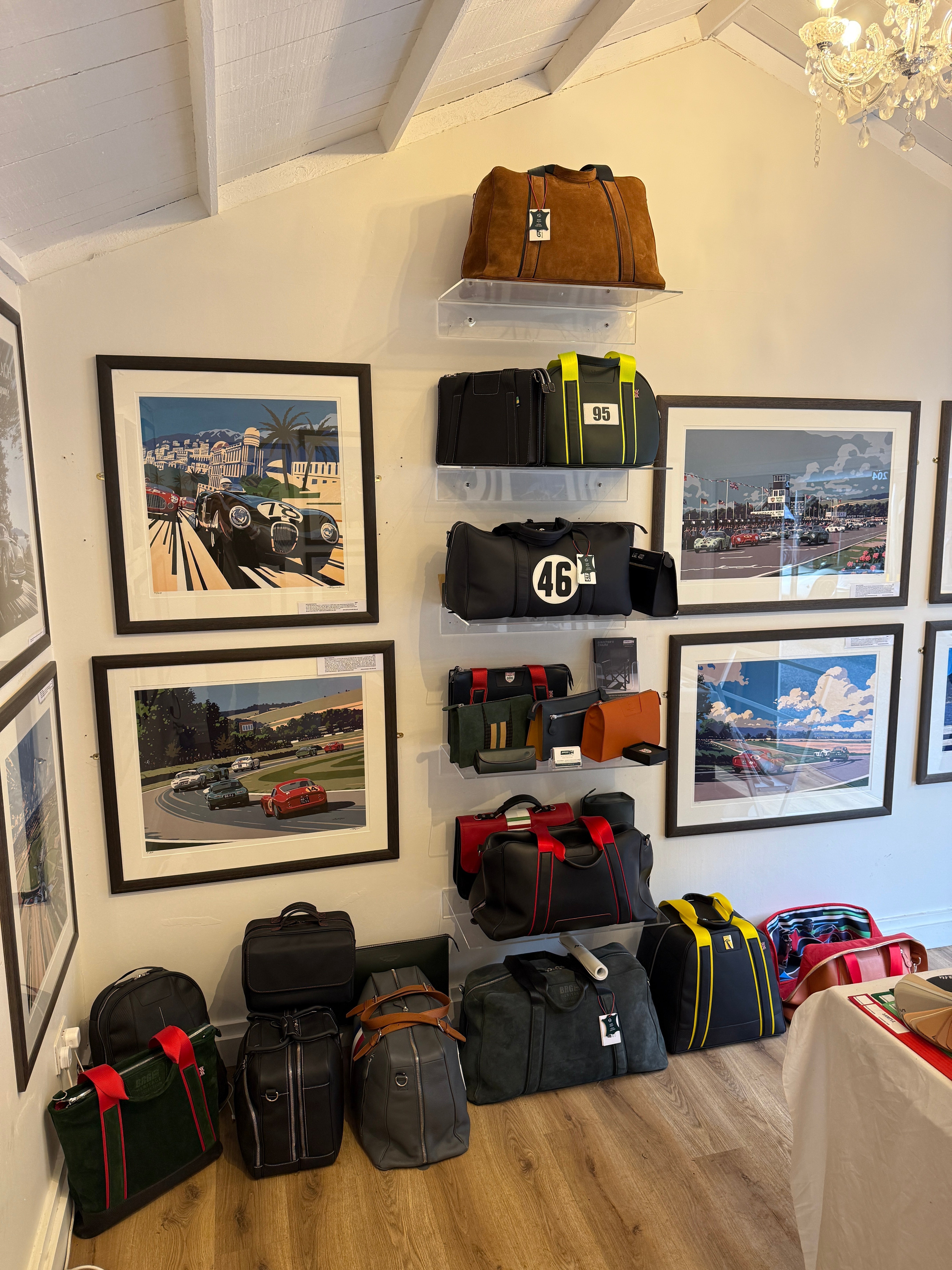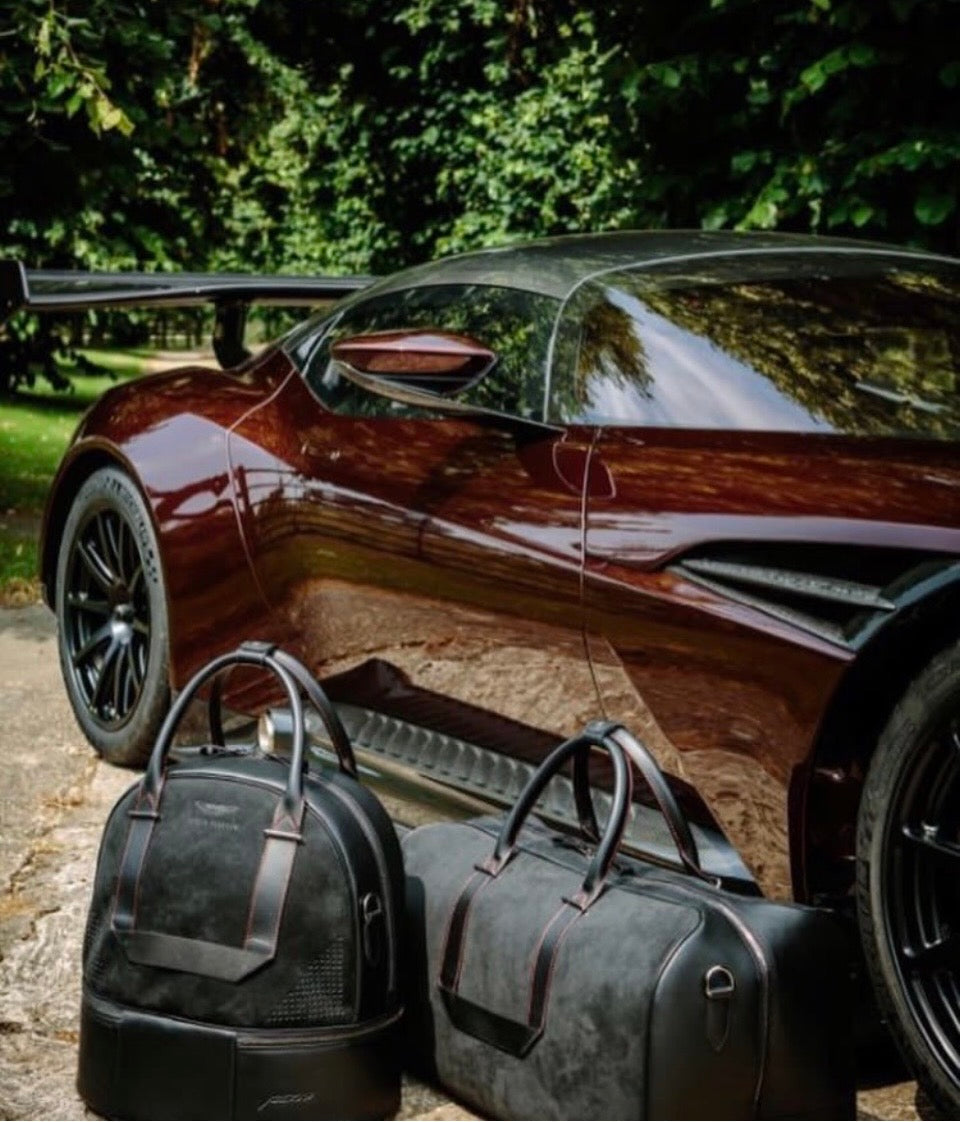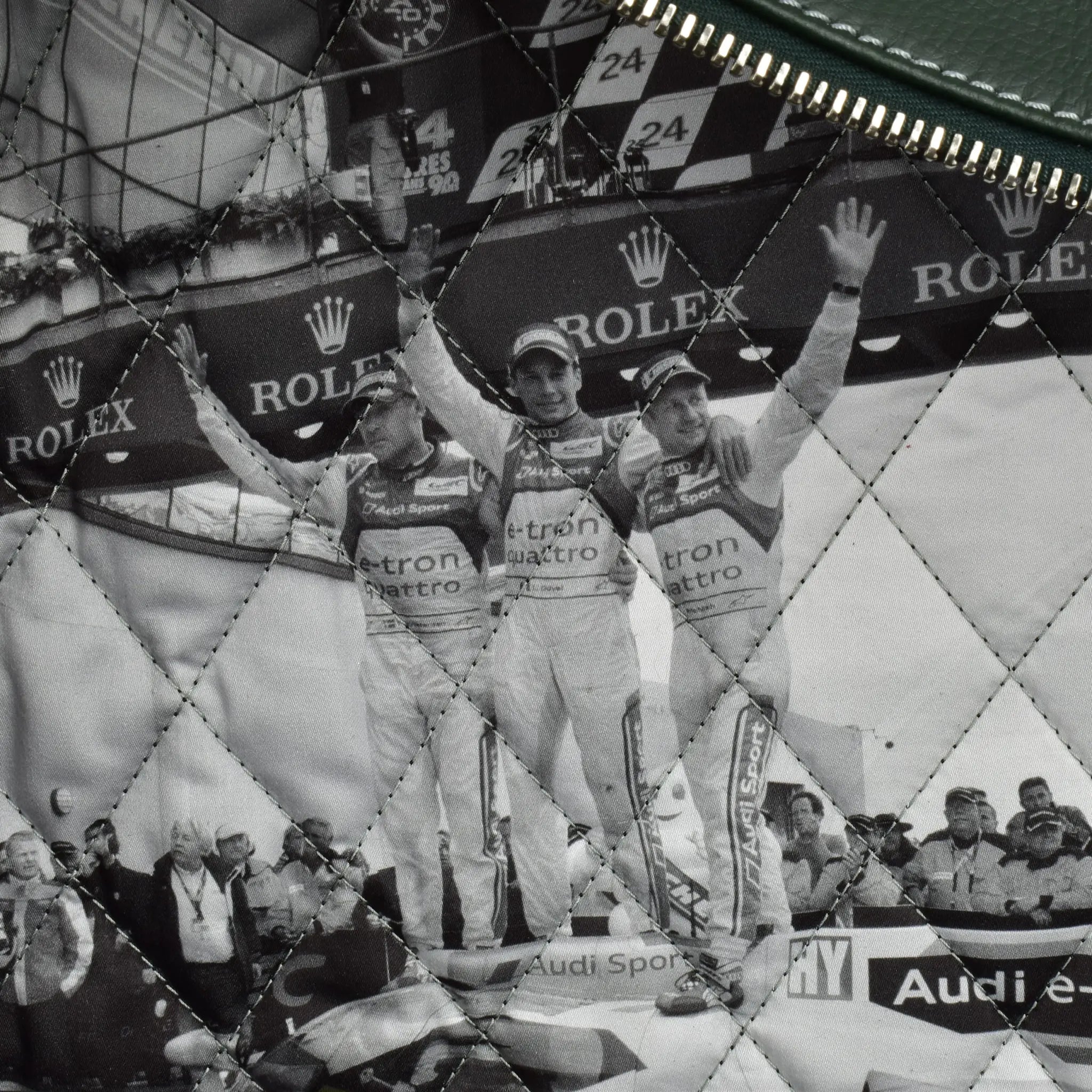

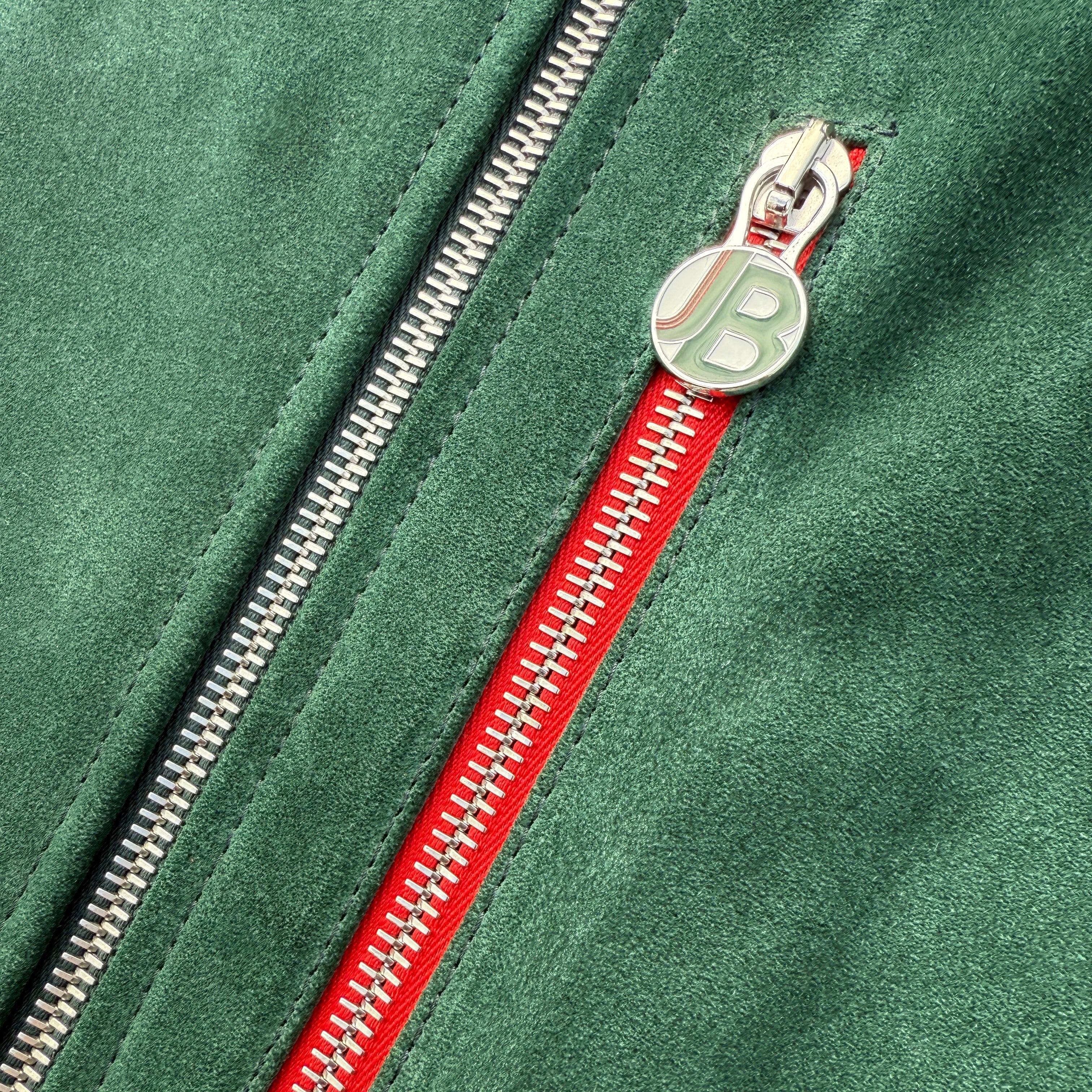

 The difference between an accessory that merely accompanies a car and one that belongs with it is felt before it is seen. The right leather has weight and character. The lining recalls an interior, a racing livery or a cherished detail from the car’s history. This guide to bespoke driving accessories is for motorists who regard the journey, the machine and the objects carried within it as parts of the same personal story.
A considered commission is not about applying a monogram to a standard product. It is about proportion, material, function and the quiet details that make a piece unmistakably yours. Whether the requirement is a weekend holdall for continental touring, a helmet bag for a track day or a leather case for the essential tools of modern travel, bespoke work begins with how you actually drive and travel.
What makes a driving accessory genuinely bespoke?
A bespoke driving accessory is designed around the client rather than selected from a fixed set of options. That distinction matters. Colour alone does not make an item personal; true customisation considers the car it will sit in, the equipment it must carry, the conditions in which it will be used and the owner’s own aesthetic.
For a grand tourer, luggage dimensions may need to work precisely with a shaped boot. For a racing driver, the priority may be a helmet bag with protective padding, purposeful compartments and a shoulder strap that remains comfortable through a long paddock day. A garment carrier might be commissioned for someone moving between boardroom, hotel and concours lawn, with enough structure to keep tailoring presentable without becoming cumbersome.
The most successful pieces also have restraint. A cabin inspired by British racing green, a contrast stitch that echoes a steering-wheel marker, or a lining in the shade of a historic team colour can say more than an overworked surface. Bespoke should feel specific, not theatrical.
A guide to bespoke driving accessories by purpose
Begin with use, not appearance. A beautifully made bag that does not fit the car, protect its contents or suit the way you travel will eventually remain in the wardrobe. Consider the moments when the accessory earns its place.
Weekend travel and grand touring
A weekend holdall is often the natural starting point for a bespoke collection. It should be substantial enough for a few days away, yet composed enough to carry through a hotel lobby or private terminal. Soft Tuscan leather brings suppleness and a rich patina over time, while a more structured construction will appeal to those who prefer a clean, architectural profile.
Before choosing the silhouette, measure the available luggage space. Sports cars can be surprisingly particular, with narrow openings, shallow compartments or irregular boot shapes. A tailored pair of bags may offer more practical capacity than one large duffel, and can make loading simpler. This is where a bespoke maker earns their place: dimensions can be developed around the vehicle rather than guessed from a product page.
Track days and race weekends
Race day kit calls for a different balance. Protection, organisation and ease of movement matter as much as visual impact. A proper helmet bag needs a padded interior, a dependable closure and space for accessories such as a HANS device, gloves, balaclava, intercom and visor care. Abrasion-resistant technical fabrics can be a sensible choice here, particularly when equipment will be placed on pit-lane surfaces or moved between garages.
Leather still has a place in motorsport luggage, but it must be used intelligently. It may form the handles, trim or exterior panels of a hybrid piece, lending permanence and distinction without adding unnecessary weight. The trade-off is simple: an all-leather race bag is exceptionally handsome, but a technical construction can be more practical when the schedule is demanding and conditions are less forgiving.
Daily driving and working life
The items used most frequently deserve equal attention. A slim document case, tech organiser or leather wallet can create a quiet continuity between the car and the rest of the day. For these pieces, layout becomes deeply personal. One owner may require a secure place for cables, keys and a tablet; another may value space for a notebook, driving glasses and travel documents.
Think carefully about closure hardware and access. A zip is often the sensible choice for security in transit, while an open-top organiser offers speed when moving between meetings. Premium components such as YKK Excella zips bring a satisfying action and longevity, but they should complement the object rather than become its headline.
Choose materials with the journey in mind
Material selection shapes how an accessory looks, feels and ages. Full-grain leather remains the defining choice for many collectors because it develops rather than deteriorates. Natural markings, tonal variation and a softening handle are signs of a living material. A black leather holdall may suit a contemporary performance car; a tobacco, oxblood or racing-green leather can lend warmth to a classic or heritage-inspired cabin.
Yet there is no single correct leather. Smooth calfskin has a refined, formal character. Grain leather is more forgiving of regular use and can be especially suitable for travel pieces. Suede linings create a luxurious interior, though they demand more care than hard-wearing textiles. For a helmet bag or equipment case, a wipe-clean technical lining may be the wiser decision.
Hardware deserves the same scrutiny. Polished metal can feel suitably formal, while brushed or darkened finishes often suit motorsport-influenced designs. Consider the metalwork already present in the car: bright chrome, satin aluminium, black anodised details or warm brass-toned accents can provide a useful reference point. Matching every finish exactly is rarely necessary. Harmony is more enduring than imitation.
Build personal details into the design
The strongest bespoke references are usually those known only to the owner. An embroidered registration, a discreet chassis number, a family crest, a race number or a lining developed from a favourite interior can turn a fine object into a personal heirloom. These details should be placed with care. A monogram inside the bag can feel more considered than one placed prominently on the exterior.
Colour offers similar opportunity. Contrast stitching may take its cue from brake calipers, seatbelts or a historic racing stripe. A custom lining can recall a tartan, a period map, a team palette or the cabin of a first significant car. The aim is not literal reproduction. It is to create a connection that remains meaningful years after the commission is completed.
For collectors with several vehicles, a family of accessories can be designed with shared proportions or hardware, then differentiated through linings and subtle colour notes. This avoids the impression of a matched set bought all at once, while creating a recognisable personal signature.
Ask the practical questions before commissioning
Luxury is most convincing when it performs without fuss. Before finalising a design, establish what the piece must carry, where it will be stored and how often it will be used. Provide boot measurements where possible, especially for a bespoke luggage set. If the item is intended for cabin travel, confirm the airline requirements you encounter most often, remembering that allowances vary.
Discuss weight honestly. Thick leather, substantial hardware and heavy padding communicate quality, but they can add up quickly when a bag is fully packed. Similarly, light-coloured leather interiors are beautiful but will show marks more readily than darker or technical linings. There is no wrong choice, only the choice that best suits the owner’s habits.
Care should be part of the decision, not an afterthought. Leather benefits from occasional cleaning and conditioning, sensible storage and protection from prolonged moisture or intense heat. A well-made piece is crafted for life, but a life well travelled leaves evidence. Patina is desirable; neglect is not.
The value of a considered commission
A bespoke accessory is a small expression of the same discernment that informs the choice of a motor car. It rewards attention each time it is lifted from the boot, set beside a helmet in the garage or carried into a weekend away. At Jordan Bespoke, that principle is shaped through British design, hand-made Italian craft and an understanding that a client’s automotive life is never generic.
Choose the details that will still matter after the novelty has passed: the leather that improves with use, the proportions that fit without compromise, and the private reference that brings back a particular road, race or car. Those are the things that make an accessory worth carrying.