

A bag’s character is often decided long before its first journey. It is found in the hide selected, the way a handle is anchored, the weight of a zip pull and the judgement of the maker assembling it. When considering handmade leather bags versus factory made pieces, the meaningful question is not simply which is better. It is what level of material, attention and individuality the bag has been designed to deliver.
For a weekend holdall placed in the boot of a grand tourer, a race-day helmet bag carried through the paddock, or a briefcase used every working day, those distinctions become tangible. The right choice depends on how the piece will be used, what it should say about its owner and whether it is expected to acquire a life of its own over time.
Handmade leather bags versus factory made: the real distinction
The phrase ‘handmade’ is sometimes used too freely. A genuinely hand-crafted leather bag is not necessarily produced entirely without machinery. Cutting presses, skiving machines and specialist stitching equipment can all have a place in a workshop. What matters is that skilled hands guide the critical decisions: inspecting the leather, matching panels, refining the pattern, forming the bag, finishing the edges and checking every detail before it leaves the maker.
Factory-made does not automatically mean poor quality. Established factories can produce well-designed bags with reliable consistency, particularly at the premium end of the market. Their strength lies in repeatability: each unit follows a prescribed process, components are standardised and production moves efficiently through dedicated stations.
The trade-off is flexibility. Where a factory model is designed around scale, an artisan workshop can respond to the character of a particular hide or the wishes of a particular client. One approach prioritises uniformity and speed; the other permits judgement, adaptation and a more personal result.
Leather is where the difference often begins
A leather bag can only be as compelling as the material from which it is made. Premium full-grain leather retains the natural surface of the hide, including the subtle grain, tonal variation and occasional marks that confirm its origin. With use, it develops a patina rather than merely showing wear. This is the material character many discerning owners look for in luggage intended to remain in service for decades.
In hand-crafted production, a maker may select and position each panel to create visual harmony. The front of a holdall might be cut from a particularly clean section of hide, while natural variation is placed where it will enhance rather than distract from the finished form. The result has a considered irregularity: no two bags are quite the same.
Mass production often requires leather to behave predictably across hundreds or thousands of units. That can lead to more heavily corrected hides, uniform surface treatments or split leather constructions. These are not inherently unsuitable, especially for an occasional-use bag or a tightly controlled budget, but they generally offer less depth and less capacity to age gracefully.
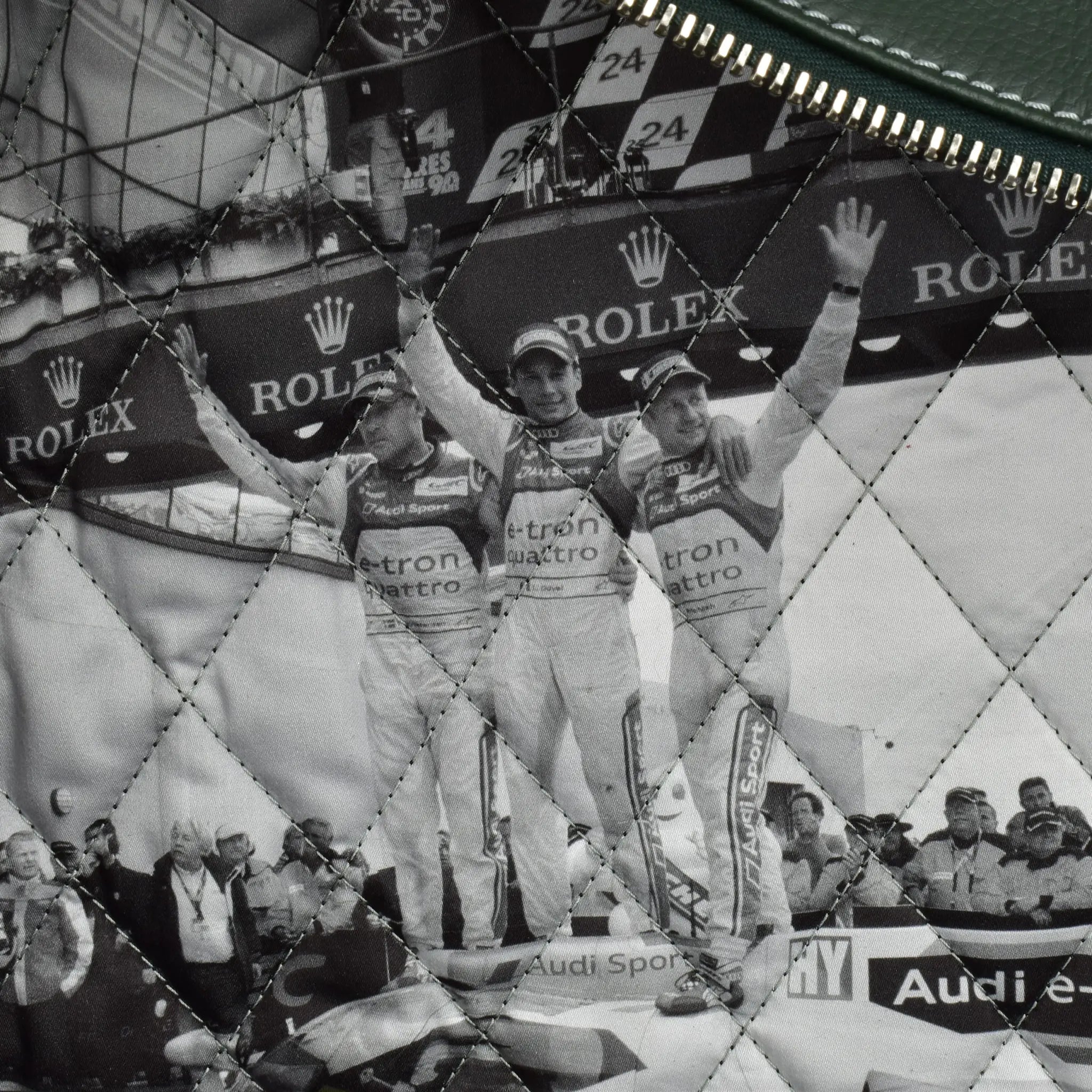
For automotive-inspired luggage, leather choice has another dimension. The colour, grain and finish can be chosen to echo a car’s cabin, hood strap, seat piping or historic racing livery. A deep tobacco leather, a precisely matched contrast stitch or a distinctive Alcantara-style lining turns luggage from an accessory into part of the wider ownership experience.
Construction reveals itself over years, not days
At first glance, two leather bags may appear remarkably similar. After repeated airport transfers, wet-weather arrivals, hotel floors and weekends in the car, their construction tells a different story.
A well-made handmade bag is built with repair and longevity in mind. Handles are reinforced where strain is greatest. Stress points may be stitched and secured with rivets where appropriate. Edges are carefully painted, burnished or turned, rather than rushed through a cosmetic finishing process. The lining is fitted with the same attention as the exterior because it must endure keys, chargers, tools and the daily friction of use.
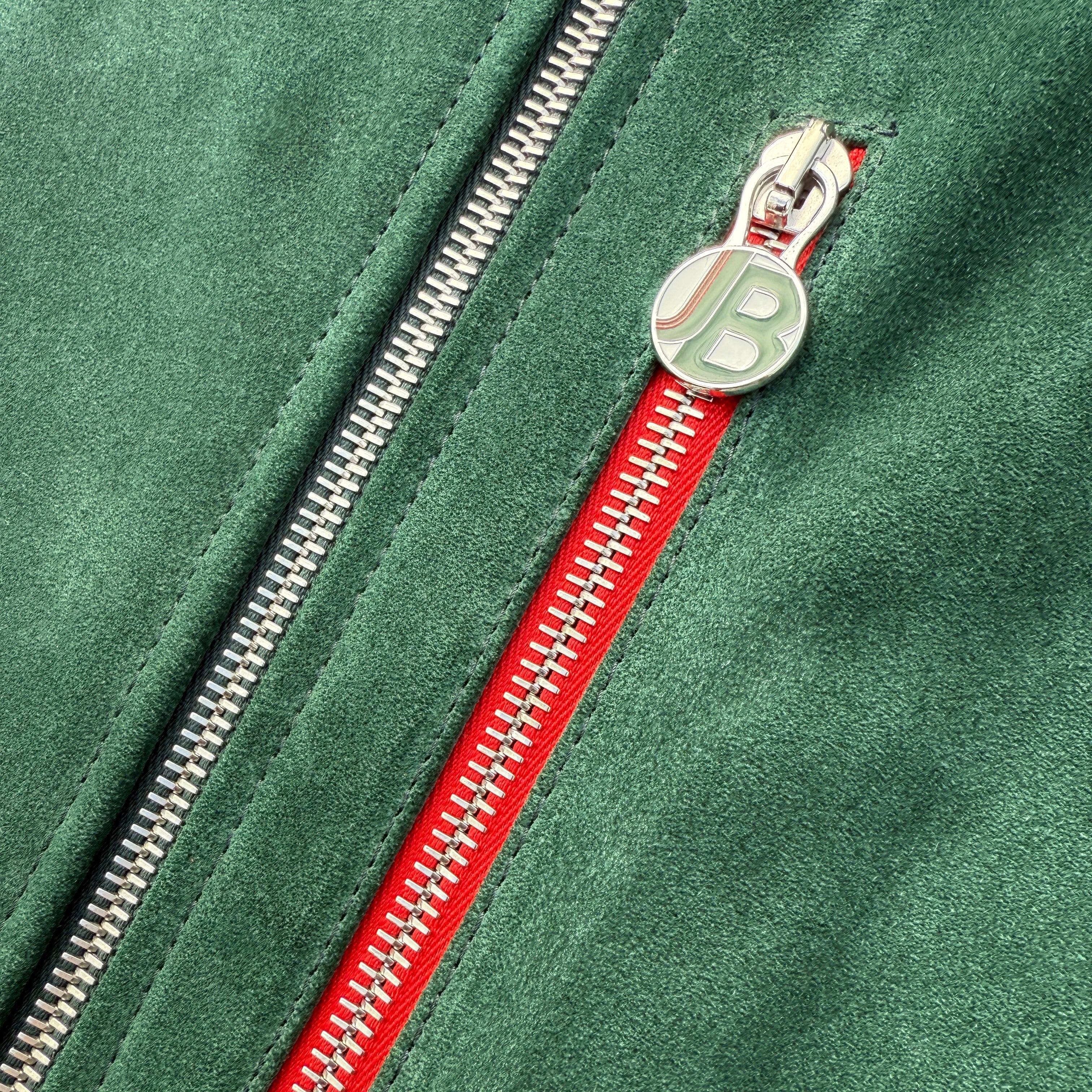
Hardware deserves equal scrutiny. A substantial zip from a respected maker, such as YKK Excella, moves with reassuring precision and can be specified to complement the leather and metalwork. Solid fittings, properly finished buckles and robust feet all contribute to the bag’s sense of permanence. These are small details until a poorly plated clasp chips, a light zip jams or a handle begins to pull away from its attachment.
Factory production can also employ excellent hardware and strong construction, but cost targets commonly determine where compromises are made. A stitched handle may conceal a thinner internal reinforcement. A handsome surface may hide a lightweight board or synthetic layer beneath it. These compromises may be perfectly acceptable for a bag with moderate expectations, but they matter when the piece is meant to travel frequently and become a familiar companion.
The value of a maker’s eye
Human inspection is not a romantic extra. It is a practical advantage. A skilled artisan notices when a grain pattern does not sit correctly across a panel, when a stitch line needs correction, or when a piece of leather will not age as attractively as it should. In a high-volume process, the standard is usually whether the product meets specification. In a specialist workshop, the standard can be whether the finished piece feels right.
That final measure is difficult to place on a production sheet, yet it is immediately understood by anyone who appreciates a hand-trimmed interior, a coachbuilt body line or the controlled action of a well-engineered mechanical component.
Personalisation is more than adding initials
A factory-made bag may offer a choice of colours or a monogram. That is useful, but it differs from bespoke design. True personalisation starts with the purpose of the bag and works outward.
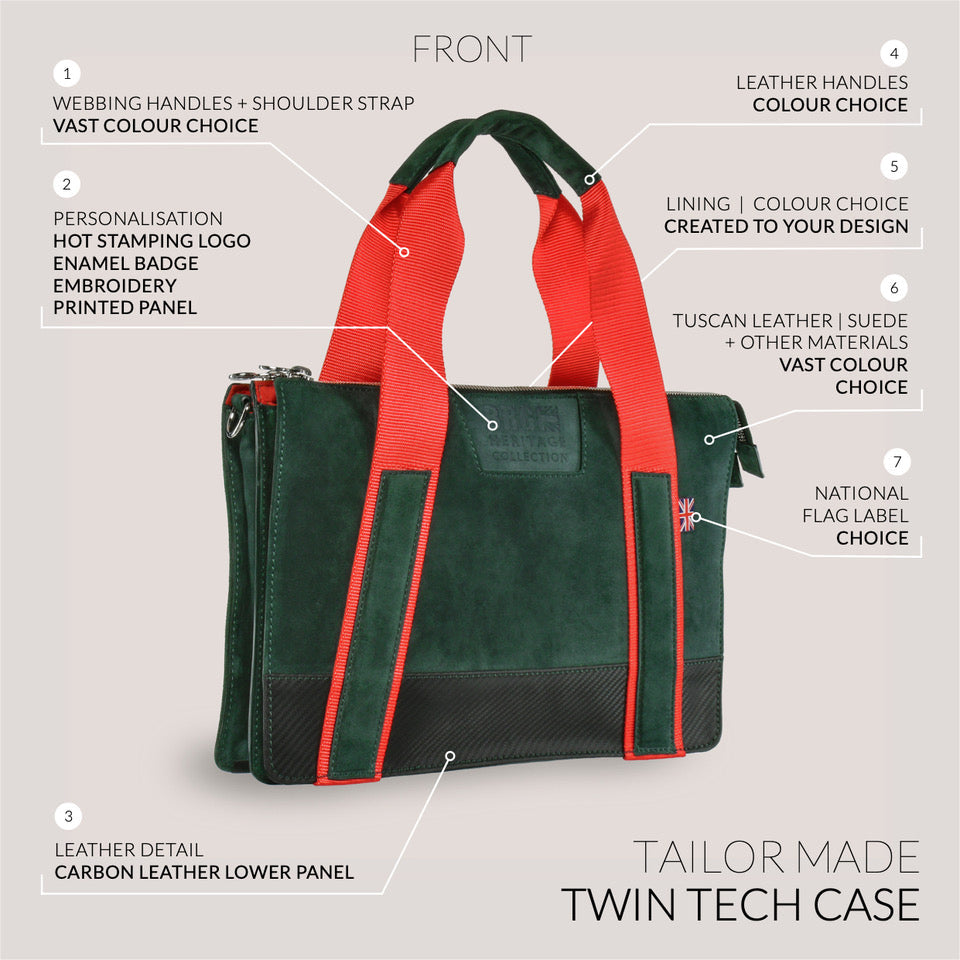
A racing driver may need a helmet bag with a carefully considered opening, protective lining and space for gloves, HANS device components or communications equipment. A collector may commission a weekend holdall sized precisely for a particular vehicle’s luggage space. Another owner may choose a lining that recalls the tartan, suede or leather found inside a cherished motor car, with contrast stitching that picks up a dashboard detail.
Such decisions cannot be reduced to a drop-down menu. They require a conversation about proportion, travel habits, material preference and personal references. Bespoke luggage carries those choices quietly. It does not need an oversized logo to signal distinction because its individuality is built into the object itself.
At Jordan Bespoke, this principle is central to the work: British design, hand-crafted in Italy, with the latitude to create luggage that belongs as naturally beside a car as it does in a private members’ club or hotel lobby. The aim is not novelty. It is coherence between the client, the vehicle and the journey.
Price, value and the honest case for factory-made bags
A factory-made leather bag will usually cost less because materials are bought at scale, designs are fixed and labour is distributed across an efficient production line. For someone who needs a smart bag quickly, prefers a familiar brand shape or does not expect intensive use, this can be a sensible decision.
Handmade luggage commands more because it contains more skilled labour, often uses more exacting materials and may involve design development before production begins. Bespoke work adds further cost through consultation, sampling, custom components and individual pattern adjustments. It should not be purchased on the assumption that every hand-crafted item is automatically superior. The maker’s reputation, leather provenance, hardware and finishing standards still deserve close examination.
The stronger case for investing is longevity. A properly made leather bag can be maintained, repaired and reconditioned. Its surface becomes more expressive with use, and its story deepens with every journey. In that sense, the initial price is only one part of the calculation. A bag bought once, used often and kept for years may offer better value than a series of replacements.
How to choose with confidence
Before choosing, handle the bag if possible. Notice whether the leather has natural depth rather than a plastic-coated feel. Open and close the zip several times. Look inside the handles and around the corners, where weak construction often declares itself first. Ask what leather has been used, where the bag is made and whether repairs are available.
Then consider the role it will play. A ready-to-own factory-made bag may be entirely right for straightforward, occasional travel. A handmade piece makes greater sense when fit, material character, craftsmanship and personal connection are central to the brief. For the driver who has spent years specifying the right car, accepting an anonymous piece of luggage can feel like leaving the final detail unfinished.
Choose the bag that will earn its place in your life. The finest examples do not simply carry clothes, documents or race-day kit. They gather the marks, miles and memories that make them unmistakably yours.