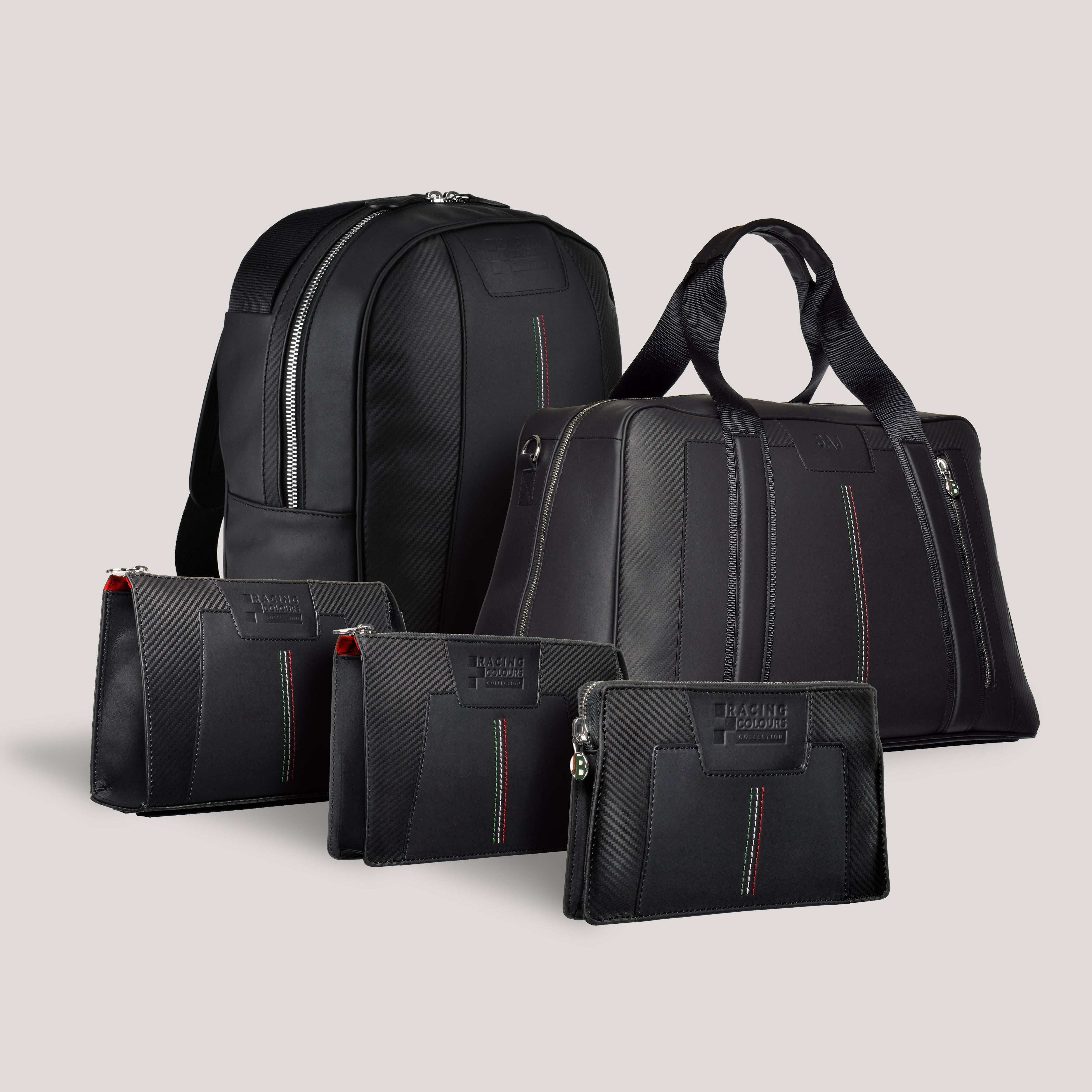


 A helmet is never simply another piece of kit. Whether it carries the patina of a cherished historic race meeting, supports a modern GT programme, or accompanies a Sunday morning drive in a favourite car, it deserves a considered place between garage and circuit. Knowing how to design a bespoke helmet carrier begins with that understanding: the carrier must protect a highly personal object while reflecting the character of its owner.
A fine helmet carrier should feel as purposeful as the helmet within it. It needs to open cleanly in the paddock, travel well in a car’s luggage compartment, protect visors and comms hardware, and look entirely at home beside properly made luggage. The best result is not achieved by adding every possible detail. It comes from making the right decisions about proportion, material, protection and personal expression.
Begin with the helmet, not the bag
The first consideration is the exact helmet being carried. A compact open-face helmet requires a different form from a full-face FIA-approved model with a prominent spoiler, HANS posts, hydration tube or radio connection. It is tempting to work from a generic size, but that approach creates either an awkwardly loose carrier or a case that risks putting pressure on vulnerable fittings.
Measure the helmet at its widest and tallest points, including any fixed accessories. Then allow enough clearance for a padded lining and a soft divider or visor protection panel. The carrier should hold the helmet securely without forcing it into position. A close, tailored fit is desirable; compression is not.
Consider how the piece will be used. A client travelling to track days may want room for gloves, balaclava, earplugs and a visor cloth. A racing driver may require dedicated space for radio leads and a HANS device. For a collector transporting a period helmet, the priority may be a cocoon-like interior with minimal movement. These are different briefs, and a bespoke design should acknowledge them from the outset.
Choose the right structure for protection
A helmet carrier can be soft, semi-structured or substantially reinforced. There is no universal answer, because the correct level of structure depends on the journey.
For short journeys between home, garage and car, a supple leather carrier with thoughtful internal padding may be entirely appropriate. It feels elegant, stores easily and develops character over time. For regular circuit travel, airline journeys or transport alongside other equipment, a semi-structured construction gives greater confidence. Reinforced panels help the bag retain its shape, while a firm base prevents the helmet from sitting directly on hard surfaces.
The base deserves particular attention. A helmet carrier is frequently set down on pit-lane concrete, workshop floors and car parks. A shaped, reinforced base with discreet protective feet keeps the leather clear of damp or abrasion. It also ensures the carrier stands upright when opened, a small but valuable detail when hands are occupied with gloves, race suit or paperwork.
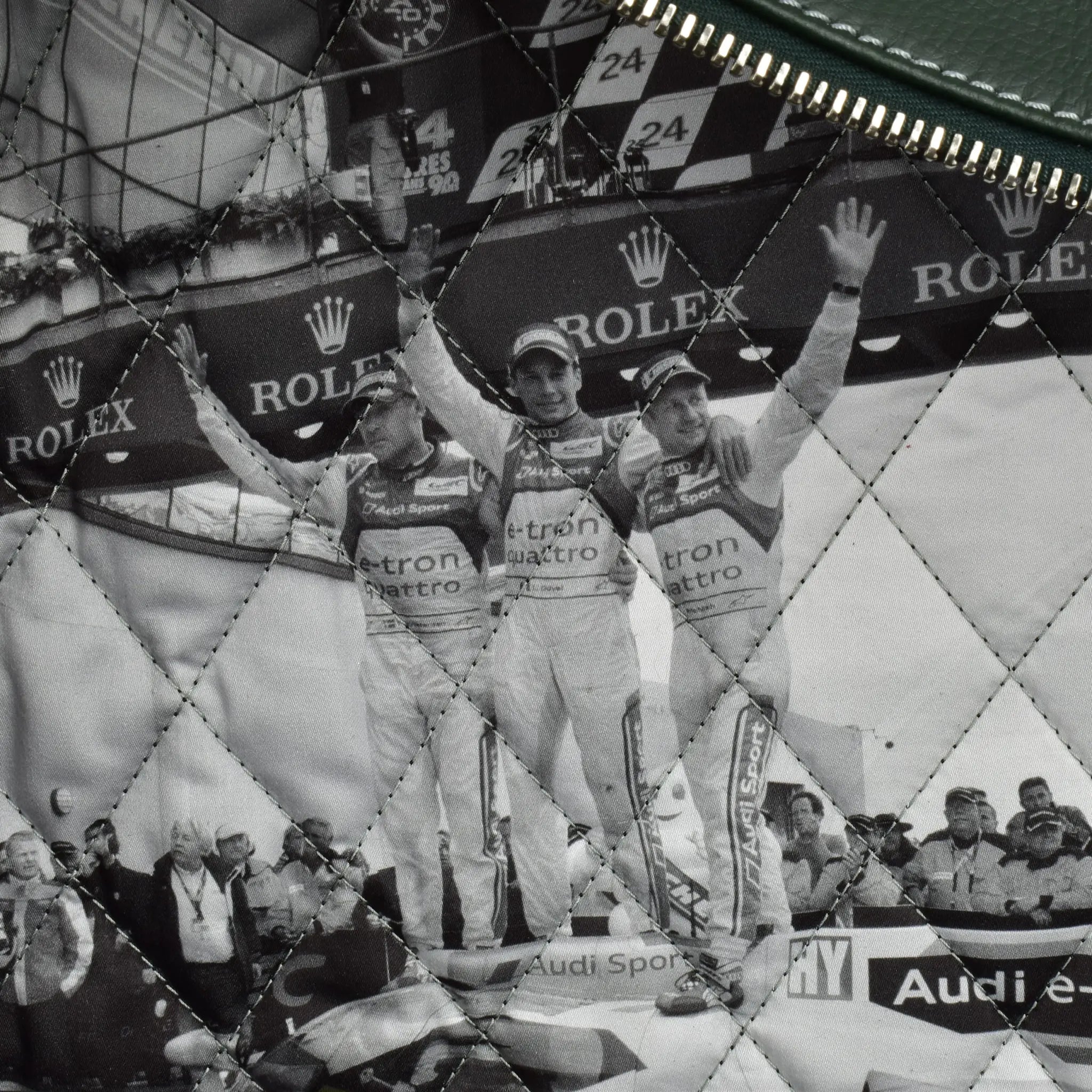
Internal protection should be soft rather than bulky. A brushed microfibre, Alcantara-style suede or fine technical lining protects paintwork and reduces the chance of a visor being marked. Avoid abrasive synthetic linings, especially where a helmet has a gloss finish, hand-painted graphics or a delicate historic decal.
Design the opening around real use
The way a carrier opens determines whether it is a pleasure to use or a beautiful inconvenience. A wide, controlled opening allows the helmet to be lifted straight out rather than dragged past the zip line. This matters particularly for helmets fitted with aerodynamic attachments or communication equipment.
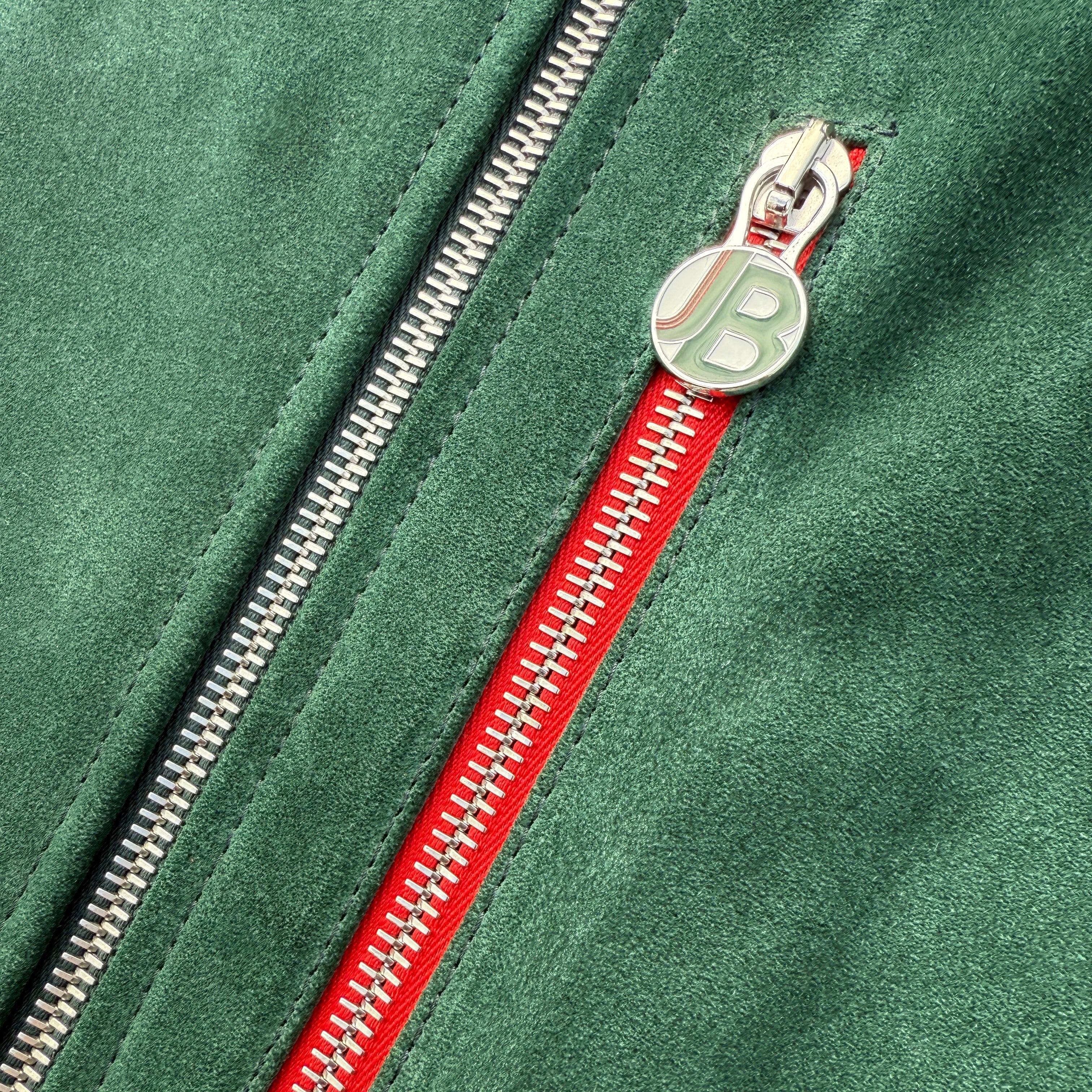
A U-shaped zip opening is often the most practical solution, provided the zip is set back from the helmet’s path. High-quality metal hardware, such as YKK Excella zips, offers a smoother action and a more substantial feel than ordinary nylon alternatives. More importantly, it gives the user confidence that the bag will withstand repeated use at busy events.
The zip pullers should be easy to find with gloved hands but not oversized to the point of becoming intrusive. Leather pull tabs in a contrasting colour can be both functional and distinctive. If the carrier will hold a valuable painted helmet, include a protective leather or fabric zip guard so metal teeth cannot make contact with the shell.
A full clamshell opening can work well for a carrier that doubles as a display-worthy storage case, while a top-loading format is more compact and often suits road use. The choice depends on whether quick access, compact dimensions or presentation is the priority.
Select materials with a reason
The leather should do more than look impressive. It should suit the carrier’s intended life. Full-grain Tuscan leather offers richness, depth and a finish that gains character with use. It is an excellent choice for a client seeking a refined companion to grand touring luggage or a classic car interior. A more grained or technically finished leather may be preferable for frequent paddock use, where resistance to scuffs and easy cleaning matter more.
Colour is where a helmet carrier can become a symbol of individuality. Exterior leather may reference a car’s cabin, hood straps, racing number roundels or the subtle tones of a team’s livery. A dark navy, racing green or tobacco leather has enduring appeal, but a vivid contrast lining can give the piece a more private sense of occasion each time it is opened.
Do not match a vehicle too literally unless that is the client’s intention. A carrier in precisely the same bright paint colour as a car can feel theatrical rather than timeless. Often, a quieter interpretation is more sophisticated: stitchwork in the car’s accent colour, a lining inspired by its upholstery, or a discreet hand-painted monogram placed under the lid.
Where technical performance is central, consider incorporating aerospace-grade textiles or wipe-clean panels inside the accessories compartment. This is especially useful for gloves, damp balaclavas or equipment that has seen a wet race weekend. The key is restraint. Fine leather and technical materials can sit together beautifully when each has a clear role.
Make the interior work harder
A well-designed interior is quiet, orderly and tailored to its owner’s routine. The helmet compartment should remain the focal point, but adjacent storage can prevent loose items from becoming a source of scratches or clutter.
A slim padded pocket for a spare visor is useful, although it should be sized to keep the visor flat rather than curved or under tension. A zipped compartment can hold a visor cloth, tear-offs, earplugs and small tools. For drivers using intercom systems, an elasticated or leather-retained channel for cables helps prevent tangles and avoids snagging when the helmet is removed.
If a HANS device is part of the brief, decide whether it belongs within the main carrier or alongside it. Carrying both in one piece is convenient, yet the larger overall form may be less elegant and harder to place in a sports car’s luggage space. In some cases, a matched HANS sleeve is the more considered answer. Bespoke design is as much about knowing when to separate functions as it is about combining them.
Add personal details without overworking the design
Personalisation should feel authored, not applied. Initials, a race number, family crest or a discreet chassis-inspired motif can give a helmet carrier lasting meaning. The most successful details are often those recognised immediately by the owner and understood only gradually by everyone else.
Hand-painted edges, contrast stitching, a custom lining and embossed leather patches can all be effective. So can a small plaque marked with a car’s registration, a significant circuit, or the year of a first race. For a gifting commission, an interior inscription can be more affecting than prominent exterior branding.
There is a trade-off. Too many colours, badges and materials can dilute the sense of quality. Restrict the palette, establish one clear visual reference, and let the craftsmanship carry the design. A beautifully cut handle, carefully aligned stitching and polished hardware will always speak more convincingly than decoration without purpose.
Test the carrier as it will be carried
Before approving a final design, imagine the full routine. Can it be lifted from a low boot without strain? Does the handle sit comfortably in the hand? Is there an adjustable shoulder strap for a driver who also needs to carry a suit bag? Does it stand securely beside the car while the helmet is removed?
Handle placement affects balance more than many people expect. The carrier should remain level when lifted, rather than tipping towards the helmet’s visor side. A detachable shoulder strap is useful for travel, but it should be removable for cleaner presentation when the bag is used at an event or displayed in a garage.
At Jordan Bespoke, these practical considerations are treated with the same care as leather selection and colour matching. A carrier is crafted for life when it works flawlessly in the unglamorous moments as well as the memorable ones.
The final measure of a bespoke helmet carrier is simple: it should make reaching for the helmet feel like part of the ritual. Not a hurried act of packing equipment, but a quiet preparation for the road, the circuit and whatever story comes next.