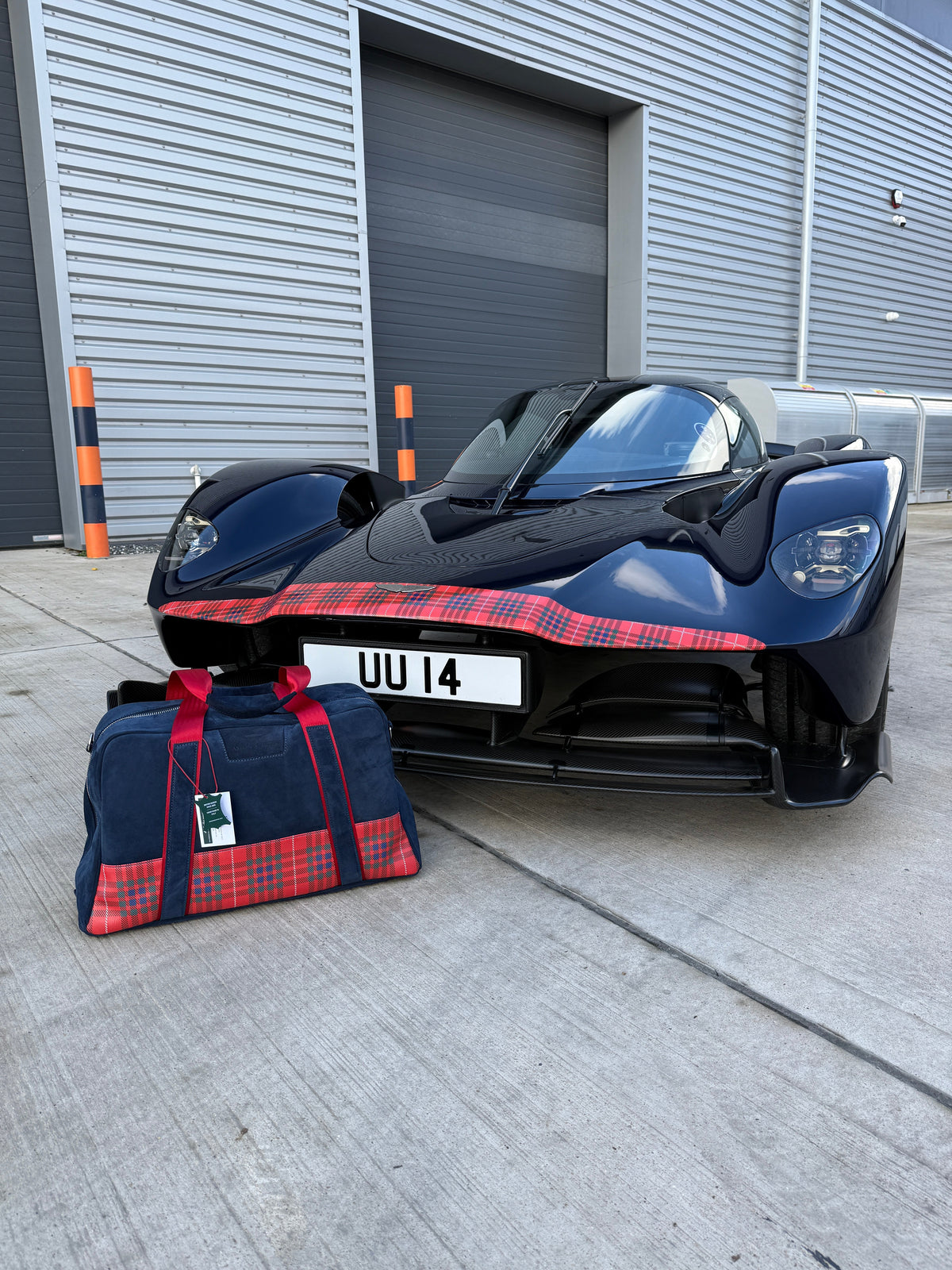


A proper leather holdall durability review begins after the first few journeys, not under showroom lighting. The real test is the early airport departure, the weekend away in a grand tourer, the race meeting where the bag is set down on concrete, and the return home with it packed rather less carefully than before. A fine holdall should acquire character through this use. It should not lose its shape, split at a stress point or become a collection of tired-looking fittings.
For the discerning traveller, durability is not simply about surviving abuse. It is about preserving proportion, touch and purpose over years of movement. The finest leather luggage is crafted for life, but that phrase only holds weight when the material selection, construction and hardware are equal to the promise.
Leather Holdall Durability Review: What Matters Most
A holdall is a demanding format. Unlike a structured briefcase, it must accommodate changing loads: a change of clothes for a two-night stay, driving shoes, wash kit, a light jacket, perhaps a helmet or race-day essentials. It is lifted one-handed, carried across car parks, placed into luggage compartments and pulled open repeatedly. Each of those actions directs strain towards the handles, zip track, base and side panels.
The quality of the leather is the first consideration, although the phrase 'full-grain' alone does not settle the question. A well-chosen full-grain hide retains the natural fibre structure that gives leather its strength, but its temperament matters just as much. A supple, lightly finished leather feels exceptional and develops a handsome patina, yet may show marks more readily than a more protected hide. That is not necessarily a flaw. It is a choice between a visibly lived-in record of travel and a more uniform appearance.
Vegetable-tanned leather is valued for its depth, ageing and ability to take on a personal character. It can be wonderfully durable, particularly when properly conditioned, though it may react more visibly to rain, heat and careless storage. Chrome-tanned leathers can offer greater softness and colour consistency, making them well suited to a holdall that is used frequently from the outset. The answer depends on how the bag will travel and how much evidence of the journey its owner wishes to see.
A luxury holdall should not rely on thick leather as a substitute for intelligent design. Excessively heavy hides can make an empty bag cumbersome and place unnecessary strain on handles and fittings once packed. The better approach is a balanced one: leather with body and resilience, reinforced where loads are concentrated, and thoughtfully paired with a lining that supports the bag rather than allowing it to collapse.
Construction Reveals the True Standard
Turn a holdall over and look where its makers expect it to meet the world. The base is among the clearest indicators of long-term quality. A double-layered or reinforced base resists sagging, scuffing and distortion when the bag is packed for a long weekend. Protective feet can be useful, especially for smooth leather, although they must be securely fixed and discreet enough to complement the form rather than turn the bag into a piece of office luggage.
Handle construction deserves equally close attention. Handles should be anchored into reinforced panels or wrapped around the body of the bag, rather than attached only at a narrow seam. The transition from handle to body is where a loaded holdall announces whether it has been made with knowledge or merely styled with confidence. Hand stitching and careful edge finishing are valuable here, but the underlying reinforcement matters more than decorative detail.
Stitching should be even, closely controlled and tensioned correctly. Loose thread, irregular spacing and crowded turns around handle tabs can all signal future weakness. Yet a durable bag is not necessarily the one with the most visible stitching. Some of the most elegant construction is hidden: internal leather facings, strengthened seams, backing materials and precisely placed reinforcements that allow the exterior to remain clean and assured.
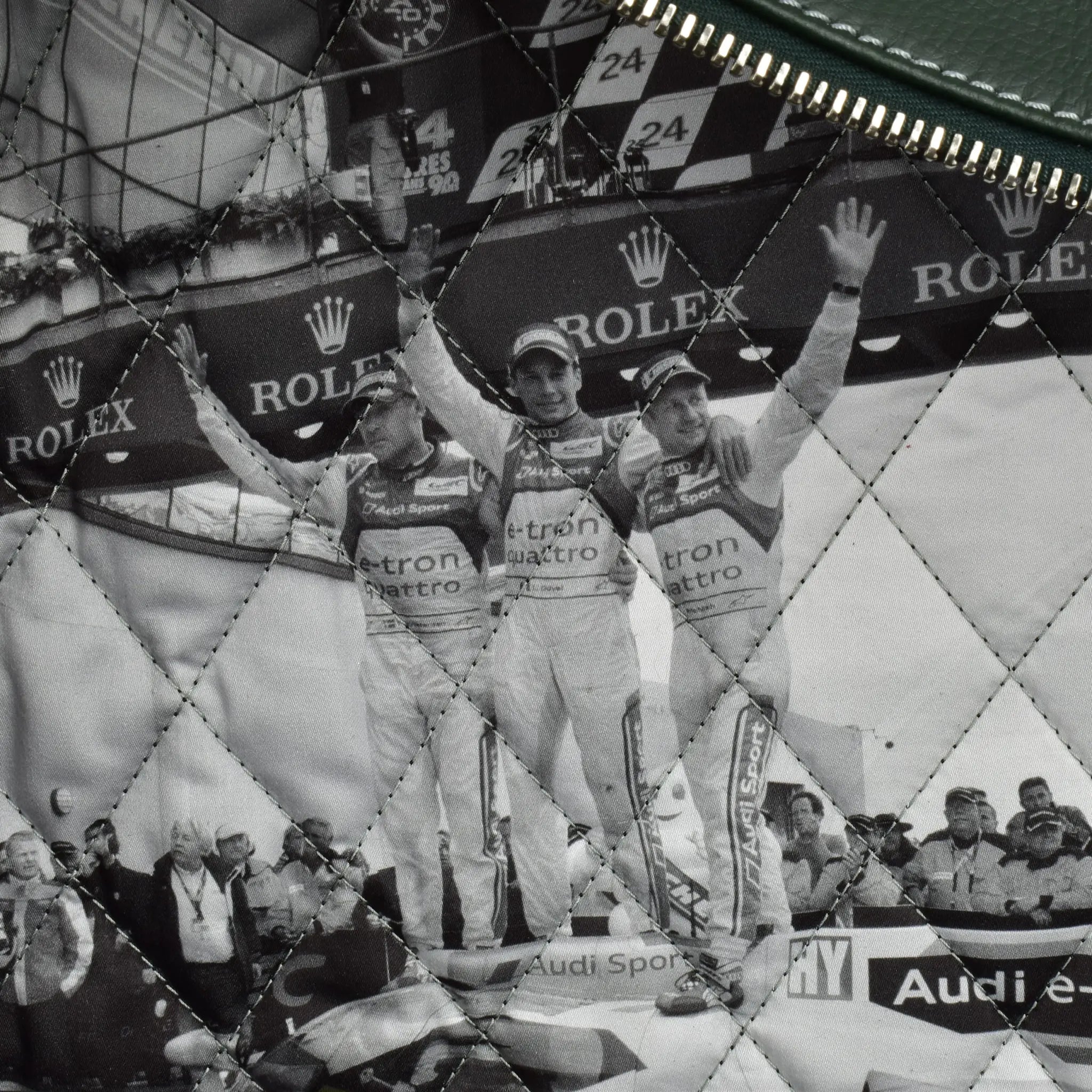
The lining also has a practical role. A beautifully coloured suede or Alcantara-style lining creates a sense of occasion each time the bag is opened, but it must be suited to the use. Delicate pale linings can show marks from shoes, tools or damp kit more readily. A darker technical textile or a hard-wearing leather-lined base may be the more sensible specification for regular race weekends. Bespoke luggage earns its place when these decisions reflect the owner's actual life rather than an imagined one.
Zips, Metalwork and the Small Failures That Are Not Small
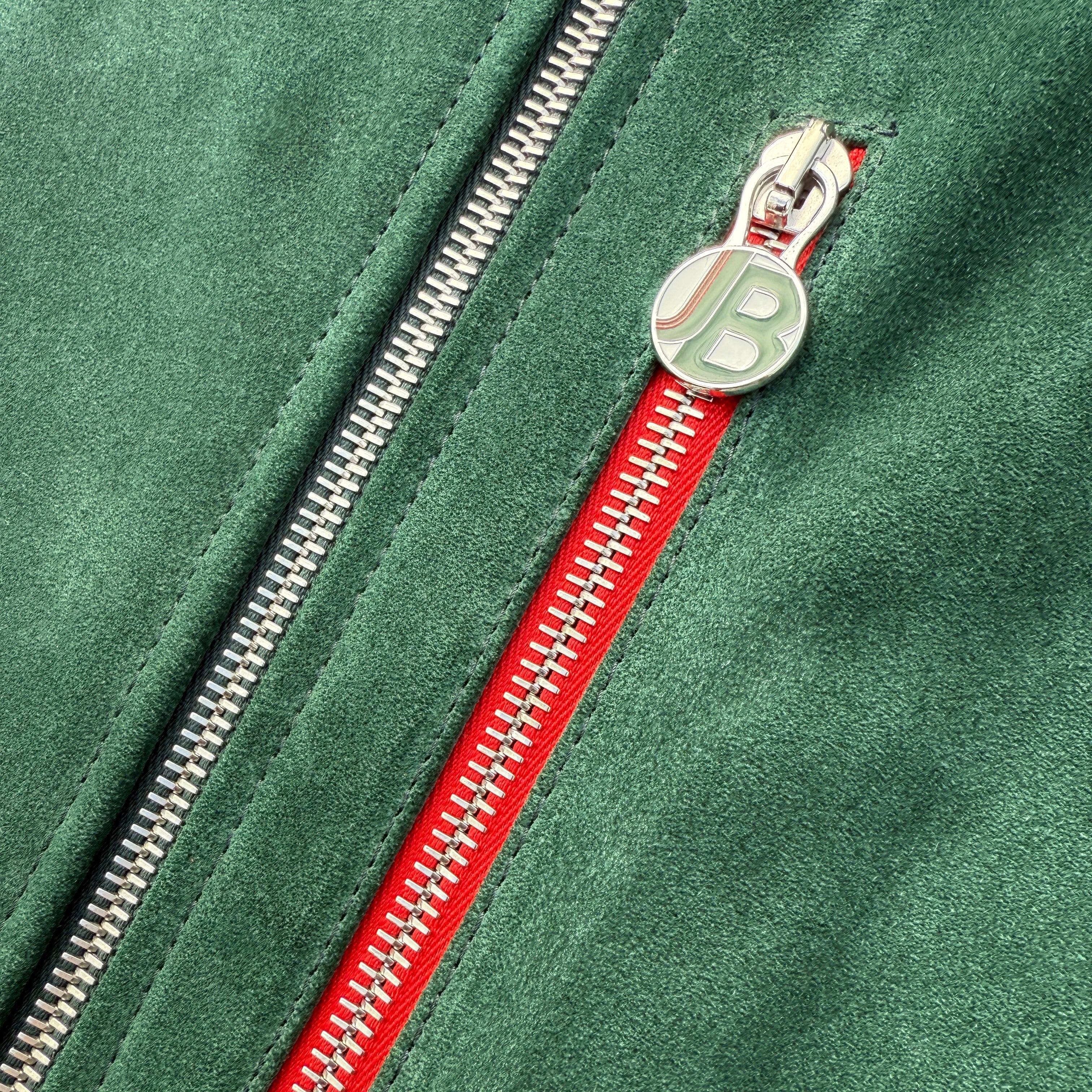
A zip failure can render an otherwise excellent holdall frustrating at exactly the wrong moment. Premium metal zips, including YKK Excella options, offer a satisfying weight and a notably smooth action when correctly fitted. The important detail is not merely the name on the puller. The zip tape must be supported, the ends properly secured, and the opening shaped to avoid excessive tension when the bag is full.
A wide opening is convenient when packing, but a very long zip can become vulnerable if a bag is overfilled. This is one of the honest trade-offs in holdall design. The most elegant profile may encourage a compact load; the most accommodating design can look less composed when half empty. A well-designed leather holdall manages both with side gussets, a considered opening and enough structure to retain its line.
Brass or palladium-toned fittings should have substance without becoming unnecessarily heavy. Hardware needs to resist scratching and corrosion, but it must also be proportioned to the bag. Large, flashy buckles often date quickly. Understated metalwork, finished with precision, gives the leather room to do the talking.
How Leather Changes After Real Use
Leather is not fabric. It remembers. The handle darkens where it is held, the corners soften, and the surface develops subtle variation from light, temperature and contact. For many owners, this is the point. A holdall with a rich patina tells a more convincing story than one that looks untouched after five years.
There is a distinction, however, between patina and neglect. Creasing around a zip is natural. A split edge coating, torn handle keeper or warped base is not. A good bag should age with greater character while remaining structurally composed. If the leather begins to feel dry, brittle or unusually stiff, it is asking for care rather than more force.
Regular use is generally kinder to quality leather than long periods in poor storage. After a trip, empty the holdall, remove dust with a soft dry cloth and allow it to air naturally if it has been exposed to damp. Never dry it against a radiator or with direct heat. Store it lightly filled with clean tissue or a soft insert, away from strong sunlight and in its dust bag where possible. Conditioning should be occasional and measured. Too much product can darken leather, soften it excessively and attract dust into the grain.
Bespoke Choices That Improve a Holdall's Lifespan
Personalisation is often associated with colour, monograms and contrast stitching, but the most intelligent bespoke choices are functional. A client who travels with driving shoes may benefit from a wipe-clean internal compartment. Someone attending circuits through the season may prefer darker lining colours, reinforced corners and a more weather-tolerant leather finish. A collector commissioning luggage to complement a particular vehicle may choose a lining that echoes the cabin while specifying a durable exterior for regular use.
At Jordan Bespoke, this is where automotive thinking and Italian hand-making naturally meet. The best specification resembles a well-considered car configuration: every material has a role, every detail supports the experience, and nothing is included merely to impress at first glance.
It is also worth considering size honestly. A generously proportioned weekender is tempting, but the larger the bag, the more weight its handles and base must carry. For frequent short breaks, a compact holdall may prove more durable in practice because it discourages overpacking. Conversely, a properly reinforced larger bag is the better choice for those who routinely carry racewear or travel for several days. Durability is always connected to intended load.
A leather holdall becomes a trusted companion through use, not preservation. Choose one with the material integrity to accept the miles, the construction to bear the weight, and the details that make you want to take it with you again. Given sensible care, it should look less like a purchase as the years pass and more like a symbol of individuality with a journey of its own.